
Across Karnataka, in nearly every town and village, you will find a shrine to a fierce local goddess called Mariamma or Maaramma — protector against disease, drought, and disaster, worshipped with a particular intensity born of genuine fear and genuine need. These goddesses are everywhere, and each community treats its own as singular, local, theirs.
In Sirsi, a town in the Western Ghats of Uttara Kannada district, stands the goddess all of them defer to: Marikamba Devi, known throughout the region simply as Doddamma — the Elder Sister.
The seven-foot wooden idol enshrined here, eight-armed, riding a tiger, depicted in the act of slaying a demon, is not merely Sirsi’s own protector deity. According to widespread regional belief, she occupies a specific position within an entire network of Mariamma worship across South India — the senior figure, the one the younger village goddesses answer to, the source from which their protective power is understood to flow.
This is why, once every two years, when the town’s Jatre Mahotsava transforms Sirsi into one of South India’s largest temple fairs — drawing reported crowds in the millions for an eight-day chariot festival — the event carries weight far beyond a single town’s celebration. People come from across Karnataka, Andhra Pradesh, and Tamil Nadu specifically because the Elder Sister is being taken out on her chariot, and her younger sisters’ devotees feel the occasion as their own.
💡 Quick Answer Daily darshan timings: 6:00 AM – 9:00 PM (some sources note an afternoon break — verify locally) Marikamba Jatre Mahotsava 2026: 24 February – 4 March 2026, held once every two years Annadanam (free meal): Served daily at noon Also known as: Doddamma Temple, Marigudi Temple founded: 1688 AD Best visiting season: October to March Last Verified: June 2026
Sirsi Marikamba Temple — Daily Darshan Timings 2026
| Session | Timings | Notes |
|---|---|---|
| Temple opens | 6:00 AM | |
| Morning darshan | 6:00 AM – approximately 12:00 PM | Some sources note a midday break |
| Annadanam (free meal) | Daily at noon | Served to all devotees |
| Evening darshan | Afternoon/evening through closing | |
| Temple closes | 9:00 PM (some sources cite 8:30 PM) | |
| Best visiting days | Tuesdays and Fridays | Considered especially auspicious for goddess worship |
Pro tip: One visitor account specifically describes a Thursday morning visit around 7:30 AM — during a quieter season, away from any festival period — as offering completely crowd-free, straight-through darshan. If your goal is a calm, contemplative visit to the main shrine rather than the festival experience, target a weekday morning outside the Jatre period and outside Navratri.
Marikamba Jatre Mahotsava 2026 — Dates and Key Rituals
Confirmed 2026 dates: 24 February – 4 March 2026. This is one of South India’s largest “car festivals” (chariot processions), held biennially (once every two years) rather than annually — a structural feature that significantly heightens anticipation each time it occurs, since devotees know they will wait roughly 24 months between occurrences.
Reported scale: Some sources describe the festival as one of South India’s largest fairs, with crowd estimates running into the millions of devotees across the full eight-day period — figures that, while difficult to independently verify with precision, are consistently echoed across multiple sources describing this as among Karnataka’s most significant religious gatherings.
Key ritual sequence (based on officially announced muhurta windows for the 2026 event; always verify exact daily timings against the official program board displayed near the temple during the Jatre, as some shifts in timing are expected based on crowd flow):
| Ritual | What Happens |
|---|---|
| Kalasha installation on the Rath | Consecration of the sacred pot atop the goddess’s chariot |
| Jatre Kalyana consecration | Special auspicious ceremony at the Sabha Mantapa |
| Ratharohana | The Goddess ascends her chariot — a pivotal moment for devotees to witness |
| Grand Shobha Yatre (procession) | The chariot procession through Sirsi, followed by installation on the Gaddige (ceremonial platform) |
| Devotee Seva period | Offerings and services permitted as per temple administration arrangements |
| Official closing | The 2026 Jatre Mahotsava concludes at the officially announced muhurta of 10:47 AM |
Pro tip: Arrive early for the Ratharohana and the Shobha Yatre specifically — these are described as the key moments for devotee darshan and crowd-free movement, before the procession itself draws the festival’s heaviest concentration of people along the route.
What Is Marikamba — The Discovery Legend and the “Doddamma” Tradition
Retrieved From a Pond, Installed by a King
According to the temple’s core legend, the seven-foot wooden image of Marikamba Devi was discovered in a pond (tank) on the road to Hangal/Hanagal, a town some distance from Sirsi. Accounts vary slightly on the precise mechanism of discovery — one tradition holds that a devotee received a dream in which the goddess herself revealed the location of her insignia in the tank, instructing that installing and worshipping it would bring well-being to the region; another simply describes the colossal idol being “retrieved” from the water without specifying how its location first became known.
What multiple sources agree on: in 1611, Sadashiva Rao II, the King of Sonda, ordered the wooden deity installed at the site that would become the temple, with the structure itself completed and formally established in 1688 AD by the villagers.
The Asaadi Singers and the Story of Basav
A separate, more folkloric strand of the temple’s tradition is preserved through the Asaadis — a community of religious professional singers and bards in Karnataka, considered loyal devotees and traditional storytellers of Maaramma worship, who carry the legend of Marikamba’s arrival through song from village to village. One such telling centers on an Asaadi named Basav, a devoted singer of Maa Maaramma’s praises, whose personal story (involving an insult he suffered at a previous year’s fair, and his subsequent absence) is woven into the broader narrative of how the goddess came to be recognized at Sirsi — a strand of oral tradition that exists alongside, rather than replacing, the more formally documented discovery-and-installation account.
Doddamma — Why She Is the “Elder Sister”
The title Doddamma (“elder sister” in Kannada) reflects Marikamba’s specific position within South Indian goddess worship: she is understood as the senior figure among the countless local Mariamma or Maaramma shrines found across villages and towns throughout Karnataka, Tamil Nadu, and Andhra Pradesh. These village goddesses — each fiercely protective of their own local community, each associated with guarding against epidemic disease, drought, and disaster — are widely regarded as younger sisters to the Marikamba enshrined at Sirsi, making this temple, in a real devotional sense, the senior address within an entire regional network of goddess worship.
She is also identified, across temple tradition, with Renuka and Yellamma — other major fierce-goddess forms within South Indian Shaktism — reflecting the layered, regionally interconnected nature of goddess worship in this part of India.
The Iconography — Eight Arms, a Tiger, and a Slain Demon
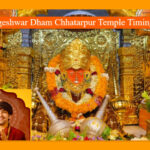
The presiding idol — approximately 7 feet tall, carved from wood — depicts Marikamba Devi in her fierce form: eight arms, each holding a different weapon, mounted on a tiger (some sources describe a lion), in the act of slaying a demon — the visual language standard to Durga’s Mahishasura Mardini aspect, rendered here in one of Karnataka’s most significant wooden temple idols.
The Kaavi Murals — A Nearly Extinct Art Form Preserved Here
Beyond the central deity, Sirsi Marikamba Temple is independently notable for its Kaavi murals — an art form once popular in the coastal Konkan region of Karnataka, now largely extinct elsewhere, involving red-pigmented plaster applied over a white base and then engraved to reveal intricate designs beneath. The temple’s central courtyard, surrounded by cloisters, displays imagery from Hindu epics rendered in this technique — making a visit here significant for art and architecture history, independent of its religious importance.
The temple’s blue-painted façade is a later, 19th-century addition; the changes made to the structure over successive periods have, according to several sources, obscured most direct evidence of the building’s original 17th-century form.
The History of Animal Sacrifice and Its Abolition
For much of the temple’s history, the biennial Rathayatra (chariot festival) included animal sacrifice, specifically the offering of a he-buffalo, as part of the ritual tradition associated with appeasing the fierce goddess form. This practice was abolished following a social reform movement led by local leaders, and the temple’s rituals today proceed without animal sacrifice — a significant historical shift that reflects broader patterns of reform within South Indian Shakti worship traditions over the past century.
The temple’s main priest traditionally belongs to the Vishvakarma community, a detail noted specifically in some temple histories as distinct from the Brahminical priesthood common at many other major Karnataka temples.
How to Plan Your Visit
For regular (non-Jatre) darshan: No advance booking is required for general darshan. Simply arrive during the open hours, ideally on a Tuesday or Friday morning if devotional timing matters to you, or any weekday morning outside festival periods for the calmest experience.
For the 2026 Jatre Mahotsava (24 February – 4 March): Given the scale of crowds reported — potentially in the millions across the eight-day period — plan well ahead:
- Book accommodation in Sirsi or nearby towns (Hubli, Sagara, Kumta) weeks in advance
- Check the official program board near the temple during the Jatre for exact daily ritual timings, as some shifts from announced muhurta windows are expected due to crowd flow
- Arrive early for the Ratharohana and Shobha Yatre specifically — these are the festival’s central devotional moments
- Expect significant road and transport congestion in and around Sirsi during the full festival window
The Trap — What Catches Most Visitors
“Assumed the Jatre happens every year” → Cause: Most major temple festivals across India are annual; Sirsi’s is biennial → Fix: The Marikamba Jatre Mahotsava is held once every two years, in February or March. Confirm the current cycle’s exact dates — 2026 is a Jatre year, with the 2028 edition to follow roughly two years later.
“Arrived expecting a Brahmin priest tradition” → Cause: Assumption based on more commonly known temple staffing patterns → Fix: The temple’s main priesthood traditionally belongs to the Vishvakarma community — a notable and historically significant distinction from many other major Karnataka Shakti temples.
“Visited specifically hoping to witness animal sacrifice as part of the ritual tradition” → Cause: Outdated information about historical Rathayatra practices → Fix: Animal sacrifice (the historical offering of a he-buffalo) was abolished following a local social reform movement. Current Jatre rituals proceed without this practice.
“Missed the Kaavi murals entirely” → Cause: Visitors focused solely on the main sanctum darshan often walk past the courtyard cloisters without realizing their independent historical and artistic significance → Fix: After main darshan, take time in the central courtyard to view the Kaavi mural work — a genuinely rare, nearly extinct regional art form preserved here.
How to Reach Sirsi
Temple location: Banavasi Road, Sirsi, Uttara Kannada district, Karnataka.
By air: Hubli Airport — approximately 100 km, the nearest air gateway. Taxis and buses connect from the airport via nearby connecting towns.
By road: Sirsi is approximately 83 km east of Gokarna. Well connected to Hubli, Sagara, Kumta, Honnavar, and other towns of Uttara Kannada district via NWKRTC/KSRTC buses and private operators.
By train: Sirsi itself has limited direct rail access; most visitors travel via Hubli or other regional rail hubs and continue by road.
Best season: October to March is recommended, avoiding monsoon season specifically due to landslide risk and heavy rainfall common in this Western Ghats region.
Before You Visit Sirsi Marikamba Temple — Checklist
☑ Daily darshan timings confirmed — 6:00 AM–9:00 PM, verify any afternoon break locally ☑ Tuesday or Friday targeted if devotional timing matters; weekday morning for calmest general darshan ☑ Jatre Mahotsava 2026 dates noted (24 Feb–4 March) if planning a festival visit ☑ Accommodation booked well ahead in Sirsi or nearby towns if visiting during Jatre ☑ Official program board checked on-site during Jatre for exact daily ritual timings ☑ Kaavi murals in the courtyard included in your visit plan, not just main sanctum darshan ☑ October–March travel preferred; monsoon season avoided due to landslide risk ☑ Combined visit planned with nearby Maha Ganapati and Shri Gopalakrishna temples, located close to Marikamba Temple
Frequently Asked Questions
What are Sirsi Marikamba Temple timings in 2026?
Daily darshan generally runs from 6:00 AM to 9:00 PM (some sources cite 8:30 PM closing). Some sources note a midday break, though this is not universally confirmed across all accounts — verify locally for the exact current schedule. Annadanam (free meal) is served daily at noon.
When is the Sirsi Marikamba Jatre Mahotsava 2026?
The biennial Jatre Mahotsava is confirmed for 24 February to 4 March 2026, an eight-day chariot festival held once every two years (not annually). The official closing muhurta for the 2026 event is announced as 10:47 AM on the final day.
Why is Marikamba Devi called “Doddamma”?
“Doddamma” means “Elder Sister” in Kannada. Marikamba is regarded as the senior figure among the numerous local Mariamma (Maaramma) goddess shrines found across villages and towns throughout Karnataka and neighboring states, with these local protector goddesses traditionally considered her “younger sisters” within the broader regional Shakti worship network.
What is the history of the Marikamba idol?
According to temple legend, the seven-foot wooden idol of Marikamba Devi was discovered in a pond on the road to Hangal/Hanagal. In 1611, Sadashiva Rao II, King of Sonda, ordered the deity installed, with the temple structure itself completed in 1688 AD by the villagers of Sirsi.
Did Sirsi Marikamba Temple practice animal sacrifice?
Historically, yes — the biennial Rathayatra included the sacrifice of a he-buffalo as part of traditional ritual practice. This was abolished following a social reform movement led by local leaders, and current Jatre rituals proceed without animal sacrifice.
What are Kaavi murals at Sirsi Marikamba Temple?
Kaavi murals are a nearly extinct art form once popular in coastal Konkan Karnataka, involving red-pigmented plaster applied over a white base and engraved to reveal designs. The temple’s central courtyard displays Hindu epic imagery in this technique, making it independently significant for art and architectural history.
Sirsi Marikamba Temple mein darshan kaise karein?
Roz subah 6 AM se raat 9 PM tak darshan hota hai — Tuesday ya Friday subah sabse auspicious mana jaata hai. 2026 ka Jatre Mahotsava 24 February se 4 March tak hai — yeh har do saal mein ek baar hota hai, har saal nahi. Festival ke time accommodation pehle se book kar lein. Main darshan ke baad courtyard ke Kaavi murals zaroor dekhein — yeh rare art form hai.
Contact and Help
Temple address: Banavasi Road, Sirsi, Uttara Kannada district, Karnataka Nearest airport: Hubli Airport — approximately 100 km Also known as: Doddamma Temple, Marigudi
One Last Thing
In village after village across Karnataka, a local goddess stands guard against the things her community fears most — fever, drought, the failure of the harvest, the sudden arrival of disease that has no other explanation. Each village believes its own goddess is the one watching over them specifically.
And yet, every two years, when the chariot rolls out from a temple in Sirsi and the eight-armed figure on the tiger is carried through streets thick with devotees, something in that local certainty widens. The younger sisters answer to an elder. The fierce protectors scattered across hundreds of villages share, by tradition, a single origin point — a wooden idol pulled from a pond on the road to Hangal, installed by a king’s order, that has been Doddamma to an entire region for over three centuries.
Whether you arrive on a quiet Thursday morning with no one else in the sanctum, or in the crush of the biennial Jatre with what may be millions of fellow devotees around you, you are standing before the same elder sister the youngest village shrine, two hundred kilometres away, ultimately answers to.
Jai Marikamba Devi. Jai Doddamma.
Want to offer puspalankar puja on any day in Navarathree.
How can I send money?
I need information about thulabaara