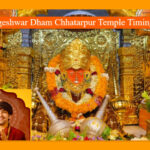
At the heart of Mathura stands a site Hindu tradition holds as the literal birthplace of Lord Krishna: the prison cell (Garbha Griha) where his parents, Devaki and Vasudeva, were held captive by the tyrannical King Kansa, and where, according to the Bhagavata Purana, Krishna was born at midnight on the eighth day of the dark fortnight of Bhadrapada — an event tradition dates to approximately 3228 BCE. The site’s construction history stretches back, by tradition, to Krishna’s own great-grandson, Vajranabha, roughly 5,000 years ago, with documented historical reconstruction following in 400 CE under Chandragupta Vikramaditya’s rule.
This temple’s history includes repeated cycles of destruction and rebuilding — by Mahmud of Ghazni in 1017 CE, later reconstructed, then destroyed again by Sikandar Lodi in the 16th century, and finally, most significantly, by the Mughal emperor Aurangzeb in 1670 CE, who is documented to have built the Shahi Idgah mosque immediately adjacent to — and, by current physical layout, sharing a common wall with — the temple site. The present-day temple complex was rebuilt and substantially expanded across the 20th century, with the Keshavdeva Temple specifically constructed between 1957 and 1958, financed by industrialist Ramkrishna Dalmia in memory of his mother, Jadiadevi Dalmia, and the Bhagavata Bhavan completed in 1982.
A note on the site’s current legal status: This guide focuses specifically on practical visitor information — darshan timings, booking, festivals, and logistics. A legal dispute concerning the adjacent Shahi Idgah site remains actively before Indian courts as of this guide’s publication, including an Allahabad High Court ruling in August 2024 permitting certain petitions to proceed, and a separately reported Archaeological Survey of India finding regarding the site’s historical layers. This guide does not take a position on this ongoing legal matter and presents only the visitor-facing facts relevant to planning a respectful, practical visit.
💡 Quick Answer Darshan timings (summer): 5:00 AM – 12:00 PM and 4:00 PM – 9:30 PM Darshan timings (winter): 5:30 AM – 12:00 PM and 3:00/3:30 PM – 8:30/9:00 PM Entry: Completely free; nominal charges may apply for specific sevas Security: Mandatory checks; mobile phones, cameras, and large bags restricted in certain areas, given the site’s location adjacent to the Shahi Idgah Janmashtami 2026: Friday, 4 September 2026, with an extended ~20-hour darshan window Dress code: Modest traditional attire; no shorts or sleeveless tops; footwear and leather items not permitted inside Last Verified: June 2026 — confirm any current security or access updates locally before traveling
Krishna Janmabhoomi Temple Timings 2026
| Season | Morning | Evening |
|---|---|---|
| Summer | 5:00 AM – 12:00 PM | 4:00 PM – 9:30 PM |
| Winter | 5:30 AM – 12:00 PM | 3:00/3:30 PM – 8:30/9:00 PM |
Daily Aartis: Mangala Aarti (dawn), Shringar Aarti (morning decoration), Rajbhog Aarti (midday food offering), Sandhya Aarti (evening lamp ceremony, approximately 7:00 PM), and Shayan Aarti (night ritual).
Pro tip: Early morning, specifically before 8:00 AM, and late evening, after 6:00 PM, are consistently recommended as the calmest darshan windows. Weekdays are notably less crowded than weekends. Expect 2–3 hours of waiting during weekends, Janmashtami, and other major holidays, compared to a far quicker visit on a typical weekday.
Janmashtami 2026 — Date, Schedule, and the Honest Scale of the Crowd
Janmashtami 2026 falls on Friday, 4 September, with celebrations extending across the surrounding days and into Gokul Nandotsav on 5 September.
The extended darshan window: Darshan at Sri Krishna Janmasthan Mandir is reported to extend for a total of approximately 20 hours on Janmashtami itself — from 5:30 AM to 1:30 AM the following night — structured around a detailed ritual sequence: Mangala Aarti at 5:30 AM (with the traditional Nagada drum), Divya Panchamrit Abhishek from 8:00 AM, continuing through the day, building to the Maha-Aarti at midnight (the precise traditional moment of Krishna’s birth), followed by Panchamrit-Mahabhishek, with entry for darshan permitted until 1:30 AM and a final Shayan Aarti closing the temple around 1:55–2:00 AM.
The honest scale, from someone who has guided pilgrims here annually since 2018: District administration figures place Janmashtami attendance across the broader Mathura district at over 5 million devotees across the full festival period, with 1 to 1.5 million people simultaneously present in the Mathura–Vrindavan corridor at the exact moment of midnight. If you attempt to reach Krishna Janmabhoomi for the midnight Janmotsav without advance planning, expect 2 to 4 hours of queueing just to reach the outer gate.
A specific, genuinely useful piece of practical guidance: Experienced local guides specifically recommend that travelers with senior citizens or young children consider skipping the midnight darshan itself, opting instead for an early-morning visit the next day, or a later visit once the immediate post-midnight crowd has eased — the spiritual significance of the day remains fully available outside the single most crowded hour.
Accommodation pricing during this period: Hotels in Mathura and Vrindavan are reported to range from approximately ₹800 to ₹3,500+ per night during Janmashtami specifically, reflecting the dramatic seasonal demand spike.
Security Checks and What to Expect at the Entrance
Given the temple’s specific physical proximity to the Shahi Idgah — including a shared common wall in the area near the Ashthabhuja Yogmaya shrine — devotees must pass through mandatory security checks before entering certain areas of the complex.
Restricted items: Mobile phones, cameras, and large bags are restricted inside specific areas of the temple — devotees should use the authorized cloakrooms and lockers provided near the entry point, rather than attempting to carry such items through security.
Leather items: Not permitted inside the temple premises.
Pro tip: Plan to arrive with minimal personal belongings specifically for this temple, given the more extensive security protocol compared to many other Mathura-area temples — this will meaningfully speed up your entry process.
Booking Sevas and Special Poojas
Available sevas: Laksharchana, Abhishekam, Special Darshan, Homa/Havan, and other traditional rituals are available by advance arrangement.
How to book: Contact the temple administration directly to schedule a specific pooja — booking early is specifically advised, particularly during festival seasons, when demand for these services increases significantly.
Managed by: Sri Krishna Janmasthan Seva Sansthan, the trust overseeing the temple’s daily administration and seva arrangements.
What Is Krishna Janmabhoomi — The Three Sections of the Complex
The Garbhagriha Shrine — The Prison Cell Itself
The Garbhagriha, revered as the exact location of the prison cell where Krishna was born, has been preserved and protected, with a marble pavilion constructed above the underground cell itself, featuring a spacious veranda for devotee darshan.
The Keshavdeva Temple
Built between 1957 and 1958 under the guidance of Hanuman Prasad Poddar, and financed by Ramkrishna Dalmia in memory of his mother, this temple section is dedicated to Lord Krishna in his Keshavdeva form.
Ashthabhuja Yogmaya Temple
A separate temple, dedicated to Ashthabhuja Yogmaya, sits near the entrance of the sanctum sanctorum — this is specifically the section sharing a common wall with the Shahi Idgah, necessitating the security check described above.
The Bhagavata Bhavan
Construction began in 1965, with the formal installation ceremony of the deities housed within taking place in 1982 — the most recently completed of the complex’s three major sections.
Deities Housed Within the Complex
The temple houses idols of infant Krishna (Bal Gopal), Radha-Krishna, and deities specifically representing Krishna’s parents, Devaki and Vasudeva.
Practical Visitor Information
Dress code: Men should wear long pants or dhotis with shirts or kurtas; women should wear sarees, salwar kameez, or other modest Indian attire. No shorts or sleeveless tops.
Footwear: Must be removed before entering the temple complex.
Accessibility: Most areas are wheelchair accessible, with ramps and elevators available — though crowding during festivals and weekends can make navigation more difficult; special arrangements exist for elderly and disabled devotees.
Parking: Paid parking is available within walking distance of the complex; auto-rickshaws and e-rickshaws are readily available for short local journeys.
Prasadam: Traditional offerings including peda, makhan mishri (butter and sugar candy), laddu, and panchamrit are distributed to devotees.
Best Time to Visit
October to March: Recommended for the most pleasant climate, making both temple exploration and festival participation more comfortable.
Janmashtami (August/September) and Holi (March): The two most spiritually vibrant periods to visit, though both bring significantly larger crowds — plan accordingly if attending specifically for either festival.
The Trap — What Catches Most Visitors
“Attempted midnight Janmashtami darshan with elderly family members or young children” → Cause: Underestimating the genuine scale of the crowd at this specific hour — 1 to 1.5 million people simultaneously present in the Mathura–Vrindavan corridor → Fix: Consider an early-morning visit the following day, or a later visit once the immediate crowd has eased, particularly if traveling with vulnerable family members.
“Carried a phone or camera into restricted security areas” → Cause: Underestimating the specific security protocol given the site’s proximity to the Shahi Idgah → Fix: Use the authorized cloakrooms and lockers near the entry point, and plan to carry minimal personal belongings specifically for this temple.
“Booked accommodation late during Janmashtami” → Cause: Underestimating how dramatically hotel prices and availability shift during this period → Fix: Book well in advance if visiting during Janmashtami, given prices ranging from approximately ₹800 to ₹3,500+ per night during this peak period.
“Arrived during the 12:00 PM–4:00 PM closure” → Cause: Standard daily afternoon break → Fix: Plan your visit for the 5:00/5:30 AM–12:00 PM or 4:00 PM–9:30 PM (seasonal variation) windows specifically.
How to Reach Krishna Janmabhoomi Temple
Temple address: Mathura, Uttar Pradesh, India — centrally located within Mathura city.
By road: Well connected via NH-2 from Delhi (approximately 145 km) and Agra (approximately 60 km).
By train: Mathura Junction Railway Station is the nearest, approximately 3.9 km away, with onward auto-rickshaw or taxi access.
By air: Agra Airport is the most practical nearby air gateway, with onward road travel to Mathura.
Combined itinerary: Most pilgrims combine a Krishna Janmabhoomi visit with the broader Mathura-Vrindavan temple circuit, including the Dwarkadhish Temple, Banke Bihari Temple, ISKCON Temple, and Prem Mandir.
Before You Visit Krishna Janmabhoomi Temple — Checklist
☑ Darshan timings confirmed for the current season — 5:00/5:30 AM–12:00 PM and 4:00 PM–9:30 PM (seasonal variation in evening closing) ☑ Minimal personal belongings carried, given mandatory security checks and restrictions on phones/cameras/large bags in certain areas ☑ Modest, traditional dress worn — no shorts or sleeveless tops; footwear and leather items left outside ☑ Janmashtami 2026 (4 September) crowd scale anticipated if visiting during this period — consider avoiding the exact midnight window with elderly or young family members ☑ Accommodation booked well in advance if visiting during Janmashtami or Holi ☑ Specific sevas (Laksharchana, Abhishekam, Homa) arranged in advance with temple administration if desired ☑ October–March travel preferred for the most comfortable general weather ☑ Combined Dwarkadhish, Banke Bihari, ISKCON, and Prem Mandir visit planned for a complete Mathura-Vrindavan circuit
Frequently Asked Questions
What are Krishna Janmabhoomi Temple darshan timings in 2026?
Summer timings are 5:00 AM to 12:00 PM and 4:00 PM to 9:30 PM. Winter timings are 5:30 AM to 12:00 PM and 3:00/3:30 PM to 8:30/9:00 PM. Hours extend significantly during Janmashtami and other major festivals.
When is Janmashtami 2026 at Krishna Janmabhoomi?
Janmashtami 2026 falls on Friday, 4 September, with an extended darshan window of approximately 20 hours, from 5:30 AM to 1:30 AM the following night, including a midnight Maha-Aarti marking the traditional moment of Krishna’s birth.
Why are there security checks at Krishna Janmabhoomi Temple?
The temple complex is located in close physical proximity to the Shahi Idgah, including a shared common wall near the Ashthabhuja Yogmaya shrine, making mandatory security screening necessary for devotees entering certain areas.
Is entry free at Krishna Janmabhoomi Temple?
Yes, general darshan is completely free. Nominal charges may apply for specific sevas such as Laksharchana, Abhishekam, or Homa, arranged through the temple administration.
How crowded does Krishna Janmabhoomi get during Janmashtami?
Extremely crowded. District administration figures place Janmashtami attendance across Mathura at over 5 million devotees across the festival period, with 1 to 1.5 million people simultaneously present in the Mathura-Vrindavan corridor at midnight. Expect 2 to 4 hours of queueing for midnight darshan without advance planning.
What is the history of Krishna Janmabhoomi Temple?
The site is believed to mark the prison cell where Krishna was born, with construction tradition tracing to his great-grandson Vajranabha roughly 5,000 years ago. The temple was destroyed and rebuilt multiple times across history, including by Mahmud of Ghazni in 1017 CE and Aurangzeb in 1670 CE, with the current complex substantially rebuilt across the 20th century, including the Keshavdeva Temple (1957-58) and Bhagavata Bhavan (completed 1982).
What should I wear to visit Krishna Janmabhoomi Temple?
Modest, traditional attire — long pants or dhotis with shirts/kurtas for men, sarees or salwar kameez for women. Shorts and sleeveless tops are not permitted, footwear must be removed, and leather items are not allowed inside.
Contact and Help
Managed by: Sri Krishna Janmasthan Seva Sansthan Address: Mathura, Uttar Pradesh, India Nearest railway station: Mathura Junction — approximately 3.9 km
One Last Thing
A prison cell, by tradition, has been preserved at the center of this city for longer than most historical records can verify with precision — destroyed by invading forces more than once across the centuries, rebuilt each time by communities unwilling to let the specific spot go, financed in its most recent incarnation by a 20th-century industrialist honoring his own mother’s memory. Whatever a visitor believes about the precise age or exact history of any single stone within the complex, the site itself has clearly mattered enough, across an extraordinarily long span of time, for people to keep returning to it and rebuilding what was taken.
Once a year, at exactly midnight, more than a million people converge on this single corridor of the city simultaneously — conches sounding, abhishek beginning, the specific hour tradition holds as the moment Krishna was actually born here repeating itself again, the way it has repeated every year regardless of who was governing the land around it at the time. The honest advice from anyone who has guided pilgrims through this specific crush, year after year since 2018, remains simple: the devotion is real either way, whether you stand in that crowd at the exact stroke of midnight or arrive instead the following quiet morning, once the millions have thinned back out into the rest of the year.