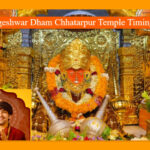
There is a small detail in the Kanaka Durga legend that most visitors never hear, and it may be the most intimate piece of mythology attached to any major temple in South India.
According to local tradition, Goddess Durga once borrowed her nose ring (mukku pudaka) from the River Krishna, which flows directly below the Indrakeeladri hill where the temple stands. She never returned it.
This is why, to this day, the nose ring of the Kanaka Durga idol is never removed — not for any ritual, not for any cleaning, not ever. The ornament stays permanently on the goddess’s face, a small daily reminder of an ancient debt between a river and a deity who have shared this hill and this water for longer than anyone can date.
It is the kind of detail that tells you something about how the people of Vijayawada relate to their goddess — not as a distant, untouchable power, but as someone close enough to borrow jewelry from a river and simply… keep it.
Official temple portal: kanakadurgamma.org
💡 Quick Answer Timings: 4:00 AM – 1:00 PM and 4:00 PM – 10:00 PM daily Darshan fees: Mukhamandapa ₹100 | Sheegra Darshanam ₹300 | Antaraalaya ₹500 | Dharma Darshanam free Online booking: kanakadurgamma.org — Sevas, Darshanam, accommodation Location: Indrakeeladri Hill, on the banks of the Krishna River, Vijayawada Navratri: 9 different forms of the Goddess across 9 days — unique among Indian temples Idol type: Swayambhu (self-manifested), 4 feet, 8 arms Last Verified: June 2026
Kanaka Durga Temple Timings 2026
| Session | Timings | Notes |
|---|---|---|
| Temple opens | 4:00 AM | Praat Aarti at 6:00 AM |
| Morning darshan | 4:00 AM – 1:00 PM | Continuous, with Aarti breaks |
| Afternoon closure | 1:00 PM – 4:00 PM | Temple closed for ritual preparation |
| Evening darshan | 4:00 PM – 10:00 PM | |
| Temple closes | 10:00 PM |
Darshan categories and fees:
| Type | Cost | What You Get |
|---|---|---|
| Dharma Darshanam | Free | Standard queue, no charge |
| Mukhamandapa Darshanam | ₹100/person | Closer viewing from the front mandapam |
| Sheegra Darshanam | ₹300/person | Fast-track queue, significantly reduced wait |
| Antaraalaya Darshanam | ₹500/person | Closest proximity darshan, inner sanctum approach |
Pro tip: For first-time visitors who want a meaningful but unhurried experience, the Sheegra Darshanam at ₹300 offers the best balance — substantially shorter wait than free darshan, while remaining far more accessible than the ₹500 Antaraalaya tier. Book online at kanakadurgamma.org before traveling, especially on weekends.
Best time for peaceful darshan: Weekday mornings between 4:00 AM and 6:00 AM — before the day’s main crowd arrives and while the hill is still cool. The Praat (morning) Aarti at 6:00 AM is a particularly atmospheric moment to witness, with the Krishna River visible below as dawn breaks over Vijayawada.
Note: Timings can change on festival days, especially during Navratri and Dussehra, when the temple may extend hours significantly. Always verify current timings at kanakadurgamma.org or by calling the temple office before traveling.
What Is Kanaka Durga Temple — The Hill, the Goddess, and Her Many Names
Indrakeeladri — Indra, Keela, and the Hill
The temple’s location — Indrakeeladri — carries a name built from three layered legends, and understanding the etymology unlocks the entire mythology of the site.
“Indrakeeladri” breaks into three parts: Indra (the king of the gods) + Keela (a Yaksha, a semi-divine being) + Adri (hill).
According to the central legend, a Yaksha named Keela performed intense penance to please Goddess Durga, and asked for a boon: that she would reside in his heart forever. The Goddess granted this wish by transforming Keela himself into the very hill on which the temple now stands — meaning the hill is not simply a location chosen by the goddess, but the literal body of a devotee who became inseparable from his own devotion.
Later, when Durga slew the buffalo demon Mahishasura — the central event of the Devi Mahatmya and the origin of the Navratri festival across all of India — she chose to make this same hill (now Keela’s transformed body) her permanent abode. Lord Indra and the other celestial deities then came to this hill to worship and thank her for ridding the world of Mahishasura. Their visits added “Indra” to the hill’s name — giving us Indra + Keela + Adri = Indrakeeladri.
Arjuna’s Penance and the Naming of Vijayawada
The same hill carries a second major Mahabharata-era legend. In the Dwapara Yuga, Arjuna performed severe penance on this hill specifically to obtain the Pashupatastra — Lord Shiva’s most powerful weapon — before the Kurukshetra war. Lord Shiva, pleased by Arjuna’s devotion and discipline, appeared and granted the weapon, addressing Arjuna as “Vijaya” (the victorious one).
This is the origin of the city’s name: Vijayawada — the place of Vijaya’s (Arjuna’s) victory.
A separate adjacent shrine on the same hill houses Malleswara Swamy — a Jyotirlinga form of Shiva, worshipped by Lord Brahma with jasmine flowers (Mallelu in Telugu), giving the deity his name. Arjuna himself is believed to have installed the Vijayeswara linga at this site to commemorate his successful penance.
Durga on the Right — A Reversal of Tradition
One of the most theologically significant details about this temple’s iconography is rarely mentioned outside specialist sources: at Indrakeeladri, Goddess Durga is positioned on the right side of Lord Malleswara (Shiva) — the opposite of the standard convention in Hindu temples, where goddesses are typically depicted to the left of their consort.
This reversal is understood locally as a deliberate statement of the Goddess’s primacy at this specific site — Kanaka Durga is not a secondary consort here. She is the presiding deity of Vijayawada, and the temple’s spatial arrangement reflects that status directly.
The Idol — Swayambhu, Eight Arms, Standing Over Mahishasura
The four-foot Kanaka Durga idol is Swayambhu — self-manifested, not carved by human craftsmen. The Goddess is depicted with eight arms, each holding a different weapon, standing in triumph over the demon Mahishasura, piercing him with her trident — the iconic Mahishasura Mardini (“destroyer of Mahishasura”) form found across Shakti worship in India, rendered here in its most historically significant South Indian expression.
The temple’s exact founding date is unknown, though inscriptions from multiple historical dynasties have been found at the site, and the Western Chalukya King Thribhuvana Malla made significant contributions to the temple’s expansion in the 10th century CE. It is also believed that Adi Shankaracharya visited the temple and personally installed a Sri Chakra here — one of the strongest forms of religious endorsement in the Hindu tradition, connecting Kanaka Durga to the broader pan-Indian Shakti tradition that Shankaracharya systematized.
2026 news: In January 2026, the President of Mauritius, Dharambeer Gokhool, visited Sri Kanaka Durga Devi Temple — receiving a traditional welcome from temple authorities, darshan, and blessings from Vedic scholars, before proceeding to the Sri Lakshmi Narasimha Swamy Temple at Mangalagiri. This reflects the temple’s standing as a site of significant national and even diplomatic visibility.
The Nine Forms of Navratri — Unique Among Indian Temples
Kanaka Durga Temple holds a distinction that may be unmatched by any other single temple in India: the Goddess is worshipped here in nine distinct forms across the nine nights of Navratri, each with its own elaborate alankaram (decoration) and ritual significance:
- Sri Saraswati Devi — Goddess of knowledge and the arts
- Sri Maha Lakshmi Devi — Goddess of wealth and prosperity
- Sri Bala Tripura Sundari — the youthful, radiant form
- Sri Rajarajeswari Devi — the supreme sovereign form
- Sri Mahishasura Mardini — the demon-slaying warrior form
- Sri Durga Devi — the fierce protector
- Sri Annapurna Devi — the goddess of nourishment and food
- Sri Gayatri Devi — embodiment of the sacred Gayatri mantra
- Sri Lalitha Tripura Sundari — the supreme beautiful form of cosmic consciousness
This sequence is theologically comprehensive — it moves the devotee through nearly every major aspect of the divine feminine recognized in Hindu tradition, from knowledge to wealth to nourishment to cosmic sovereignty to martial power. Few temples anywhere attempt this complete a presentation across a single festival.
Navratri 2026 dates: Sharad Navratri begins 9 October 2026 and concludes with Vijaya Dashami (Dussehra) on 18 October 2026. Lakhs of devotees travel to Vijayawada specifically for this period, and many take a ritual dip in the Krishna River as part of the Dussehra celebrations.
How to Book Darshan and Sevas Online
Step 1: Go to kanakadurgamma.org — the official Sri Durga Malleswara Swamy Varla Devasthanam website.
Step 2: Click “Online Booking” → select Darshanam (Sheegra or Antaraalaya), Pratyaksha Seva (in-person ritual participation), Paroksha Seva (remote/proxy ritual for those unable to attend), or accommodation.
Step 3: Choose your date and preferred time slot.
Step 4: Enter devotee details and pay online.
Step 5: Download and print your e-ticket. Present it along with ID at the designated counter on your visit day.
Paroksha Seva is a notable option for devotees who cannot travel to Vijayawada — the temple performs the requested ritual on their behalf, and the seva benefit/prasadam may be sent or made available for collection.
The Trap — What Catches Most Visitors
“Arrived at 2 PM — temple closed” → Cause: Afternoon closure 1:00 PM–4:00 PM → Fix: Plan arrival before 12:30 PM for the morning session, or after 4:00 PM for the evening session.
“Paid for Dharma Darshanam queue, very long wait” → Cause: Free darshan queue can extend several hours, especially on weekends → Fix: Book Sheegra Darshanam (₹300) online at kanakadurgamma.org for a substantially faster experience if your schedule is limited.
“Navratri — could not get accommodation in Vijayawada” → Cause: Lakhs of devotees arrive for the 9-day festival → Fix: Book accommodation and any special darshan slots at kanakadurgamma.org at least 4–6 weeks ahead of Navratri (9–18 October 2026).
“Missed the Malleswara Swamy shrine — only saw Kanaka Durga” → Cause: The adjacent Shiva shrine is easy to overlook for visitors focused solely on the Durga sanctum → Fix: After Kanaka Durga darshan, the Malleswara Swamy (Jyotirlinga) shrine is immediately adjacent on the same hill — a short walk completes the full Indrakeeladri pilgrimage.
Pro tip: Climb the hill via the traditional steps rather than the road approach at least once — the climb itself is considered part of the devotional experience, and the view of the Krishna River and Prakasam Barrage from partway up the steps is one of the best vantage points in Vijayawada.
How to Reach Kanaka Durga Temple
Temple address: Sri Durga Malleswara Swamy Varla Devasthanam, Indrakeeladri, Durga Temple Ghat Road, Mallikarjunapeta, Vijayawada, Andhra Pradesh — 520 001
By train: Vijayawada Railway Station — approximately 4 km / 10-minute drive from the temple. Vijayawada is a major railway junction with connections to Chennai, Hyderabad, Visakhapatnam, Kolkata, Delhi, and Mumbai.
By air: Vijayawada Airport (Gannavaram) — approximately 20 km (35–40 minutes).
By road: The temple is in the heart of Vijayawada city, easily reached by auto-rickshaw, taxi, or city bus. Buses depart for the temple from both the railway station and the central bus stand approximately every 20 minutes.
Combined sightseeing: Prakasam Barrage (on the Krishna River, scenic walk/drive), Gandhi Hill (with its planetarium and Gandhi memorial), and the Undavalli Caves (ancient rock-cut cave temples, 8 km away) are commonly combined with a Kanaka Durga Temple visit for a full day in Vijayawada.
Before You Visit Kanaka Durga Temple — Checklist
☑ Timings confirmed — 4:00 AM–1:00 PM and 4:00 PM–10:00 PM; closed 1–4 PM ☑ Darshan type decided — Free (Dharma) / ₹100 (Mukhamandapa) / ₹300 (Sheegra) / ₹500 (Antaraalaya) ☑ Online booking done at kanakadurgamma.org if planning Sheegra/Antaraalaya darshan ☑ Malleswara Swamy shrine visit planned — adjacent to Kanaka Durga on the same hill ☑ Navratri 2026 (9–18 October) — accommodation and special darshan booked weeks ahead ☑ Steps vs road climb decided — steps recommended at least once for the devotional experience ☑ Traditional dress — respectful modest attire ☑ Combined sightseeing planned — Prakasam Barrage, Gandhi Hill, Undavalli Caves
Frequently Asked Questions
What are Kanaka Durga Temple timings in 2026?
The temple is open from 4:00 AM to 1:00 PM (morning session) and 4:00 PM to 10:00 PM (evening session) daily. Praat Aarti is at 6:00 AM. Timings may change during festivals, especially Navratri — verify at kanakadurgamma.org before traveling.
What are the darshan ticket prices at Kanaka Durga Temple?
Dharma Darshanam (free general queue), Mukhamandapa Darshanam (₹100/person), Sheegra Darshanam (₹300/person, fast-track), and Antaraalaya Darshanam (₹500/person, closest proximity). Book online at kanakadurgamma.org or at the temple counter.
Why is the hill called Indrakeeladri?
“Indrakeeladri” combines three elements: Indra (king of the gods), Keela (a Yaksha who became the hill itself through Goddess Durga’s boon), and Adri (hill). After Durga slew the demon Mahishasura and made the hill her permanent abode, Indra and other gods visited to worship her, adding “Indra” to the name.
What is the legend of Kanaka Durga’s nose ring?
According to local tradition, Goddess Durga once borrowed her nose ring from the River Krishna, which flows below the temple hill, and never returned it. As a result, the idol’s nose ring is never removed during any ritual — a permanent feature reflecting this ancient bond between the goddess and the river.
How many forms does Kanaka Durga take during Navratri?
Nine distinct forms across the nine nights: Saraswati, Maha Lakshmi, Bala Tripura Sundari, Rajarajeswari, Mahishasura Mardini, Durga Devi, Annapurna, Gayatri, and Lalitha Tripura Sundari. This comprehensive presentation of the divine feminine is considered unique among major Indian Shakti temples.
How do I book online darshan at Kanaka Durga Temple?
Visit kanakadurgamma.org → Online Booking → select Darshanam, Pratyaksha Seva, Paroksha Seva, or accommodation → choose date and slot → enter details and pay → download e-ticket. Present the printed ticket with ID at the temple counter on your visit day.
Kanaka Durga Temple mein darshan kaise karein?
Subah 4–6 AM ya shaam 4–6 PM mein jaayein — sabse kam crowd. kanakadurgamma.org par Sheegra Darshanam (₹300) ya Antaraalaya (₹500) book kar sakte hain fast darshan ke liye. Dopahar 1–4 PM mandir band rehta hai. Kanaka Durga ke baad adjacent Malleswara Swamy shrine bhi zaroor dekhein. Navratri (9–18 October 2026) mein accommodation hafton pehle book karein.
Contact and Help
Official portal: kanakadurgamma.org Managed by: Sri Durga Malleswara Swamy Varla Devasthanam Address: Indrakeeladri, Mallikarjunapeta, Vijayawada, Andhra Pradesh — 520 001 Nearest railway station: Vijayawada Junction — 4 km
Official Links
| Purpose | Link |
|---|---|
| Online booking & seva | kanakadurgamma.org |
One Last Thing
A Yaksha asked to keep the goddess in his heart forever, and she turned him into a hill so the wish could be literally true. A warrior climbed the same hill seeking the most powerful weapon in existence, and a city took its name from his victory. A river lent its goddess a piece of jewelry, and the goddess simply never gave it back.
These are not separate stories competing for the same hilltop. They are layers — Yaksha, warrior, river, goddess — all settling into the same geography, the same stone, the same 4-foot self-manifested idol with eight arms.
People climb Indrakeeladri every day of the year, in every season, for reasons as varied as the nine forms the Goddess takes during Navratri. Some come for wealth. Some for knowledge. Some simply for protection, the way Indra came after the demon was slain, to say thank you to the one who had made the world safe again.
The nose ring is still there. It has never been removed.
Jai Kanaka Durga Mata. Jai Maa Indrakeeladri.