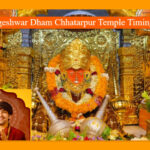
In a village called Diuri, near Tamar in Jharkhand’s Ranchi district, stands a temple built without a single grain of cement — large stones, interlocked one over another, held together by nothing but the precision of their original placement, more than 700 years ago. Local legend warns that anyone who has attempted to alter the structure has faced severe consequences, and as a direct result, the temple’s form has remained essentially unchanged since it was first built.
What makes Maa Dewri Mandir genuinely distinctive, beyond its construction and its age, is who worships there and how. This is one of the very few temples in India where tribal priests, known as Pahans, from the Munda community, perform rituals alongside Brahmin priests — by long-standing tradition, the six Pahans conduct worship six days of the week, with a Brahmin priest officiating on the remaining day. This is reportedly the only temple where tribal priests are formally permitted to worship the Goddess directly, a detail that places Maa Dewri Mandir at the genuine intersection of tribal Jharkhand spirituality and mainstream Hindu devotional practice — not as a historical curiosity, but as a living, continuing arrangement that has held for centuries.
The deity herself is equally distinctive: Solah Bhuji Devi, an avatar of Goddess Durga depicted with sixteen arms — where most Durga forms across India are shown with eight or ten.
This guide covers complete darshan timings, the live-streamed Aarti you can watch from anywhere in the world, and the layered, sometimes-conflicting legends behind one of Jharkhand’s most spiritually significant temples.
💡 Quick Answer Darshan: Free; specific pooja categories require payment at the counter Closed: 1:00 PM – 3:00 PM daily, for rest and bhog (food offering) distribution Live Darshan online: Available via the official YouTube channel, 12:00 PM – 12:30 PM Online booking: Not currently available — tickets/pooja arrangements only at the temple counter; an online facility has been promised for the future Distance: Approximately 60 km from Ranchi, on the Ranchi-Tata Highway (NH33) Unique feature: Worship jointly performed by tribal Pahan priests (six days/week) and a Brahmin priest (one day/week) Last Verified: June 2026
Maa Dewri Mandir Timings 2026
| Activity | Timing | Notes |
|---|---|---|
| Temple open for darshan | Morning through evening | Specific opening/closing hours best confirmed locally or via maadewrimandir.com |
| Afternoon closure | 1:00 PM – 3:00 PM | For rest and bhog distribution |
| Live Darshan (online) | 12:00 PM – 12:30 PM | Via official YouTube channel |
Pro tip: If you cannot travel to Tamar but want to witness the Aarti, tune into the official YouTube live darshan specifically between 12:00 PM and 12:30 PM — this gives remote devotees direct access to the ritual without needing to make the 60 km journey from Ranchi.
Crowd note: Due to the temple’s recently increased popularity, long queues can be expected before darshan, particularly during festival periods — plan extra time accordingly.
Booking — Currently Offline Only, With Online Promised for the Future
Darshan itself is free of charge. Devotees only need to pay for specific types of pooja, which are arranged directly at the temple.
No online ticket booking currently exists. The temple administration does not offer tickets online, and all pooja bookings and ticket purchases are made exclusively at the Mandir Ticket Counter on arrival.
A promised future facility: Dewri Temple Administration has specifically stated they intend to introduce online darshan booking going forward — but as of this guide’s publication, this facility is not yet live. Check maadewrimandir.com, the official trust website launched in October 2022 specifically to provide authentic, up-to-date information to devotees, for any future announcement regarding online booking.
Pro tip: Until online booking actually launches, plan your visit as a walk-in pilgrimage, with sufficient time built in for counter-based ticket purchase, particularly if visiting during a festival period when the counter itself may see longer queues.
What Is Maa Dewri Mandir — The Goddess, the Stones, and the Layered Legends
Solah Bhuji Devi — Sixteen Arms, an Unusual Form
The presiding deity, Solah Bhuji (“sixteen-armed”) Devi, is worshipped as a specific avatar of Goddess Durga. The idol holds a bow, shield, flower, and parashu (axe) among her sixteen arms — a configuration distinct from the more commonly depicted 8-armed or 10-armed Durga forms found across most of India. Some sources additionally note that Lord Shiva is consecrated alongside her within the same sanctum.
“Dewri Diri” — The Sacred Stone of Diuri Village
The temple’s name carries its own etymological history: it was earlier known as “Dewri Diri,” meaning “the sacred stone of Diuri village” in the tribal Bhumij-Munda languages — and is still referred to as Mata Dewri Diri in these local tribal languages today, preserving the temple’s origin as fundamentally a tribal sacred site that was later integrated into broader Hindu devotional practice.
Built Without Cement — And Never Successfully Altered Since
The temple’s original structure was built using an interlocking stone technique, with large stones placed one atop another without any binding material such as cement or chalk. According to consistently repeated local legend, anyone who has attempted to alter this structure has faced the wrath of the gods and suffered consequences — a belief that has, in practical terms, preserved the temple’s original architectural form across the centuries, even as renovation work has been undertaken in recent years.
Multiple, Sometimes Conflicting Origin Legends
Maa Dewri Mandir carries an unusually layered set of competing founding stories, each pointing to a different era entirely:
The Mahabharata connection: Local lore holds that the Pandava brothers themselves sought solace within these walls during their period of exile — connecting the site to the epic’s events long before any documented history of the temple exists.
The Emperor Ashoka connection: A separate strand of legend suggests that Emperor Ashoka knelt here seeking divine strength before the Kalinga War, dated to approximately 260 BCE — an extraordinarily early association if accepted.
The Nagvanshi king’s dream: The most consistently cited historical account attributes the temple’s actual establishment to a Nagvanshi king, who ruled the region in medieval times and is said to have received a divine vision of the goddess in a dream, instructing him to establish her idol at this specific location.
The 18th-century rediscovery: A further, more recent layer of legend describes a Tamar king, guided by a dream, leading villagers to uncover a hidden temple in Deori around the 18th century — unearthing a small temple and an ancient stone statue of Durga, and igniting the continuous worship that has carried forward to today.
How to understand these multiple accounts: Rather than treating any single legend as the definitive history, these layered stories are best understood as centuries of oral tradition accumulating around a genuinely ancient sacred site — the temple’s documented age of roughly 700 years sits most comfortably with the Nagvanshi-king account, while the Mahabharata and Ashoka connections likely reflect the broader regional impulse to root a sacred site’s significance in India’s deepest historical and mythological memory.
Spread Across Nearly Two Acres
The temple complex spans nearly two acres, a substantial footprint for what remains, at its core, a relatively modest stone structure — reflecting the broader devotional complex that has grown around the original sanctum over centuries.
The Sacred Thread Ritual
As at several other Jharkhand and eastern Indian temples, devotees at Maa Dewri Mandir tie yellow and red sacred threads on bamboo structures within the temple premises, symbolizing a specific wish or prayer. Once that wish is fulfilled, devotees return to the temple to untie the thread — a two-part devotional commitment (asking, then returning to give thanks) similar in structure to other Indian temples that use thread-tying as their signature wish-fulfillment ritual.
Festivals at Maa Dewri Mandir
Durga Puja (Saptami to Dashami, Dussehra) in October is the temple’s most significant annual observance, drawing elaborate rituals and a substantial surge of devotees seeking blessings during this period.
Holi (March/April) also draws significant gatherings, marked by elaborate rituals specific to this festival.
The Trap — What Catches Most Visitors
“Arrived expecting online ticket booking” → Cause: Assuming a temple with growing popularity and its own official website would offer online booking → Fix: As of this guide’s publication, no online booking exists. All tickets and pooja arrangements are made at the temple counter on arrival. Check maadewrimandir.com periodically for any future announcement, as the administration has stated this is planned.
“Visited during 1:00 PM–3:00 PM expecting darshan” → Cause: Unfamiliarity with the temple’s specific afternoon closure → Fix: Plan your visit for morning or evening hours, avoiding the 1:00 PM–3:00 PM window reserved for rest and bhog distribution.
“Assumed only Brahmin priests would be performing rituals” → Cause: Unfamiliarity with this temple’s specific, unusual joint-worship tradition → Fix: Understand before visiting that tribal Pahan priests perform rituals six days a week, with a Brahmin priest officiating on the remaining day — both traditions are integral to how worship functions here, not an either-or arrangement.
“Treated one specific origin legend as definitively true” → Cause: Multiple, genuinely different founding stories circulate for this temple, spanning from the Mahabharata era to the 18th century → Fix: Approach these layered legends as centuries of accumulated oral tradition rather than a single settled historical fact — the temple’s documented age (roughly 700 years) aligns most closely with the Nagvanshi-king account specifically.
How to Reach Maa Dewri Mandir
Address: Diuri Village, Tamar, Ranchi District, Jharkhand — 834001.
By road (from Ranchi): Approximately 60 km via the Tata-Ranchi Highway (NH33), on the right side of the road toward Tamar town. The journey takes roughly 1.5 to 2 hours depending on traffic, by self-drive, taxi, or state transport bus.
From other cities: Travelers from Jamshedpur, Kolkata, or Bokaro should first reach Ranchi, then follow the road directions above, or check for direct bus services to Tamar with a drop-off point near the temple.
Before You Visit Maa Dewri Mandir — Checklist
☑ Afternoon closure (1:00–3:00 PM) noted when planning your arrival time ☑ No online booking expected — plan for counter-based ticket purchase on arrival ☑ Live Darshan via YouTube checked (12:00–12:30 PM) if attending remotely ☑ Extra time budgeted for longer queues, given the temple’s recently increased popularity ☑ Modest, traditional dress worn — no strict dress code exists, but respectful attire is expected ☑ Sacred thread-tying ritual understood if participating — tie now, return later to untie upon fulfillment ☑ Durga Puja (October) or Holi (March/April) dates checked if visiting during these significant festival periods
Frequently Asked Questions
What are Maa Dewri Mandir darshan timings in 2026?
The temple closes daily from 1:00 PM to 3:00 PM for rest and bhog distribution. Live Darshan is available online via the official YouTube channel from 12:00 PM to 12:30 PM. Specific morning and evening opening/closing hours are best confirmed locally or via maadewrimandir.com.
Is online booking available for Maa Dewri Mandir?
Not currently. The temple administration does not offer tickets online — all pooja and darshan-related purchases are made at the Mandir Ticket Counter. The administration has stated an intention to introduce online booking in the future; check maadewrimandir.com for updates.
Why does Maa Dewri Mandir have both tribal and Brahmin priests?
This is one of the temple’s most distinctive features — by long-standing tradition, six tribal Pahan priests from the Munda community perform rituals six days a week, with a Brahmin priest officiating on the remaining day. It is reportedly the only temple where tribal priests are formally permitted to worship the Goddess directly.
Why is the deity at Maa Dewri Mandir depicted with 16 arms?
The presiding deity, Solah Bhuji Devi (“sixteen-armed goddess”), is a specific avatar of Goddess Durga unique to this temple, depicted holding a bow, shield, flower, and parashu (axe) — distinct from the more commonly seen 8-armed or 10-armed Durga forms elsewhere in India.
How old is Maa Dewri Mandir and what are its origin legends?
The temple is believed to be approximately 700 years old. Multiple layered legends exist: one connects it to the Pandavas during their Mahabharata-era exile, another to Emperor Ashoka around 260 BCE, and the most consistently cited historical account attributes its establishment to a Nagvanshi king who received a divine vision in a dream.
Why has the temple’s structure never been altered?
According to consistently repeated local legend, anyone who has attempted to alter the temple’s original interlocking-stone structure (built without cement or any binding material) has faced severe consequences as a result of divine displeasure — a belief that has helped preserve its original form across centuries.
How far is Maa Dewri Mandir from Ranchi?
Approximately 60 km, via the Tata-Ranchi Highway (NH33), taking roughly 1.5 to 2 hours by road depending on traffic conditions.
Contact and Help
Official website: maadewrimandir.com Address: Diuri Village, Tamar, Ranchi District, Jharkhand — 834001
Official Links
| Purpose | Link |
|---|---|
| Temple information & updates | maadewrimandir.com |
| Live Darshan | Official YouTube channel, 12:00–12:30 PM daily |
One Last Thing
Six days a week, a tribal priest from the Munda community stands before a sixteen-armed goddess and performs the rituals his community has performed here for longer than anyone can precisely date. On the seventh day, a Brahmin priest takes his place at the same sanctum, before the same stones, continuing a single, unbroken thread of worship that has somehow never required choosing between two traditions — only sharing the calendar between them.
The legends disagree about when this all began — a Pandava taking shelter, an emperor kneeling before a war, a king following a dream centuries later. What they agree on is more durable than any single story: stones interlocked without cement, never successfully altered since, holding a goddess that most of India would not recognize by her usual eight or ten arms, worshipped jointly by two traditions that, almost everywhere else, worship separately.
Jai Maa Dewri. Jai Solah Bhuji Devi.