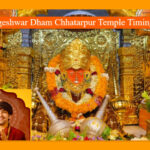
In Warangal, a story passed down through generations holds something genuinely startling about one of the world’s most famous gemstones: that the Koh-i-Noor diamond was never simply a piece of jewelry, but was originally embedded as the left eye of Goddess Bhadrakali herself, within this exact temple. According to this local tradition, the stone was not decorative but alive with protective energy — radiating an unearthly brilliance, watching over the Kakatiya dynasty and its people, guarding the land from enemies, drought, and misfortune. The legend continues that in the 14th century, when Delhi Sultanate forces invaded the region, the sacred eye was forcibly removed and taken away — and that darkness, in both a literal and devotional sense, fell over Warangal immediately afterward, with the Kakatiya kingdom collapsing not long after, the goddess herself left, in the story’s own telling, blind in one eye, her cosmic vision permanently disturbed.
A necessary note on this legend: This is a piece of local oral tradition and folklore specifically associated with the temple, not a historically documented fact about the Koh-i-Noor’s actual provenance, which is separately and differently traced through verified historical record. This guide presents the legend as exactly that — a story that matters to the temple’s devotional identity and local cultural memory — without asserting it as established history.
What is independently, historically documented is more than dramatic enough on its own: Sri Bhadrakali Temple, perched on a hilltop between Warangal and Hanamkonda in Telangana, is one of the oldest temples dedicated to Goddess Bhadrakali anywhere in India, believed to have been built in 625 CE by the Chalukya King Pulakeshin II, specifically to commemorate his victory over the Vengi region of Andhra Desham — and later adopted by the Kakatiya dynasty as their kuladevata (family/ancestral deity), a relationship of royal devotion that shaped centuries of the temple’s subsequent history.
💡 Quick Answer Darshan timings: 5:30 AM – 1:00 PM and 3:00 PM – 8:30 PM daily (some sources cite 5:00 AM start and 8:00 PM close — minor variation) Entry: Completely free; specific Pooja/Seva charges range approximately ₹50–₹500+ Online booking: Does NOT exist as of this guide’s publication — multiple sources explicitly warn against fake websites claiming to offer this Photography: Strictly prohibited inside the temple Best season: August–September (Sravana Masam) for the most spiritually significant period, or September–February for the most comfortable general visiting weather Location: Tadkamalla Village, near Lal Bahadur College, Warangal, Telangana — approximately 5 km from Warangal city Last Verified: June 2026 — confirm current timing locally
Bhadrakali Temple Warangal Timings 2026
| Session | Timing |
|---|---|
| Morning darshan | 5:30 AM – 1:00 PM (some sources cite 5:00 AM start) |
| Afternoon closure | 1:00 PM – 3:00 PM |
| Evening darshan | 3:00 PM – 8:30 PM (some sources cite 8:00 PM close) |
Pro tip: Early morning, specifically 5:30–7:30 AM, is consistently recommended across sources as the most peaceful darshan window. Late afternoon, 5:00–7:00 PM, offers the additional appeal of combining darshan with a sunset view over the adjacent Bhadrakali Lake foreshore.
Best season: Sravana Masam (the Telugu month corresponding to August–September) is specifically when the temple is most flooded with devotees, considered the most auspicious period for worshipping the Goddess, with a major festival featuring the deity decked in jewels and silks. For comfortable general sightseeing weather independent of this specific religious significance, September to February is recommended.
A Direct, Important Warning — No Online Booking Exists
This deserves clear, prominent treatment: as of this guide’s publication, Sri Bhadrakali Temple has no official website and no online booking system of any kind. Multiple independent sources explicitly and specifically state this, with at least one source noting that the temple administration is reportedly planning to launch an official website, given rapidly increasing devotee numbers — but this had not yet happened at the time of this guide’s research.
Multiple sources specifically and urgently warn devotees: numerous fake websites exist online claiming to be the official Bhadrakali Temple portal, falsely offering online Pooja or darshan booking. Do not make any payment to any such site. All Pooja and darshan bookings must currently be completed in person, at the temple’s authorized booking counter on the premises, where devotees receive an official receipt directly.
Pro tip: If you encounter any website, app, or third-party service claiming to offer “official” Bhadrakali Temple Warangal booking, treat it as fraudulent unless and until the temple itself publicly announces a genuine, verified online system.
What Sevas and Poojas Are Available
Suprabhata Seva: The early morning ritual to awaken Goddess Bhadrakali and seek her blessings for the day.
Archana: Mantra chanting and flower offerings, performed both morning and evening.
Alankarana: Decoration of the deity with flowers and ornaments.
Maha Mangala Harathi: Daily evening (and noon) aarti, considered highly auspicious.
Abhishekam: Performed with milk, honey, and turmeric — best time cited as approximately 7:00 AM.
Lalitha Sahasranama Archana: Recitation of the 1,000 names of the Goddess, typically within a 9:00–11:00 AM slot.
Kumkuma Puja: Offering of saffron-colored powder, symbolizing power.
Homam/Havan: Specific rituals for astrological/planetary alignment correction.
Pricing: Charges for specific sevas range approximately ₹50 to ₹500 or more, depending on the specific ritual — confirm current rates directly at the temple counter.
Pro tip: Arrive 10–15 minutes early if you specifically want to witness Suprabhata Seva or participate in Archana without feeling rushed.
What Is Bhadrakali Temple — History and Architecture
Built by Pulakeshin II, 625 CE
According to inscriptions on the temple wall itself, the shrine was constructed in 625 CE by Chalukya King Pulakeshin II, specifically to commemorate his military victory over the Vengi region (corresponding to parts of the present-day Krishna and Godavari districts of Andhra Pradesh).
Adopted as Kakatiya Kuladevata
The Kakatiya dynasty, which later rose to regional prominence, specifically adopted Goddess Bhadrakali as their kuladevata (ancestral/family deity) — a relationship of deep royal devotion that brought significant architectural contribution and patronage to the temple across the Kakatiya period. King Ganapati Deva of this dynasty is specifically credited with constructing the adjacent Bhadrakali Lake.
925 Years of Decline, Then a 1950 Revival
Following the fall of the Kakatiya dynasty, the temple lost its prominence and fell into neglect for nearly 925 years. Revival began on 29 July 1950, led by Sri Ganapathi Sastri (also referenced as Sri Ganesh Rao Sastri) — a devout follower of Goddess Kali who had migrated from Karnataka to Warangal in the 1940s, and who, upon encountering the temple’s remains in what was then a secluded area, decided to settle nearby and dedicate himself to its restoration. He was joined in this effort by Sri Mudumbai Ramanujacharya, Gujarati businessman Sri Maganlal Sameja (reportedly inspired by a dream in which Goddess Bhadrakali herself blessed him with the task), and several other local contributors including Vangala Guravaiah, Brahmasri Sri Hari Radhakrishnamurthy, Thandra Venkata Rama Narsaiah, Adluri Seetharama Shastry, Tankasala Narasimha Rao, and Maha Tapaswini Mangalambika.
Renovations Continuing Into the 2000s
Restoration work continued well beyond the initial 1950 revival, with the Alaya Shikaram (temple tower) and Maha Mantapam added during the 2000s, alongside the inscription of holy shlokas on the deity’s tongue and the installation of the Chandi Yantra within the temple premises.
A 2.7-Metre Monolithic Idol With Eight Arms
The presiding deity is carved from a single piece of black granite (Ekanda Shila), measuring approximately 2.7 by 2.7 metres, depicting Goddess Bhadrakali seated, with eight arms each holding a different weapon, and a crown — her eyes specifically described across sources as appearing to gaze intensely at devotees. The Goddess’s vahana, a lion, is positioned directly opposite the sanctum sanctorum, with a Dhwajasthambham (flag pillar) and Balipeetham also present within the complex.
Architecture Blending Chalukyan and Kakatiya Styles
The temple reflects a genuine architectural layering across centuries — the original Chalukyan elements (including the Ekanda Shila idol and certain pillars) combined with later Kakatiya-period contributions, the latter showing intricate carving work characteristic of that dynasty’s architectural reign, blending Chalukyan, Dravidian, and Nagara elements together.
A Shakti Peetha — and Wife of Veerabhadreshwara
The temple is additionally recognized as a Shakti Peetha dedicated to the Mother Goddess. According to one tradition, Bhadrakali is understood as the wife of Lord Veerabhadreshwara Swamy — connecting this Telangana shrine to the broader Veerabhadra-Bhadrakali devotional pairing found at other significant temples (including Muramalla in Andhra Pradesh, covered separately).
A Strictly Vegetarian Premises
Reflecting the temple’s high spiritual significance, the premises and immediate vicinity maintain a strict vegetarian policy — alcohol and meat are prohibited.
Festivals at Bhadrakali Temple
Sravana Masam (July–August): The period of highest devotee volume, during which the Goddess is decorated in jewels and silks for a major festival.
Bhadrakali Devi Jayanti: The Goddess’s birthday celebration, typically observed during Ashada Masam (July–August) or Bhadrapada Masam (August–September).
Navaratri/Dasara: Nine nights of intense devotion, special decorations, and nightly aartis.
Vasantotsavam (Vasanta Navaratri, Chaitra Masam) and Maghi Utsavalu (Magha Navaratri, Magha Masam): Additional seasonal Navaratri-style observances.
Bhadrakali Brahmotsavalu (Chaitra Masam): A significant grand annual festival.
Bonalu, Ugadi: Additional major Telangana festivals observed at the temple, drawing significant footfall.
Shakambari Devi observance: During a specific nine-day period, the Goddess is honored in her aspect as Shakambari Devi (“the bearer of greens”), decorated with vegetables in a distinctive harvest-themed devotional tradition.
The Trap — What Catches Most Visitors
“Paid an unauthorized website claiming to offer official Bhadrakali Temple booking” → Cause: No official temple website or online booking system currently exists, but fraudulent sites claim otherwise → Fix: Do not make any payment to any website for Bhadrakali Temple bookings. All Pooja and darshan arrangements must be completed in person at the temple’s authorized counter.
“Arrived during the 1:00 PM–3:00 PM closure” → Cause: Standard South Indian-style afternoon break → Fix: Plan your visit for 5:30 AM–1:00 PM or 3:00 PM–8:30 PM specifically.
“Repeated the Koh-i-Noor eye legend as verified historical fact” → Cause: The story is vividly told and widely repeated as local lore → Fix: Understand and present this specifically as devotional folklore and local oral tradition, not as established historical record of the Koh-i-Noor diamond’s actual documented provenance.
“Visited during Sravana Masam without anticipating extreme crowds” → Cause: Underestimating the scale of devotion this specific period draws → Fix: Plan for significantly heavier footfall if visiting during this period, or choose September–February instead for a calmer general visit.
How to Reach Sri Bhadrakali Temple
Temple address: Bhadrakali Temple Road, Near Lal Bahadur College, Tadkamalla Village, Warangal, Telangana — 506007.
By road: Approximately 5 km from Warangal city, on the Hyderabad–Warangal Highway (NH 163). Well connected by TGSRTC buses and auto-rickshaws.
By train: Warangal Railway Station — approximately 5 km, roughly a 20–25 minute auto-rickshaw ride. Kazipet Junction (approximately 12 km) is the major regional rail hub.
By air: Rajiv Gandhi International Airport, Hyderabad — approximately 135–160 km (sources show variation), with taxis and TSRTC buses connecting onward to Warangal.
Nearby attractions: Thousand Pillar Temple (Hanamkonda, approximately 2 km), Padmakshi Temple, Sri Pothuluri Veerabrahmendra Swamy Temple, Warangal Fort, and Sri Shirdi Sai Baba Temple — all commonly combined with a Bhadrakali Temple visit.
Before You Visit Sri Bhadrakali Temple — Checklist
☑ Darshan timings confirmed — 5:30 AM–1:00 PM and 3:00 PM–8:30 PM ☑ No online booking expected — all Pooja and darshan arrangements made in person at the temple counter ☑ Any website claiming “official” online booking treated with suspicion and avoided ☑ Photography expectations set — strictly prohibited inside the temple ☑ Sravana Masam crowd levels anticipated if visiting during this period, or September–February chosen for a calmer visit ☑ Vegetarian-only policy understood for the temple premises and immediate vicinity ☑ Thousand Pillar Temple and other nearby Warangal/Hanamkonda attractions combined into the same visit ☑ Modest, traditional dress worn
Frequently Asked Questions
What are Sri Bhadrakali Temple Warangal darshan timings in 2026?
The temple is generally open from 5:30 AM to 1:00 PM and 3:00 PM to 8:30 PM daily (some sources cite slightly different opening/closing times). There is an afternoon closure between 1:00 PM and 3:00 PM.
Is online booking available for Bhadrakali Temple Warangal?
No. As of this guide’s publication, there is no official website or online booking system. All Pooja and darshan bookings must be made in person at the temple’s authorized counter. Multiple sources specifically warn against fraudulent websites falsely claiming to offer official online booking — do not make payments to any such site.
What is the legend connecting the Koh-i-Noor diamond to Bhadrakali Temple?
Local Warangal tradition holds that the Koh-i-Noor diamond was originally the left eye of Goddess Bhadrakali’s idol at this temple, removed by invaders in the 14th century, after which the Kakatiya kingdom is said to have declined. This is devotional folklore and local oral tradition specifically associated with the temple, not an independently verified historical account of the diamond’s documented provenance.
Who built Bhadrakali Temple Warangal?
According to inscriptions on the temple wall, it was built in 625 CE by Chalukya King Pulakeshin II, to commemorate his victory over the Vengi region. The Kakatiya dynasty later adopted the temple, considering Goddess Bhadrakali their kuladevata (ancestral deity).
Is entry free at Bhadrakali Temple Warangal?
Yes, general entry is completely free. Specific Pooja and Seva offerings carry charges ranging from approximately ₹50 to ₹500 or more, payable at the temple counter.
How old is Bhadrakali Temple?
The temple dates to 625 CE, making it over 1,400 years old, though it underwent significant renovation beginning in 1950 after centuries of decline following the Kakatiya dynasty’s fall.
What is the best time of year to visit Bhadrakali Temple?
Sravana Masam (July–August) is the most spiritually significant period, with a major festival, though it draws the heaviest crowds. September to February offers the most comfortable general weather for visiting.
Contact and Help
Address: Bhadrakali Temple Road, Near Lal Bahadur College, Tadkamalla Village, Warangal, Telangana — 506007 Booking: In person only, at the temple’s authorized counter — no official website currently exists
One Last Thing
A diamond that may or may not have ever actually been this goddess’s eye, removed by invaders who may or may not have caused the exact collapse local memory blames on its theft — Warangal’s relationship to its own history here is, like so much oral tradition layered onto ancient stone, part documented fact and part something more like devotional poetry, the two no longer fully separable after fourteen centuries.
What survives independent of any single legend’s literal truth is the temple itself: built by a Chalukya king commemorating one victory, adopted by a Kakatiya dynasty as their own family’s protector, abandoned for nearly a millennium, and then deliberately, patiently rebuilt by a handful of devoted strangers in 1950 who decided a goddess left in ruins for 925 years was still worth the effort of restoration. No website exists to book your visit. No app will hold your place. You arrive, you walk to the counter, and Goddess Bhadrakali — eight arms, one piece of black granite, eyes that still, by every visitor’s account, seem to watch you closely — receives you exactly as she has received pilgrims since long before anyone thought a diamond might once have lived in her gaze.
Jai Bhadrakali. Jai Adi Shakti.