Rameshbhai Patel, a 55-year-old textile trader from Surat, had heard about Sanwariya Seth from his father and his father before him. The Patel and Marwari trading communities of Rajasthan and Gujarat have a deep relationship with this temple — they come not just as devotees but as businessmen coming to a divine business partner.
The custom is specific: many traders bring their account books, their business documents, their partnership papers — and place them at the feet of Sanwariya Seth. They believe Lord Krishna in his form as Seth (the divine merchant) blesses their business dealings, their negotiations, their harvests and losses, with the same wisdom he used to navigate the Mahabharata’s most complex transactions.
Rameshbhai had been going through a difficult year. A large consignment dispute, a partner he no longer trusted, a son who was uncertain about joining the business. He drove from Surat to Mandaphiya — 400 km — and stood before the black stone Krishna with his ledger in his hands.
He said he left the temple having made three decisions he had been unable to make for six months. He does not credit the temple. He says the clarity arrived in the silence before the idol.
He has gone back every year since.
No online booking required. Just arrive.
💡 Quick Answer Timings: 5:30 AM – 12:00 PM and 2:30 PM – 11:00 PM daily Afternoon break: 12:00 PM – 2:30 PM daily Entry fee: Free — no tickets, no VIP system No online booking: Darshan and all services counter-only on day of visit Custom: Arrive with empty hands — no outside offerings; prasad available inside Janmashtami 2026: 16 August — temple open all night Nearest major city: Udaipur — 110 km (2.5–3 hours) Last Verified: June 2026
Sanwariya Seth Temple Timings 2026
| Session | Timings | Notes |
|---|---|---|
| Morning darshan | 5:30 AM – 12:00 PM | Mangala Aarti at 5:30 AM; Shringar Aarti at 8:00 AM |
| Afternoon break | 12:00 PM – 2:30 PM | Temple closed |
| Evening darshan | 2:30 PM – 11:00 PM | Sandhya Aarti at 7:30 PM; Shayan Aarti at 10:30 PM |
The afternoon closure from 12:00 PM to 2:30 PM is the standard planning trap. Pilgrims driving from Udaipur or Chittorgarh who arrive at lunchtime find the gate shut for 2.5 hours.
Best time for comfortable darshan: Weekday mornings 6:00–8:30 AM — the Mangala Aarti has just concluded, the air is cool, and the queue is light. The evening window from 5:00 PM to 7:00 PM is also calm before the Sandhya Aarti crowd arrives.
Ekadashi (the 11th day after new and full moon) is the most auspicious day for Sanwariya Seth darshan — extended hours, much larger crowd. Arrive by 5:30 AM on Ekadashi for manageable queue. Janmashtami 2026 falls on 16 August — the temple remains open through the night with bhajans, kirtans, and grand midnight celebrations marking Krishna’s birth hour.
Who Is Sanwariya Seth — The Divine Merchant
Most Krishna temples worship the Lord as Bal Gopal (child), Radha-Krishna (beloved), or Govardhandhari (protector). Sanwariya Seth is different.
“Seth” in Hindi and Rajasthani means a merchant, a businessman, a person of means who also carries wisdom and responsibility. At Sanwariya Seth Temple, Lord Krishna is worshipped in his aspect as the ultimate divine businessman — the one who navigated the most complex negotiations in human history (the Mahabharata), who counselled the greatest strategic thinker (Arjuna), who understood commerce, strategy, loyalty, and the long game.
This is why the temple draws trading communities — Marwaris, Patels, Banias — from across Rajasthan, MP, and Gujarat in particular. They come to present their business problems to a deity who they believe understands business not as a mundane concern but as a field of dharma. Bringing your account book to Sanwariya Seth is not considered crass or materialistic. It is considered appropriate — the Lord is a Seth; you are a Seth; you meet as equals.
This theological identity — Krishna as merchant-lord — makes Sanwariya Seth among the most interesting and psychologically rich Krishna temples in India. The devotion here has a specific practical texture that is different from the aesthetic devotion of Nathdwara or the warrior devotion of other Krishna forms.
The Founding Story — A Milkman’s Dream, Three Identical Idols
In 1840, a cowherd named Bholaram Gurjar had a divine dream. In it, Lord Krishna revealed that three sacred black stone idols of himself were buried underground in Chapar village (Bagund village) in the region. He was told to excavate them.
Bholaram did. Three identical black stone Krishna idols were found at the site.
The three idols were installed at three separate temples:
- Mandaphiya temple — the main temple, the one known today as Sanwariya Seth Dham, built by Rodulalji Jain (the village head)
- Bhadsora temple — approximately 6 km away
- Chapar village — the original excavation site, where the third idol remained
All three are considered manifestations of the same divine presence. Pilgrims who know the full story sometimes visit all three. The Mandaphiya temple has grown into a massive complex; the original Chapar site retains a simpler, more ancient character.
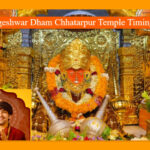
The black stone idols are striking — dark, polished, commanding. The principal deity at Mandaphiya stands adorned in elaborate dress and jewellery that changes with the season and the festival. The Shringar (decoration) changes reflect the seasons of Braj — monsoon dress, winter dress, festival shringar.
The “Empty Hands” Custom — What Most Visitors Do Not Know
At most temples, pilgrims bring offerings from outside — flowers, coconut, prasad, garlands, sweets. At Sanwariya Seth Temple, the tradition is different:
According to the local belief, devotees must visit the temple with empty hands.
This means: do not bring offerings purchased outside the temple gates. No garlands from street vendors. No coconuts from the market. No flowers from the roadside stalls.
Prasad and offerings are available inside — at the official temple counters. The logic of this custom is devotional: you come before the Lord with nothing but yourself. All the material provisions are the Lord’s own — you are the guest, he is the Seth, and the Seth provides.
For first-time visitors who have read about this custom, it feels strange. For regular Sanwariya Seth devotees, it is deeply natural — they arrive at the gate, deposit their outside world, and walk in with empty hands.
Second Most Important Vaishnav Site in Rajasthan — After Nathdwara
This temple is considered the second most important place for followers of the Vaishnav sect after Shri Nathdwara.
Nathdwara — 85 km away — is the home of Shrinathji, the most important Pushti Marg pilgrimage site in Rajasthan. Sanwariya Seth, while from a different Krishna tradition, carries comparable spiritual weight for the broader Vaishnav community of western India.
The geographical proximity of the two temples creates a natural pilgrimage combination. Many Gujarati and Rajasthani families combine Nathdwara darshan (Shrinathji) with Sanwariya Seth darshan in a single trip. The 85 km road between them passes through the Aravalli landscape — entirely doable in a half day.
For pilgrims based in Udaipur (110 km from Sanwariya Seth), both temples can be covered in a single day trip: Sanwariya Seth in the morning, Nathdwara in the afternoon, return to Udaipur by evening.
How to Plan Your Visit — Step by Step
Step 1: Arrive before 8:00 AM for the best morning darshan experience. The Mandaphiya village is on National Highway 27 (Chittorgarh-Udaipur Highway) — clear signage directs to the temple.
Step 2: Park at the temple parking area — free for two-wheelers; charges for four-wheelers.
Step 3: Enter the temple complex with empty hands — do not bring outside offerings. Leave your shoes at the designated stand at the gate.
Step 4: Join the general darshan queue — free, no prior booking. On non-festival weekdays, the queue moves in 20 to 40 minutes.
Step 5: After darshan, purchase prasad from the official temple counter if you wish to carry blessings home. All prasad counter proceeds go to the Shri Sanwariya Seth Mandir Trust’s charitable activities.
Step 6: The complex has smaller shrines, a peaceful courtyard, and space for quiet sitting — use this time after the main darshan.
No online booking exists for darshan, special aartis, or donations at the main counter. All darshan is on a walk-in, first-come-first-served basis. For large donations or bulk prasad seva, contact the official Shri Sanwariya Seth Mandir Trust directly.
Festivals at Sanwariya Seth — When to Come and What to Expect
Janmashtami 2026 — 16 August: Celebrations begin at midnight, marking Krishna’s birth. The temple remains open throughout the night. Elaborate decorations and special prasad make this the biggest festival. The crowd on Janmashtami night at Sanwariya Seth is extraordinary — tens of thousands of devotees from across Rajasthan and Gujarat arrive specifically for the midnight birth celebration.
Ekadashi (monthly): The 11th day after new moon and full moon is the most sacred day for Vaishnav worship. At Sanwariya Seth, Ekadashi draws the largest regular crowds — extended darshan hours, more elaborate rituals. Arrive by 5:30 AM.
Kartik Purnima 2026 — 5 November: One of the most significant dates in the Vaishnav calendar. Thousands of diyas lit, special rituals, very heavy crowd.
Holi (March): Lord Krishna is the presiding deity of Holi. At Sanwariya Seth, Holi is celebrated with color and devotion simultaneously — a unique experience.
Common Problems and How to Fix Them
“Arrived at 1:00 PM — temple closed” → Cause: Afternoon break 12:00 PM–2:30 PM → Fix: Return at 2:30 PM. Use the break to eat at the dhabas near the temple, rest, or take a short drive toward Chittorgarh Fort (40 km).
“Brought garlands from outside — told to put them away” → Cause: Tradition holds that devotees visit with empty hands; outside offerings not accepted → Fix: Leave your outside purchases at the vehicle. Prasad is available at the temple counter inside. For future visits: arrive with nothing and buy what you need inside.
“No online booking found — multiple sites showed booking pages” → Cause: Many third-party sites create fake booking pages for popular temples → Fix: There is no official online booking for Sanwariya Seth darshan. Currently, there is no official online booking system for darshan or special aartis. All poojas and donations are walk-in or handled via temple counters. Do not pay any site claiming to offer advance booking.
“Janmashtami night — too crowded” → Cause: One of the largest festival crowds in the region → Fix: Arrive by 10:00 PM for the midnight celebration. Come from Udaipur or Chittorgarh by 9:30 PM at the latest. Expect a crowd that rivals the biggest festivals in Rajasthan.
Before You Leave for Sanwariya Seth — Checklist
☑ Arrival planned — before 8:00 AM (morning) or 3:00–5:00 PM (afternoon); avoid 12:00–2:30 PM ☑ Empty hands tradition — no outside offerings; prasad available inside ☑ No online booking — all services walk-in and counter-only ☑ Janmashtami 2026 date noted — 16 August; temple open all night; arrive by 10 PM ☑ Ekadashi day? — arrive by 5:30 AM for manageable queue ☑ Shoes removed at entrance stand ☑ Cash for prasad counter inside ☑ Nathdwara combo planned? — 85 km away; manageable same-day addition
Frequently Asked Questions
What are Sanwariya Seth temple timings in 2026?
Morning darshan: 5:30 AM to 12:00 PM. The temple closes from 12:00 PM to 2:30 PM. Evening darshan: 2:30 PM to 11:00 PM. Aartis: Mangala at 5:30 AM, Shringar at 8:00 AM, Sandhya at 7:30 PM, Shayan at 10:30 PM. On Janmashtami (16 August 2026) and major festivals, the temple remains open through the night.
Why is Lord Krishna called “Seth” at this temple?
“Seth” means merchant or businessman. At Sanwariya Seth Temple, Lord Krishna is worshipped in his aspect as the divine merchant — the supreme strategist of the Mahabharata, the counsellor of Arjuna, the one who understands commerce, loyalty, and dharma in business. Trading communities — Marwaris, Patels, Banias — come specifically to present their business concerns to this form of Krishna, often bringing account books and business documents to place at his feet.
Is there online booking for Sanwariya Seth temple?
No. There is no official online booking system for darshan, special aartis, or donations at Sanwariya Seth Temple. All darshan is walk-in, first-come-first-served. Any website claiming to offer advance booking is unofficial.
What is the “empty hands” custom at Sanwariya Seth?
Local tradition holds that devotees should arrive with empty hands — without bringing outside offerings such as garlands, coconuts, or flowers purchased from vendors outside the temple. Prasad and offerings are available at the official temple counter inside. The custom reflects the belief that you come before the Lord with nothing but yourself.
How far is Sanwariya Seth temple from Udaipur and Nathdwara?
Udaipur is approximately 110 km from Sanwariya Seth temple (2.5 to 3 hours by road). Nathdwara is approximately 85 km away (2 hours). Many pilgrims combine both temples in a single day trip from Udaipur — Sanwariya Seth in the morning, Nathdwara in the afternoon.
What is the history of Sanwariya Seth temple?
In 1840, a cowherd named Bholaram Gurjar dreamed that three sacred black stone Krishna idols were buried underground in Chapar village. He excavated them and found three identical idols. These were installed at three temples — Mandaphiya (the main temple), Bhadsora, and the original excavation site in Chapar village. The Mandaphiya temple grew into what is now Sanwariya Seth Dham — the second most important Vaishnav pilgrimage site in Rajasthan after Nathdwara.
Sanwariya Seth temple kaise pahunchein?
Mandaphiya village, Chittorgarh district — NH-27 (Chittorgarh-Udaipur Highway) par clearly signed. Udaipur se 110 km (3 ghante), Nathdwara se 85 km (2 ghante), Chittorgarh railway station se 40 km. Darshan ke liye koi online booking nahi — seedha pahunchein aur queue mein lagein. Khali haath aayein — bahar se koi prasad mat laayein; andar counter par milta hai. Dopahar 12–2:30 PM mandir band rehta hai.
Contact and Help
Trust contact: Shri Sanwariya Seth Mandir Trust, Mandaphiya, Chittorgarh District, Rajasthan Address: Shri Sanwariya Seth Mandir, Mandaphiya Village, Chittorgarh District, Rajasthan — 312 001 Highway: NH-27, Chittorgarh-Udaipur Highway
One Last Thing
Lord Krishna is worshipped in hundreds of forms across India. At Vrindavan he is the child who steals butter. At Dwarka he is the king. At Kurukshetra he is the charioteer. At Puri he is Jagannath, the Lord of the Universe.
At Mandaphiya, he is the Seth. The businessman who understands that every transaction — commercial, personal, karmic — has a dharmic dimension. The one you can bring your account book to.
The merchants of Rajasthan and Gujarat have known this for nearly two centuries. They come with their ledgers and their disputes and their uncertainties and their gratitude. They leave having stood before a black stone idol in a temple that exists because a milkman had a dream.
Rameshbhai went back the following year with his son. The consignment dispute had resolved. The partner had come through. The son had joined the business.
He brought the partnership papers this time. He placed them at the Seth’s feet.
He said the Seth already knew.
Jai Sanwariya Seth Ji. Jai Shri Krishna.