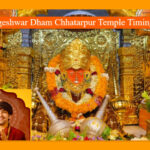
Meera Agarwal, a 43-year-old from Jaipur, had been to Nathdwara twice before, both times with family. This time she went alone, specifically for the Mangala Jhanki — the first darshan of the day when Shrinathji “wakes up.” She had read it was at 5:30 AM.
She arrived at the temple at 7:00 AM, walked to the main entrance, and told the sevak she was there for Mangala.
He looked at her gently. “Mangala 6:30 AM pe band ho gayi. Shringar ka intezaar karein — 7:15 AM mein khulegi.”
She had arrived an hour and a half after the window closed. Mangala Darshan runs from 5:30 AM to 6:30 AM. After it ends, the doors close. You cannot request an exception, you cannot pay to enter late. The Jhanki system at Shrinathji Temple is based on the Lord’s daily routine — and that routine does not adjust for tardy visitors.
She attended Shringar at 7:15 AM instead. She said it was extraordinarily beautiful.
But the next time she went, she left Jaipur at 3:00 AM.
Official booking: nathdwaratemple.org
💡 Quick Answer 8 Jhankis daily: Morning (4 Jhankis) + Evening (4 Jhankis) First Jhanki: Mangala — 5:30 AM–6:30 AM (Lord waking up) Most sacred Jhanki: Rajbhog — 11:15 AM–12:15 PM (grand midday meal offering) VIP darshan: ₹300–₹500 per person — shorter queue Book online: nathdwaratemple.org Mobile phones: Strictly prohibited inside the haveli Miss your Jhanki? Wait for the next one — no re-entry to a closed window Last Verified: June 2026
The 8 Jhanki Schedule — Lord Shrinathji’s Complete Daily Routine
The word “Jhanki” means a glimpse or a peek. At Shrinathji Temple, it refers to the specific moments when the doors of the inner sanctum open to reveal the Lord in a particular aspect of his daily human-divine routine. This is not a queue for continuous darshan — the doors open for a window and then close. You see the Lord in that window, and then he withdraws.
| Jhanki | Time | What It Shows |
|---|---|---|
| Mangala | 5:30–6:30 AM | Shrinathji waking — Lord in morning simplicity |
| Shringar | 7:15–8:00 AM | Morning decoration — jewels, flowers, royal attire |
| Gwal | 9:15–10:00 AM | Preparing to go to the cowherds — pastoral setting |
| Rajbhog | 11:15 AM–12:15 PM | Grand midday meal — most elaborate, most significant |
| (afternoon closure) | 12:15–4:00 PM | Haveli closed |
| Uthapan | 4:00–5:00 PM | Lord waking from afternoon rest |
| Bhog | 5:00–5:30 PM | Evening refreshment offering |
| Sandhya | 6:15–7:00 PM | Sunset darshan — twilight attire |
| Shayan | 9:00–10:00 PM | Lord retiring for the night |
The rule that catches most visitors: If you arrive after a Jhanki window has closed, you wait for the next one. There is no exception, no paid entry to a closed window, no request that works. The Lord’s routine does not accommodate tardiness. Arriving 30 to 45 minutes before your desired Jhanki is standard practice.
Rajbhog (11:15 AM–12:15 PM) is considered the most spiritually significant Jhanki of the day. This is when the grand midday meal is offered to Shrinathji — an elaborate ceremonial feeding with multiple dishes. The decoration and attire of the Lord during Rajbhog is more elaborate than any other window. If you can only attend one Jhanki, this is the one.
What Is Shrinathji — And Why This Temple Exists at Nathdwara
Shrinathji is a form of Lord Krishna as the seven-year-old divine child of Govardhan — one hand raised upward to lift the Govardhan hill to shelter the Braj villages from Indra’s storm. The idol (svarupa) is 7 feet tall, carved in black stone, the left arm raised, the expression simultaneously childlike and cosmic.
The story of how this idol came to Nathdwara is one of the most extraordinary in Indian pilgrimage history.
In 1672, the iconoclast Mughal emperor Aurangzeb had issued orders for the destruction of Hindu temples and idols across his empire. The priests of the Govardhan temple near Mathura — knowing the Shrinathji svarupa was at direct risk — made a decision that would take courage and faith in equal measure. They placed the idol on a bullock cart and began moving it south toward the protected Mewar kingdom, ruled by the Hindu Maharana Raj Singh.
The procession traveled for months. When it reached the village of Sihad (present-day Nathdwara), approximately 48 km from Udaipur, the wheels of the cart sank axle-deep in the mud and could not be moved further. No amount of effort from the accompanying priests and bullocks could dislodge them.
The priests recognized this as the divine will of the Lord himself. Shrinathji had chosen his resting place. The Maharana of Mewar accepted the divine signal and had the temple — or “Haveli” — built at exactly this spot. The idol has not moved since.
Why “Haveli” and not “Mandir”? In the Pushti Marg tradition, Shrinathji’s abode is called a Haveli (mansion) rather than a Mandir (temple). This is a deliberate theological statement: Shrinathji is not a deity installed in a temple to be worshipped at a distance. He is the Lord of the house — living here, receiving visitors, being dressed, fed, and put to sleep. The devotee who comes for darshan is not a pilgrim at a shrine — they are a guest in the Lord’s home.
This distinction changes how you experience the visit.
The Pushti Marg Tradition — Why Shrinathji Is Different
Shrinathji Temple belongs to the Pushti Marg — the “path of grace” — a devotional tradition founded by the philosopher-saint Vallabhacharya in the 15th-16th century. In Pushti Marg, the relationship between devotee and deity is not one of formal worship but of loving intimacy — the devotee is a family member of the Lord’s household.
This is why the eight Jhankis follow the Lord’s daily life: waking, dressing, eating, going out, resting, coming home, and sleeping. The devotee’s role is to participate in this life as a loving observer — to see the Lord in each aspect of his day, to offer food and flowers and songs at the appropriate moments, and to feel the joy of being in the presence of the divine child.
The Pichwai paintings — elaborate cloth hangings that form the backdrop behind Shrinathji during different seasons and festivals — are one of the most distinctive art forms in India, created specifically for this temple tradition. The paintings change with the season and the festival: monsoon paintings show black clouds and peacocks, winter paintings show warm fires and cowherd games, Diwali paintings show lamps and celebrations. Each Pichwai is a visual meditation on the Lord’s seasonal activities. The bazaar around the Nathdwara temple is one of the best places in India to find authentic Pichwai paintings.
How to Book Shrinathji Darshan — Step by Step
Step 1: Go to nathdwaratemple.org and create an account with your mobile number and email.
Step 2: Select your visit date and preferred Jhanki. The Rajbhog slot fills first — book early if this is your priority.
Step 3: Choose general darshan (free) or VIP darshan (₹300–₹500 per person, shorter dedicated queue).
Step 4: Enter devotee details — name, government ID number. Carry the same ID physically on the day.
Step 5: Pay online. Download your booking confirmation — print or digital both accepted.
Step 6: Arrive at the temple 30 to 45 minutes before your Jhanki window. The queue builds fast for Rajbhog and Mangala.
Mobile phone rule: Phones are strictly prohibited inside the haveli. Leave your phone in your vehicle or at the storage facility near the entrance — no exceptions.
The Pichwai Paintings — What to Look For
The backdrop behind Shrinathji changes throughout the year, based on the Hindu festival calendar. Each change is an event in itself — the new Pichwai is revealed to devotees during a specific Jhanki as part of the seasonal seva.
The paintings are typically very large — 6 to 10 feet tall — and created by hereditary artists in Nathdwara. The motifs are always related to Shrinathji’s life in Braj: cows, cowherd boys, the Yamuna river, Govardhan hill, Radha and the gopis. The dominant colors in Nathdwara Pichwai are deep blue-black (Krishna’s complexion), gold, and rich jewel tones.
If you have any interest in Indian textile and painting traditions, the Nathdwara bazaar immediately surrounding the temple is worth two to three hours of exploration even separately from the darshan. Original Pichwais range from ₹2,000 (small, printed) to several lakhs (large, hand-painted, heirloom quality). Antique Pichwais are among the most sought-after items in Indian art collecting.
The Trap Most Nathdwara Visitors Fall Into
The Jhanki system creates a specific pattern of frustration that no guide adequately warns about:
A pilgrim arrives at Nathdwara from Udaipur or Jaipur with a vague sense that the temple “opens in the morning.” They find the Mangala already over, join the Shringar queue, complete darshan. They then find out Rajbhog is the most significant window but it is still an hour away. They wait. By 12:15 PM, Rajbhog is done and the haveli closes until 4:00 PM.
They are exhausted, they have waited several hours, and they now have 3.5 hours of closure ahead. They may have to be back on the road by 3:00 PM. They miss Uthapan and the evening Jhankis entirely.
The solution is a two-day plan for Nathdwara if coming from a distance:
Day 1: Arrive in the afternoon. Check in to a guesthouse in Nathdwara town. Attend Sandhya Jhanki (6:15 PM) and Shayan (9:00 PM) in the evening.
Day 2: Wake for Mangala (5:30 AM). Attend Shringar (7:15 AM). Rest. Attend Rajbhog (11:15 AM). Done — the three most significant Jhankis complete, without rushing.
Common Problems and How to Fix Them
“Missed Mangala — arrived at 7 AM” → Cause: Mangala closes at 6:30 AM; most pilgrims do not know this → Fix: Attend Shringar at 7:15 AM — it is the morning decoration darshan, equally beautiful. Next visit: leave origin city by 3:00 AM for Mangala.
“Phone confiscated at entrance” → Cause: Strict no-phone policy inside the haveli → Fix: Leave your phone at the storage facility near the entrance or in your vehicle. No exceptions.
“Rajbhog darshan slot sold out online” → Cause: Most popular Jhanki; VIP slots fill quickly for weekends and festivals → Fix: General darshan is always available (free). VIP gives priority queue — if sold out, join general queue and arrive 45 minutes before Rajbhog starts.
“Dress code rejected at entrance” → Cause: Western casual clothing — jeans, shorts, sleeveless — not permitted in the haveli → Fix: Traditional Indian attire only — dhoti-kurta for men, saree or salwar kameez for women. Rental available near entrance if needed.
“Afternoon — haveli closed” → Cause: Closure from 12:15 PM to 4:00 PM → Fix: Use this time to visit the Nathdwara Pichwai painting bazaar, the old town, or rest at your guesthouse. Return for Uthapan at 4:00 PM.
Before You Leave for Nathdwara — Use This Checklist
☑ Jhanki planned — Rajbhog (11:15 AM) is the most significant; Mangala (5:30 AM) the most devotional; Shringar (7:15 AM) the most beautiful decoration ☑ Darshan booked at nathdwaratemple.org — 30 days in advance; Rajbhog fills first ☑ Arrive 30–45 minutes before your Jhanki window ☑ Mobile phone left in car or storage — strictly prohibited inside ☑ Traditional dress confirmed — dhoti-kurta (men); saree or salwar (women) ☑ Two-day plan if coming from far — Mangala + Shringar (Day 2 morning) + Rajbhog (Day 2 midday) ☑ Pichwai bazaar visit planned — afternoon closure is ideal time ☑ Government ID carried — must match booking details
Frequently Asked Questions
What are Shrinathji Nathdwara temple timings in 2026?
Shrinathji Temple follows an 8-Jhanki daily schedule: Mangala (5:30–6:30 AM), Shringar (7:15–8:00 AM), Gwal (9:15–10:00 AM), Rajbhog (11:15 AM–12:15 PM), afternoon closure (12:15–4:00 PM), Uthapan (4:00–5:00 PM), Bhog (5:00–5:30 PM), Sandhya (6:15–7:00 PM), Shayan (9:00–10:00 PM). Verify current timings at nathdwaratemple.org.
What is a Jhanki at Shrinathji Temple?
A Jhanki (meaning “glimpse”) is a specific time window when the doors of the inner sanctum open and devotees can see Shrinathji in a particular aspect of his daily divine routine — waking, dressing, eating, going out, or sleeping. There are 8 Jhankis daily. If you arrive after a Jhanki has closed, you wait for the next one — there is no re-entry to a missed window.
Which is the most significant Jhanki at Shrinathji?
The Rajbhog Jhanki (11:15 AM–12:15 PM) is considered the most spiritually significant darshan of the day. This is the grand midday meal offering to Shrinathji — the most elaborate decoration and ceremonial presentation of the day. Book this slot in advance through nathdwaratemple.org, as it fills fastest.
Why is Shrinathji Temple called a Haveli?
In the Pushti Marg tradition, Shrinathji’s abode is called a Haveli (mansion) rather than a Mandir (temple), because the Lord is treated as a living presence — not a deity installed for worship but the Lord of the household receiving family members. The 8-Jhanki routine follows his daily life from waking to sleeping, and devotees are guests in his home.
How did Shrinathji come to Nathdwara?
In 1672, to protect the idol from Mughal Emperor Aurangzeb’s iconoclasm, priests transported the Shrinathji svarupa from Govardhan (Mathura) southward. When the bullock cart reached the village of Sihad (now Nathdwara), the wheels sank axle-deep and would not move. The priests recognized this as divine will — the Lord choosing his resting place — and the temple was established at exactly that spot under the protection of Maharana Raj Singh of Mewar.
Are mobile phones allowed at Shrinathji Temple?
No. Mobile phones are strictly prohibited inside the haveli. Leave your phone in your vehicle or at the storage facility near the temple entrance.
Shrinathji ke darshan kaise karein?
nathdwaratemple.org par apna preferred Jhanki book karein — Rajbhog (11:15 AM) VIP slot pehle bharta hai. Apne Jhanki se 30–45 minute pehle pahunchein. Mobile phone gaadi mein ya entrance ke storage mein chhod dein. Traditional dress mein jaayein — dhoti-kurta ya saree mandatory. Agar door se aa rahe hain toh 2-din ka plan banayein — Mangala subah aur Rajbhog dopahar.
Contact and Help
Official portal: nathdwaratemple.org Address: Shrinathji Temple, Nathdwara, Rajsamand District, Rajasthan — 313 301 Distance from Udaipur: 48 km (approximately 1 hour) Distance from Jaipur: 320 km (approximately 5 hours)
Official Links
| Purpose | Link |
|---|---|
| Jhanki booking & darshan | nathdwaratemple.org |
One Last Thing
The Shrinathji svarupa has been in Nathdwara for over 350 years. The cart that carried it from Mathura broke its wheels in the mud of this particular village, and the Lord stayed. The Maharana built walls around him. The Dikshitars of Pushti Marg continued the seva. The eight Jhankis continued, one opening and closing after another, day after day, decade after decade, century after century.
When you stand before the Rajbhog Jhanki and see Shrinathji in his most elaborate noon adornment — the flowers, the jewels, the food arranged before him — you are seeing a moment that the priests have prepared and offered every single day for 350 years without interruption.
Meera went back. She left Jaipur at 3:00 AM. She reached Nathdwara at 5:00 AM, joined the Mangala queue in the dark with other early devotees, and was inside when the doors opened at 5:30 AM.
She said the Lord in Mangala looks like someone waking slowly. The decoration is simple. The expression is quiet.
She said she had never understood, until that moment, why people wake before dawn to see a god.
Book your Jhanki at nathdwaratemple.org.
Jai Shrinathji. Jai Govardhandhari.