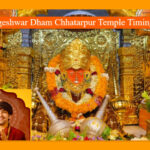
Walk into almost any major Shiva temple across South India and you will likely encounter Dakshinamurthy — Shiva in his form as the supreme cosmic teacher, traditionally depicted seated beneath a banyan tree, facing south, instructing silent disciples in the deepest wisdom of yoga, music, and the scriptures. But you will almost never find him as the main, presiding deity of an entire temple in his own right. At nearly every shrine where he appears, Dakshinamurthy occupies a niche on the southern outer wall — present, significant, but secondary to whichever god occupies the central sanctum.
Govindavadi, a small village near Kancheepuram in Tamil Nadu, is the documented exception. Here, Dakshinamurthy is the principal deity, with other gods positioned around him rather than the reverse — making this, by most available accounts, the only standalone temple in India dedicated exclusively to this specific form of Shiva. There is, fittingly for a temple centered on a teacher rather than a warrior or a destroyer, no gopuram (tower) marking the entrance — an architectural absence some devotees read as its own kind of statement about the quiet, unornamented nature of true wisdom.
The temple’s founding legend connects this unusual devotional arrangement directly to Lord Vishnu himself. According to tradition, during a great war between the Devas and Asuras, Vishnu’s Sudarshana Chakra mistakenly fell upon the sage Dadheechi and lost its divine power. To recover it, Vishnu, accompanied by his consorts, took a sacred ritual bath and performed penance specifically to Lord Shiva. Shiva appeared before Vishnu not as a fellow deity but as a Guru — teaching him sacred mantras and instructing him to worship a Linga at nearby Thirumalpur with a thousand flowers. Vishnu did exactly as instructed, and his Chakra’s full power was restored. Because Shiva had appeared specifically in his teacher form to grant this restoration, the deity at this site came to be worshipped as Dakshinamurthy — and Govindavadi, the place where Vishnu’s gratitude unfolded, became this singular shrine’s permanent home.
💡 Quick Answer Standard darshan timings: Confirm current hours locally or via the temple’s HR&CE listing — most South Indian temple patterns apply (morning and evening sessions with a midday break) Thursday special hours: Temple opens 5:00 AM – 8:00 PM continuously — the most auspicious day, given Dakshinamurthy’s specific association with Guru (Jupiter) Entry: Free general darshan; Special Entrance ₹10, Sheegra (Quick) Darshan ₹50 Online booking: Available via the Tamil Nadu HR&CE Department portal (hrce.tn.gov.in) Unique status: The only standalone temple in India dedicated exclusively to Lord Dakshinamurthy Location: Govindavadi village, Kancheepuram district, Tamil Nadu — 631502 Last Verified: June 2026
Govindavadi Temple Timings 2026
| Day | Timing |
|---|---|
| Regular days | Morning and evening darshan sessions, with a midday break (confirm exact hours locally) |
| Thursday | 5:00 AM – 8:00 PM, continuous, no midday closure |
Why Thursday specifically: Thursday (Guruvasaram) is dedicated to Guru (Jupiter) in Vedic astrology, and given Dakshinamurthy’s specific identity as the cosmic Guru, this day carries amplified devotional significance at this particular temple — drawing the highest weekly footfall of any day, by a clear margin.
Pro tip: If your primary purpose is seeking relief from Guru-related astrological afflictions (Guru Dosha), plan your visit specifically for a Thursday, and arrive early even within the extended hours, given how significantly crowd volume increases on this single day compared to the rest of the week.
How to Book Pooja and Darshan Online via Tamil Nadu HR&CE
Step 1: Visit the official portal: hrce.tn.gov.in.
Step 2: Click on “Temple Booking Services” on the homepage.
Step 3: Select “Temple Service” on the next page.
Step 4: Browse the list of available services and click on your desired option (darshan, specific pooja, etc.).
Step 5: Select your preferred date and time slot, then click “Book.”
Step 6: A detailed form will appear — enter devotee details including name, contact number, address, number of persons, and gender.
Step 7: Complete payment to confirm your booking.
Special entry tickets: Special Entrance (₹10) and Sheegra (Quick) Darshan (₹50) are both available for devotees wishing to avoid the standard queue — confirm current pricing, as Tamil Nadu HR&CE rates are subject to periodic revision.
Archanai and Abhishekam: Archanai can generally be performed at any point during darshan hours without specific advance scheduling. Abhishekam is typically scheduled for early morning specifically and requires prior booking.
Guru Preethi Pooja — The Temple’s Signature Astrological Remedy
Beyond standard darshan, Govindavadi is specifically known for the Guru Preethi Pooja, performed to reduce the malefic or challenging effects associated with an afflicted Guru (Jupiter) placement in a devotee’s astrological chart. Given the temple’s singular identity as Dakshinamurthy’s only standalone shrine — and Dakshinamurthy’s direct theological connection to wisdom, teaching, and guidance, the same domains traditionally governed by Jupiter — this specific pooja’s strong reputation follows logically from the temple’s broader devotional character.
Who specifically seeks this temple out: Devotees come seeking wisdom, mental clarity, spiritual growth, and guidance, alongside those specifically addressing Guru-related planetary doshas — a combination of intellectual/spiritual aspiration and astrological remedy-seeking that distinguishes Govindavadi’s visitor base from temples focused purely on one or the other.
What Is Dakshinamurthy — Understanding the Deity’s Unique Identity
“Facing South” — The Literal Meaning
Dakshinamurthy translates literally as “one who is facing south (Dakshina)” in Sanskrit — a name describing the deity’s traditional iconographic orientation rather than any specific narrative attribute. At most temples where Dakshinamurthy appears as a subsidiary deity, he is positioned specifically on the temple’s southern exterior wall, without a tower or shrine structure of his own, seated in the teaching posture beneath a symbolic banyan tree.
The Full Temple Name
The temple’s complete official name is Arulmigu Kailasanathar & Dhakshanamoorthi Temple (alternatively transliterated as Arulmigu Sri Guru Bhagavan Dhakshinamoorthy Temple), reflecting both the Dakshinamurthy identity central to its fame and a connection to Kailasanathar (Shiva as lord of Kailash) within the broader temple complex.
Other Deities Within the Complex
While Dakshinamurthy holds the unusual distinction of being the central, presiding deity here, other deities are positioned surrounding him within the temple, reflecting the standard South Indian temple practice of housing multiple devotional focal points within a single complex, even as one specific deity claims the unusual primary status this particular temple is built around.
Managed by Tamil Nadu HR&CE
The temple is administered by the Hindu Religious and Charitable Endowments (HR&CE) Department, Government of Tamil Nadu, placing it within the standard government-administered framework governing most of Tamil Nadu’s major temples.
Festivals at Govindavadi Temple
Maha Shivaratri is specifically cited as the temple’s most significant annual festival, drawing considerably larger crowds than even a typical Thursday.
Weekly Thursday observance functions, in practice, as the temple’s recurring “special day,” with Guru-focused pooja performed specifically for Guru Bhagavan throughout this heavily attended day.
The Trap — What Catches Most Visitors
“Expected a typical South Indian temple with a tall gopuram entrance” → Cause: Assuming all major Tamil Nadu temples feature an imposing tower structure → Fix: Govindavadi specifically has no gopuram — a deliberate architectural distinction connected to Dakshinamurthy’s quiet, teaching-focused identity rather than a warrior or cosmic-ruler form of divinity.
“Visited on a Thursday without anticipating significantly heavier crowds” → Cause: Underestimating how strongly this single day concentrates the temple’s weekly devotional activity → Fix: If avoiding crowds matters more than the specific Guru-day significance, choose a different weekday; if attending specifically for Guru-related prayers, arrive early even within the extended Thursday hours.
“Assumed Abhishekam could be arranged without advance booking” → Cause: Confusing Archanai’s flexible, walk-in timing with Abhishekam’s more structured requirements → Fix: Abhishekam is scheduled specifically for early morning and requires prior booking — plan accordingly if this particular ritual matters to your visit.
“Confused this temple with a standard Shiva temple expecting a Dakshinamurthy side-shrine” → Cause: Unfamiliarity with Govindavadi’s unique status as the only standalone Dakshinamurthy temple → Fix: Understand before visiting that Dakshinamurthy is the central, presiding deity here — not a subsidiary southern-wall figure as found at virtually every other Shiva temple in India.
How to Reach Govindavadi Temple
Temple address: Arulmigu Kailasanathar & Dhakshanamoorthi Temple, Govindavadi, Kancheepuram District, Tamil Nadu — 631502.
By road: Located near Kancheepuram, accessible by local bus, taxi, or auto-rickshaw from the broader Kancheepuram/Chennai region.
By train: Kancheepuram Railway Station is the nearest major rail connection, with onward local transport to Govindavadi village.
By air: Chennai International Airport is the nearest major air gateway, with road travel required to reach Kancheepuram and then Govindavadi.
Before You Visit Govindavadi Temple — Checklist
☑ Standard darshan timings confirmed locally or via the temple’s HR&CE listing ☑ Thursday’s extended 5:00 AM–8:00 PM continuous hours noted if planning a Guru-focused visit ☑ Online booking completed at hrce.tn.gov.in for darshan or specific poojas if planning in advance ☑ Special Entrance (₹10) or Sheegra Darshan (₹50) considered for faster access ☑ Abhishekam booked in advance specifically, given its early-morning, prior-booking requirement ☑ Decent, modest attire worn — no strict dress code, but respectful clothing expected ☑ Maha Shivaratri dates checked if planning around the temple’s most significant annual festival ☑ Guru Preethi Pooja considered specifically if seeking relief from Jupiter-related astrological afflictions
Frequently Asked Questions
What are Govindavadi Temple darshan timings in 2026?
Standard days follow a typical South Indian temple pattern with morning and evening sessions and a midday break — confirm exact current hours locally or via the temple’s HR&CE listing. Thursdays are a specific exception, with the temple open continuously from 5:00 AM to 8:00 PM given the day’s auspicious connection to Guru (Jupiter).
Why is Govindavadi Temple unique among Shiva temples?
It is widely documented as the only standalone temple in India dedicated exclusively to Lord Dakshinamurthy as the main, presiding deity. At almost every other temple, Dakshinamurthy appears only as a subsidiary figure on the southern exterior wall, without his own dedicated shrine structure.
What is the legend behind Govindavadi Temple?
According to tradition, Lord Vishnu’s Sudarshana Chakra lost its power after mistakenly falling on the sage Dadheechi during a war between Devas and Asuras. Vishnu performed penance to Lord Shiva, who appeared before him in Guru (teacher) form, taught him sacred mantras, and instructed him to worship a Linga at nearby Thirumalpur with a thousand flowers. After doing so, Vishnu’s Chakra regained its full power — and because Shiva had appeared as a teacher, the deity came to be worshipped as Dakshinamurthy.
How do I book darshan or pooja online at Govindavadi Temple?
Visit hrce.tn.gov.in, click “Temple Booking Services,” select “Temple Service,” choose your desired darshan or pooja option, select a date and time slot, enter devotee details, and complete payment.
What is Guru Preethi Pooja and why is it significant at this temple?
Guru Preethi Pooja is performed to reduce the malefic effects of an afflicted Guru (Jupiter) in a devotee’s astrological chart. Given Dakshinamurthy’s direct theological connection to wisdom and guidance — the same domains traditionally associated with Jupiter — this specific remedy has particular significance and strong reputation at Govindavadi.
Why does Govindavadi Temple have no gopuram?
Unlike most major South Indian temples, Govindavadi’s entrance lacks the traditional towering gopuram, a distinction some devotees connect to Dakshinamurthy’s identity as a quiet, teaching-focused form of Shiva rather than a more dramatically depicted warrior or cosmic-ruler deity.
What are the special entry ticket prices at Govindavadi Temple?
Special Entrance tickets cost approximately ₹10, and Sheegra (Quick) Darshan costs approximately ₹50, both offering faster access compared to the standard queue. General darshan itself remains free.
Contact and Help
Official booking portal: hrce.tn.gov.in Address: Arulmigu Kailasanathar & Dhakshanamoorthi Temple, Govindavadi, Kancheepuram District, Tamil Nadu — 631502 Managed by: Hindu Religious and Charitable Endowments (HR&CE) Department, Tamil Nadu
Official Links
| Purpose | Link |
|---|---|
| Darshan & pooja online booking | hrce.tn.gov.in |
One Last Thing
Every other Shiva temple in India keeps its teacher on the side — a quiet figure on the southern wall, present but secondary, instructing silent disciples beneath a stone-carved banyan tree while a more dramatic form of the god occupies the actual sanctum. Govindavadi reverses this entirely, and the reversal feels deliberate rather than accidental: a temple built around the specific moment Shiva chose to teach rather than to fight, to instruct rather than to destroy, even Vishnu himself arriving not as an equal but as a student needing his own lost power restored.
No gopuram announces this temple from the road the way a towering entrance might announce a god of war or a cosmic ruler. What announces Govindavadi instead is simply Thursday — the one day each week when Guru’s significance pulls enough devotees through the gate that the temple stops closing at midday and simply stays open, twelve straight hours, for anyone whose own Jupiter needs exactly the kind of teaching this particular form of Shiva has always specialized in giving.
Om Namah Shivaya. Jai Dakshinamurthy.