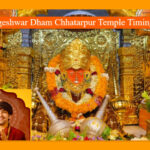
In the early 1900s, a poor cowherd named Abbayya, herding cattle near a pond in what was then an obscure village in Tumkur district, came into possession of a self-manifested (Swayambhu) idol of Goddess Mahalakshmi. He began worshipping it at home with sincere devotion — and, according to local tradition, his fortunes changed dramatically. From genuine poverty, Abbayya rose into prosperity, and used his newfound wealth specifically for charitable work, to the point that his modest home came to be known throughout the region as Lakshmi Nivas — “the abode of Lakshmi.”
After Abbayya’s death, his brother Thotadappa continued the devotional practice, and following a vision received in a dream — the Goddess herself instructing him to build her a proper temple — he constructed the first formal shrine. After Thotadappa’s own death, a devotee named Chowdayya carried forward the daily poojas.
Then, sometime around 1910, something happened that most temple histories quietly skip over: the temple was simply abandoned. For fifteen years, between 1910 and 1925, no one performed regular worship, and the shrine that had grown from one man’s gratitude sat neglected.
In 1925, a devotee named Kamalamma arrived in Goravanahalli, found the temple in this deserted state, and began performing poojas again — restoring the site to active worship. But after roughly a year, she too left, and the temple’s exact fate over the following decades is not fully documented. It was not until 1952 — twenty-seven years after her first arrival — that Kamalamma returned to Goravanahalli and re-established the temple permanently, beginning the continuous tradition of worship that has carried forward to the present day, drawing lakhs of devotees annually to what began as one cowherd’s private gratitude for an idol he found by a pond.
💡 Quick Answer Darshan timings: 6:00 AM – 12:30 PM and 5:30 PM – 8:00 PM (one source cites a continuous 6:30 AM–9:00 PM window without a break — confirm current schedule) Entry: Free general darshan Special/VIP Darshan: Sources cite either ₹50 (covering up to two family members) or ₹100 per person — confirm current pricing at the counter Maha Mangalarathi: Performed daily at 9:30 AM, 12:30 PM, and 7:30 PM Online booking: Available via the official temple website for sevas; OTP-based mobile login Best days: Fridays and Amavasya (New Moon) are considered especially auspicious for Mahalakshmi worship Last Verified: June 2026 — confirm exact current timings and pricing given some source variation
Goravanahalli Mahalakshmi Temple Timings 2026
| Activity | Timing |
|---|---|
| Morning darshan | 6:00 AM – 12:30 PM |
| Kumkuma Archana and Abhisheka | 8:00 AM – 9:30 AM |
| Maha Mangalarathi (1st) | 9:30 AM |
| Maha Mangalarathi (2nd) | 12:30 PM |
| Afternoon closure | 12:30 PM – 5:30 PM |
| Evening darshan | 5:30 PM – 8:00 PM |
| Maha Mangalarathi (3rd) | 7:30 PM |
A note on the timing discrepancy: Most detailed sources consistently describe the 6:00 AM–12:30 PM and 5:30 PM–8:00 PM pattern with an afternoon closure, shown above. However, at least one source describes the temple as opening at 6:30 AM and remaining continuously open until 9:00 PM without any break. Given the strong consensus around the two-session pattern, this is the more reliable general guide — but confirm the exact current schedule directly with the temple, particularly given that real-time devotee accounts (such as a Tuesday visit where queuing began at 9:30 AM and continued past 1:00 PM) confirm the basic structure is accurate in practice.
Pro tip: Arrive as early as possible — one detailed devotee account specifically recommends reaching the local bus stand by 7:00 AM to get ahead of the day’s queue, since lines can grow significantly crowded as the morning progresses, particularly on Fridays. Fridays draw notably heavier crowds than other days specifically due to the day’s auspicious association with Mahalakshmi worship.
How to Book Sevas Online
Step 1: Visit the official temple website.
Step 2: Log in using your mobile number — you will receive an OTP (One-Time Password) to complete login.
Step 3: Click on “Online Service” and navigate to the “Seva Booking” section.
Step 4: Select your desired seva from the available options, which include Mahalakshmi Homa, Panchamruta Abhisheka Seva, Kumkumarchane, Chandi Homa, Shashvatha Pooja, Tulabhara Seva, Namakarana Seva, and Akshara Abhyasa Seva.
Step 5: Fill in required details — your name, contact information, and preferred date and time.
Step 6: Complete payment through the available payment methods.
Step 7: Save or print your booking confirmation for your records.
Special/VIP Darshan: Sources show a notable pricing discrepancy — one cites ₹50 per ticket, covering up to two family members, making it a genuinely economical option; another cites ₹100 per person. Confirm the current rate directly at the temple counter before paying, given this variation. Importantly, the temple does not maintain a formally separate “VIP” category in the way some other temples do — what is commonly called “VIP darshan” here is simply the priority-access Special Darshan ticket.
Offline alternative: Pooja tickets, including Special Darshan, are also available directly at the temple counter for devotees who prefer in-person arrangement.
What Is Goravanahalli — Three Deities, One Roof
Mahalakshmi, Marikamba, and Manchala Nagappa
The temple is genuinely distinctive for housing three separate, significant deities under one roof: the presiding Goddess Mahalakshmi (consort of Lord Vishnu, goddess of wealth and prosperity), Goddess Marikamba (a powerful form of Shakti), and Manchala Nagappa, the snake god, worshipped for protection. This combination — a Vaishnavite goddess of prosperity alongside a fierce Shakti form and a serpent deity — gives Goravanahalli a broader devotional scope than many single-deity temples, drawing devotees with varying specific spiritual needs to the same complex.
Architecture — Early 1900s South Indian Style
The temple was built in the early 1900s, reflecting typical South Indian architectural style of that period: a large, multicolored Gopuram with smaller arches on either side, verandahs flanking the main structure, and the central Garbhagriha (sanctum sanctorum) housing the self-manifested Mahalakshmi idol.
Theetha Reservoir — A Natural Setting
The temple stands close to the Theetha Reservoir, built on the Suvarnamukhi River, surrounded by lush greenery. Many devotees combine their temple visit with a walk around the reservoir afterward, taking advantage of the area’s natural beauty as a peaceful extension of the pilgrimage.
A No-Coconut-Breaking Rule
A specific, practical rule devotees should know before visiting: breaking coconuts is not permitted inside the temple premises — devotees are expected to break coconuts either outside before entering or after exiting, rather than within the temple grounds itself.
Major Festivals at Goravanahalli
Lakshadeepotsava: Cited as the most important festival at the temple — a grand festival of lights specifically honoring Goddess Mahalakshmi.
Amavasya Vaibhava Lakshmi Pooja: A special pooja performed on New Moon days, reflecting Amavasya’s particular auspicious significance for Mahalakshmi worship at this temple.
Pournima Sathya Narayana Swamy Pooja: Performed on full moon days, a separate significant ritual observance.
Navaratri and Deepavali: Both major festivals draw significantly heavier crowds, with advance accommodation booking strongly recommended for devotees planning to stay overnight during these periods.
Nearby Attractions
Theetha Reservoir: Immediately adjacent to the temple, a popular spot for a peaceful walk after darshan.
Devanarayandurg State Forest: A separate, more distant attraction (specific distance varies by source) spanning approximately 42 square km, protected by the Karnataka state government since 1853, home to langurs, chital deer, wild boars, and elusive leopards and tigers. Its highest point reaches approximately 3,940 feet.
The Trap — What Catches Most Visitors
“Tried to break a coconut inside the temple premises” → Cause: Unfamiliarity with this specific temple rule → Fix: Break coconuts either outside before entering the temple or after exiting — not within the temple grounds.
“Paid an unconfirmed VIP/Special Darshan price based on a single source” → Cause: Genuine pricing discrepancy across sources (₹50 for two people vs. ₹100 per person) → Fix: Confirm the current rate directly at the temple counter before paying, as this guide’s sources genuinely disagree on the exact figure.
“Arrived later in the morning expecting a quick darshan” → Cause: Underestimating how quickly the queue builds, particularly on Fridays → Fix: Arrive as early as possible — reaching the area by 7:00 AM specifically improves your position in the queue, per detailed devotee accounts.
“Visited during the afternoon closure window” → Cause: Standard South Indian temple midday break → Fix: Plan your visit for 6:00 AM–12:30 PM or 5:30 PM–8:00 PM specifically, though confirm current exact hours given the minor source variation noted above.
How to Reach Goravanahalli Mahalakshmi Temple
Temple address: Theeta Post, Koratagere Taluk, Tumkur District, Goravanahalli — 572129, Karnataka.
By road: Approximately 87–88 km from Bangalore via the Bangalore–Tumkur highway, taking a turn toward Goravanahalli at Dabaspet. Driving time from Bangalore is approximately 1 hour 42 minutes. From Tumakuru (Tumkur) town, the distance is approximately 31 km.
By bus: KSRTC buses run from Kempegowda Bus Stand (Bangalore) toward Tumkur or Koratagiri, with onward connection to Goravanahalli. Private buses also operate from Kalasipalyam, Bangalore. If traveling from other towns like Gauribidanur or Hindupur, connect via Koratagiri first.
By train: Tumkur Railway Station is the nearest, approximately 30–36 km from the temple (sources show minor variation), with onward taxi or bus connection.
By air: Kempegowda International Airport, Bangalore — approximately 77–90 km (sources vary), with onward road travel required.
Accommodation: Pilgrim accommodation is available near the temple at nominal rates — advance booking is strongly recommended during Navaratri and Deepavali specifically.
Before You Visit Goravanahalli Mahalakshmi Temple — Checklist
☑ Darshan timings confirmed — 6:00 AM–12:30 PM and 5:30 PM–8:00 PM, with confirmation of any source variation ☑ Special/VIP Darshan pricing confirmed at the counter given the genuine ₹50 vs ₹100 discrepancy across sources ☑ Early arrival planned (by 7:00 AM) particularly if visiting on a Friday ☑ Coconut-breaking plan made for outside the temple, not within the premises ☑ Online seva booking completed via the official temple website if planning a specific ritual in advance ☑ Accommodation booked in advance if visiting during Navaratri or Deepavali ☑ Theetha Reservoir walk planned as a peaceful post-darshan addition ☑ Traditional, modest dress worn as a mark of respect
Frequently Asked Questions
What are Goravanahalli Mahalakshmi Temple timings in 2026?
Most sources confirm darshan from 6:00 AM to 12:30 PM and 5:30 PM to 8:00 PM, with an afternoon closure between sessions. At least one source describes a continuous 6:30 AM–9:00 PM window without a break — confirm the current schedule directly with the temple given this variation.
What is the legend behind Goravanahalli Mahalakshmi Temple?
A poor cowherd named Abbayya found a self-manifested idol of Goddess Mahalakshmi near a pond in the early 1900s and began worshipping it at home, after which his fortunes changed dramatically. His home became known as Lakshmi Nivas. After his death, his brother Thotadappa built the first formal temple following a divine vision, and devotee Kamalamma later revived the temple in 1925 and permanently re-established it in 1952, after a period of abandonment.
How much does VIP/Special Darshan cost at Goravanahalli Mahalakshmi Temple?
Sources show a genuine discrepancy — one cites ₹50 per ticket (covering up to two family members), while another cites ₹100 per person. Confirm the current rate directly at the temple counter before paying.
What deities are worshipped at Goravanahalli Mahalakshmi Temple?
Three deities are housed under one roof: Goddess Mahalakshmi (the presiding deity, consort of Vishnu), Goddess Marikamba (a form of Shakti), and Manchala Nagappa, the snake god worshipped for protection.
How do I book sevas online at Goravanahalli Mahalakshmi Temple?
Visit the official temple website, log in using your mobile number and OTP, navigate to “Online Service” then “Seva Booking,” select your desired ritual (such as Mahalakshmi Homa, Panchamruta Abhisheka Seva, or Chandi Homa), enter your details, and complete payment to receive a confirmation.
Can I break a coconut inside Goravanahalli Mahalakshmi Temple?
No. Coconut-breaking is not permitted inside the temple premises — devotees should break coconuts either outside before entering or after exiting the temple.
How far is Goravanahalli Mahalakshmi Temple from Bangalore?
Approximately 87–88 km via the Bangalore–Tumkur highway, taking about 1 hour 42 minutes by road. From Tumakuru town, the distance is approximately 31 km.
Contact and Help
Address: Theeta Post, Koratagere Taluk, Tumkur District, Goravanahalli — 572129, Karnataka Nearest railway station: Tumkur — approximately 30–36 km
One Last Thing
A cowherd found something by a pond that he had no way of knowing would change his life, and rather than keeping his good fortune private, he gave it away through charity until his home itself became known by the goddess’s name. That instinct — to share rather than hoard whatever blessing arrives — passed from Abbayya to his brother, and then, after the temple sat empty for fifteen years, to a woman named Kamalamma who found it abandoned, tried to revive it, left, and then came back twenty-seven years later to finish what she had started decades earlier.
Most temple histories move in a straight line — built, expanded, still standing. Goravanahalli’s history has a genuine gap in it, a decade and a half of silence between Chowdayya’s final poojas and Kamalamma’s first return, and then another year-long lapse before her permanent re-establishment in 1952. The temple that exists today is not the product of unbroken devotion. It is the product of devotion that broke, twice, and was picked back up anyway by people who were not the ones who had let it fall.
Om Shri Mahalakshmiyae Namah. Jai Goravanahalli Amma.