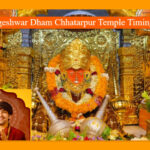
Inside the sanctum at Draksharamam Temple, in Andhra Pradesh’s Konaseema district, stands a genuinely extraordinary object of worship: the presiding Lord Bhimeswara Swamy, represented not in the more typical black or grey stone, but as a 14-foot-tall Spatika Lingam — carved from a single, massive crystal, its upper portion specifically white, understood to symbolize the Ardhanariswara Tatwam (the union of Shiva and Shakti in a single form). Even more remarkable: the temple’s architecture is specifically oriented so that the very first rays of the rising sun fall directly upon this crystal Lingam each morning — a deliberate alignment, sustained across more than a thousand years, that turns sunrise itself into a daily ritual the builders engineered the structure to perform.
Draksharamam holds a genuinely rare dual distinction within Hindu sacred geography: it is one of the five Pancharama Kshetras — temples built, according to tradition, to enshrine fragments of the demon Tarakasura’s destroyed Shivalinga — and it is simultaneously the 12th of the eighteen Ashtadasha Shakti Peethas, the sites where pieces of Goddess Sati’s body are believed to have fallen. No other Pancharama Kshetra carries this additional Shakti Peetha status — making Draksharamam, among its four sibling Pancharama temples, the singular site where Shiva and Shakti worship converge with equal, simultaneous theological weight.
The temple’s name itself preserves this connection: “Draksharamam” derives from “Daksha” (the deity Daksha Prajapati, father of Sati and father-in-law of Shiva) and “Aramam” (abode) — literally, “the Abode of Daksha.” It was here, according to the foundational legend, that Daksha performed his fateful Nirishvara Yajna (a sacrifice deliberately excluding Shiva), provoking Sati’s self-immolation in outrage, Shiva’s grief-stricken Tandava across the cosmos, and Vishnu’s eventual intervention with his discus — the resulting fragments of Sati’s body falling across India to become the Shakti Peethas. Draksharamam specifically marks the spot where Sati’s left cheek fell.
💡 Quick Answer Darshan timings: 6:00 AM – 8:00 PM daily, with an afternoon closure (most sources cite 12:00 PM – 3:00 PM) Entry: Free general Sarva Darshan Online booking: Available via aptemples.ap.gov.in for Abhishekam, Alankaram, Aarti, and other special sevas Unique status: The only Pancharama Kshetra that is simultaneously a Shakti Peetha Best season: October to March; Karthika Masam (November) is especially auspicious but more crowded Location: Draksharamam town, Konaseema district, Andhra Pradesh — approximately 50 km from Rajahmundry, 28 km from Kakinada, 6 km from Ramachandrapuram Last Verified: June 2026 — confirm exact current timing locally
Draksharamam Temple Timings 2026
| Session | Timing |
|---|---|
| Morning darshan | 6:00 AM – 12:00 PM |
| Afternoon closure | 12:00 PM – 3:00 PM |
| Evening darshan | 3:00 PM – 8:00 PM |
| Maha Shivaratri (full-day exception) | 6:00 AM – 8:00 PM, continuously, no afternoon break |
A note on minor timing variation: Most detailed sources converge consistently on this 6 AM–12 PM and 3 PM–8 PM pattern with a midday break — making this one of the more consistently documented temple schedules in this guide. A small number of sources cite slightly different evening closing times (e.g., some festival-specific guides reference extended hours during Karthika Masam) — confirm any festival-period adjustment directly before traveling during a specific occasion.
Pro tip: For the calmest visit, arrive early in the morning specifically — both to witness the sunrise-Lingam alignment described above and to avoid the heavier crowds that build through the day, particularly during Karthika Masam and around Maha Shivaratri.
How to Book Sevas Online via aptemples.ap.gov.in
Step 1: Visit aptemples.ap.gov.in, the official Andhra Pradesh government temple booking portal.
Step 2: Sign up as a devotee, or log in using your registered mobile number and password.
Step 3: On the User Dashboard, click “Online Booking.”
Step 4: Select the temple — search for “Sri Bhimeswara Swamy Temple, Draksharamam.”
Step 5: Choose your desired seva type — Abhishekam, Alankaram, Aarti, Kumkum Archana, or general Special Darshan.
Step 6: Select your preferred date and available time slot.
Step 7: Enter devotee details — name, age, and gender for each person.
Step 8: Complete payment via UPI, debit/credit card, or net banking.
Step 9: Save your SMS and email confirmation — this serves as your entry pass.
Is online booking mandatory? No. Walk-in access is fully available for free Sarva Darshan. Online seva booking is strongly recommended specifically during festivals like Maha Shivaratri and Karthika Masam, when demand for special sevas increases significantly, but is not required for standard darshan on a regular day.
Offline alternative: Seva tickets are also available directly at the temple counter, convenient for pilgrims who prefer in-person arrangement or did not plan a specific ritual in advance.
What Is Draksharamam — History, Deity, and Architectural Highlights
Built by Eastern Chalukya King Bhima, 9th–10th Century CE
According to temple inscriptions, Draksharamam was constructed between the 9th and 10th centuries CE by the Eastern Chalukya king Bhima — and is believed to predate the related Bhimeswaraswamy Temple at Samalkot (built 892–922 CE), a separate Pancharama Kshetra located approximately 35 km away, dedicated to Lord Kumara Bhimeswara.
Goddess Manikyamba — Worshipped With Equal Importance
The temple’s female deity, Goddess Manikyamba Devi, consort of Lord Bhimeswara Swamy, is given equal devotional importance to the male deity here — a detail specifically highlighted across sources as distinguishing Draksharamam from many temples where the female consort occupies a more secondary devotional role. Sage Adi Shankaracharya himself referenced this goddess directly in his Shakti Peetha sloka, specifically naming “Maanikye Daksha Vatika” — the Manikyamba of Draksharama.
A Dancing Ganapati With His Trunk Turned Right
At the temple’s entrance stands a striking dancing Ganapati statue, with one genuinely distinctive feature: the elephant-god’s trunk is turned to the right — a relatively rare iconographic choice (most Ganesha depictions show the trunk curving left), specifically noted across sources as one of the temple’s unique visual details.
A Miniature Replica Shrine Within the Same Complex
One of Draksharamam’s more unusual architectural features: the complex houses a miniature shrine, built as an identical replica of the main temple itself — a temple within a temple, scaled down but matching the principal structure in form.
Additional Deities and a Sacred Tank
Beyond the central Bhimeswara-Manikyamba sanctum, the complex includes shrines to Lord Lakshmi Narayana, Lord Sankaranarayana, Lord Ganapati, and the Navagrahas. A sacred temple tank on the premises carries its own significant spiritual weight within the broader pilgrimage experience.
Built on 12 Acres, Dravidian Architectural Style
The temple complex spans over 12 acres, surrounded by high walls, constructed in classical South Indian (Dravidian) architectural style, with two Mandaps and two enclosing walls structuring the overall layout. A flight of steps leads to an upper level of the sanctum, allowing visitors to view the upper structure of the towering crystal Lingam from a different vantage point.
“Dakshina Kasi” — Equivalent to Varanasi
Draksharamam carries the honorific “Dakshina Kasi” — meaning it is considered, within South Indian devotional tradition, as spiritually significant as Varanasi (Kashi) itself, with both dying and worshipping here believed by devotees to grant moksha (liberation).
What’s the Difference Between a Pancharama Kshetra and a Jyotirlinga?
This is a genuinely useful distinction many guides skip: Jyotirlingas are twelve sites across India, each independently significant within the broader pan-Indian Shiva tradition. Pancharama Kshetras, by contrast, are five specific Shiva temples exclusive to Andhra Pradesh, traditionally understood as built to enshrine fragments of the demon Tarakasura’s destroyed Shivalinga, fractured during his defeat. Draksharamam is widely regarded as the most powerful of the five Pancharama Kshetras — and, as established above, the only one among them that simultaneously carries Shakti Peetha status, a distinction none of its four sibling Pancharama temples share.
Festivals at Draksharamam Temple
Maha Shivaratri: The temple’s most significant single-day festival, with continuous Vedic chanting, special Abhishekams, and night-long Shiva worship; the temple remains open all day without the usual afternoon break.
Karthika Masam (November): A month-long observance of heightened significance for Shiva worship — especially auspicious, though correspondingly more crowded.
Masa Shivaratri: A monthly observance drawing increased seva demand specifically on this recurring date.
Dasara/Navaratri: Cited alongside Maha Shivaratri as one of the temple’s two principal major festivals.
Nearby Sites for a Combined Konaseema Pilgrimage
Samalkot Kumararama Temple — approximately 35 km away, one of the other four Pancharama Kshetras.
Annavaram Temple — approximately 50 km away, the well-known Vaishnavite Sri Veera Venkata Satyanarayana Swamy shrine.
Rajahmundry (Rajamahendravaram) — a culturally significant Godavari riverside city, home to the Godavari Pushkara ghats and an ISKCON temple.
Muramalla Temple — the Nitya Kalyanam shrine within the same broader Konaseema region, also commonly combined into an extended pilgrimage itinerary.
Kakinada Beach and Kadiam Nurseries — non-religious stopovers commonly added to round out a Konaseema trip.
The Trap — What Catches Most Visitors
“Assumed online booking was mandatory for any visit” → Cause: Confusing the strong recommendation for festival-period seva booking with a general requirement → Fix: Walk-in access for free Sarva Darshan is fully available on regular days — online booking via aptemples.ap.gov.in is specifically recommended (not required) during Maha Shivaratri and Karthika Masam.
“Arrived during the midday closure” → Cause: Standard South Indian temple afternoon break → Fix: Plan your visit for 6:00 AM–12:00 PM or 3:00 PM–8:00 PM specifically, except on Maha Shivaratri, when the temple remains open continuously.
“Visited later in the morning, missing the sunrise-Lingam alignment” → Cause: Underestimating the specific significance of this architectural feature → Fix: Arrive as close to sunrise as practical if witnessing the first rays falling directly on the crystal Lingam is a priority for your visit.
“Treated Draksharamam as ‘just another Pancharama temple'” → Cause: Unfamiliarity with its unique dual Pancharama-and-Shakti-Peetha status → Fix: Understand before visiting that Draksharamam is the only one of the five Pancharama Kshetras that is simultaneously a recognized Shakti Peetha — a distinction worth appreciating as part of the visit’s deeper significance.
How to Reach Draksharamam Temple
Temple address: Sri Bhimeswara Swamy Temple, Draksharamam, Ramachandrapuram Mandal, East Godavari/Konaseema District, Andhra Pradesh — 533262.
By road: Approximately 50 km from Rajahmundry, 28 km from Kakinada Town, and just 6 km from Ramachandrapuram. Regular buses connect the temple to neighboring towns and cities.
By train: Kakinada, Rajahmundry, and Samalkot Junction are all reasonably convenient nearby railway stations.
By air: Rajahmundry Airport — approximately 50 km, with flights connecting to Hyderabad, Visakhapatnam, and Chennai.
Accommodation: Simple guest rooms are available close to the temple itself for early-morning access; more comfortable AC hotel options exist in Kakinada, Samalkot, and Amalapuram for visitors prioritizing comfort.
Before You Visit Draksharamam Temple — Checklist
☑ Darshan timings confirmed — 6:00 AM–12:00 PM and 3:00 PM–8:00 PM, with continuous hours specifically on Maha Shivaratri ☑ Online seva booking completed at aptemples.ap.gov.in if planning Abhishekam, Alankaram, or Aarti, especially during festivals ☑ Early-morning arrival planned if witnessing the sunrise-Lingam alignment matters to your visit ☑ October–March travel preferred, or Karthika Masam (November) if seeking heightened festival significance despite larger crowds ☑ Samalkot, Annavaram, and Muramalla temples considered for a combined Konaseema circuit ☑ Traditional, modest dress worn ☑ Accommodation booked in advance during Maha Shivaratri or Karthika Masam, given increased demand
Frequently Asked Questions
What are Draksharamam Temple darshan timings in 2026?
The temple is open daily from 6:00 AM to 8:00 PM, with an afternoon closure from 12:00 PM to 3:00 PM. On Maha Shivaratri, the temple remains open continuously throughout the day without this break.
How do I book sevas online at Draksharamam Temple?
Visit aptemples.ap.gov.in, sign up or log in, click “Online Booking,” search for “Sri Bhimeswara Swamy Temple, Draksharamam,” select your desired seva and time slot, enter devotee details, and complete payment. Save your confirmation as your entry pass.
Is online booking mandatory for Draksharamam darshan?
No. Walk-ins are allowed for free general Sarva Darshan. Online seva booking is strongly recommended, though not required, specifically during festivals like Maha Shivaratri and Karthika Masam.
Why is Draksharamam unique among the Pancharama Kshetras?
It is the only one of the five Pancharama Kshetras (Shiva temples in Andhra Pradesh believed to enshrine fragments of the demon Tarakasura’s destroyed Shivalinga) that is simultaneously recognized as one of the eighteen Ashtadasha Shakti Peethas — making it the site where Shiva and Shakti worship traditions converge with equal significance.
What is special about the Shivalinga at Draksharamam Temple?
The presiding deity, Lord Bhimeswara Swamy, is represented by a 14-foot Spatika (crystal) Lingam, with its upper portion specifically white, symbolizing Ardhanariswara Tatwam (the union of Shiva and Shakti). The temple’s architecture is aligned so that the first rays of the rising sun fall directly upon this crystal Lingam each morning.
What is the legend behind Draksharamam Temple’s name?
“Draksharamam” derives from “Daksha” (the deity Daksha Prajapati, Sati’s father) and “Aramam” (abode), meaning “the Abode of Daksha.” It was here that Daksha performed a sacrifice excluding Shiva, leading to Sati’s self-immolation, Shiva’s grief-stricken Tandava dance, and the eventual scattering of Sati’s body across India as Shakti Peethas — with Draksharamam specifically marking where her left cheek fell.
How far is Draksharamam from Rajahmundry and Kakinada?
Approximately 50 km from Rajahmundry and 28 km from Kakinada Town, with the nearest airport (Rajahmundry) also approximately 50 km away.
Contact and Help
Official booking portal: aptemples.ap.gov.in Address: Sri Bhimeswara Swamy Temple, Draksharamam, Ramachandrapuram Mandal, East Godavari/Konaseema District, Andhra Pradesh — 533262 Managed by: Endowments Department, Government of Andhra Pradesh
Official Links
| Purpose | Link |
|---|---|
| Seva & darshan online booking | aptemples.ap.gov.in |
One Last Thing
Somewhere in the architectural planning of a thousand-year-old temple, someone calculated, with no modern instrument beyond patient, careful observation, exactly where the sanctum needed to face for the first light of every single sunrise to fall precisely on a fourteen-foot column of crystal. That alignment has held since the Eastern Chalukya dynasty first built it — sunrise after sunrise, century after century, a piece of architecture quietly performing the same celestial trick every single morning whether or not anyone is awake early enough to watch it happen.
Around that crystal Lingam, two entirely separate sacred traditions converge in a way no other Pancharama temple permits — Shiva’s broken weapon and Sati’s falling body, two different cosmic catastrophes, two different healing responses, resolving at the exact same physical location. Most pilgrims come specifically for one or the other. Draksharamam, alone among its four sibling temples, asks nothing of them but to receive both at once.
Om Namah Shivaya. Jai Bhimeswara. Jai Manikyamba Devi.