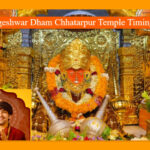
Step inside Birla Mandir in Hyderabad and you will notice an absence most visitors don’t immediately register, but which devotees familiar with typical Hindu temple practice find genuinely striking: there are no temple bells here. Where most Hindu shrines fill with the sound of bells rung by entering devotees, Birla Mandir was deliberately designed without this element — a quiet departure from convention that contributes directly to the unusually still, contemplative atmosphere the temple has become known for. A second, equally deliberate choice sits within the same complex: alongside shrines to Lord Venkateswara, Goddess Lakshmi, Lord Shiva, and Lord Hanuman, the temple specifically houses a statue of Lord Buddha — installed not as devotional inconsistency, but as an intentional symbol of universal harmony, reflecting the temple’s broader stated mission of building an accessible, inclusive spiritual space within a fast-growing modern city.
Perched atop Naubat Pahad, a 280-foot hillock in the heart of Hyderabad, the temple is constructed entirely from white marble — approximately 2,000 tonnes of it, transported specifically from Rajasthan. Construction took roughly ten years, with the temple formally opened in 1976 by Swami Ranganathananda of the Ramakrishna Mission, under the patronage of the Birla Foundation — the same industrialist family responsible for similarly named Birla Mandirs constructed in major cities across India. The temple is officially known as the Birla Lakshmi Narayan Temple, dedicated principally to Lord Venkateswara (Balaji), with the presiding idol specifically modeled as a replica of the original deity at Tirumala.
💡 Quick Answer Darshan timings: 7:00 AM – 12:00 PM and 3:00 PM – 9:00 PM daily — consistently confirmed across sources Entry: Completely free; donations welcomed Photography: Strictly prohibited inside the temple Construction: 2,000 tonnes of white Rajasthani marble; took approximately 10 years; opened 1976 Accessibility: Ramps and lifts available; elderly visitors may still need assistance given the hill’s steps Best time to visit: Early morning or evening, particularly for the sunset view over Hussain Sagar Lake Last Verified: June 2026
Birla Mandir Hyderabad Timings 2026
| Session | Timing |
|---|---|
| Morning darshan | 7:00 AM – 12:00 PM |
| Afternoon closure | 12:00 PM – 3:00 PM |
| Evening darshan | 3:00 PM – 9:00 PM |
This is one of the more consistently and reliably documented temple schedules in this guide — multiple independent sources, across different publication dates, converge on this exact 7:00 AM–12:00 PM and 3:00 PM–9:00 PM pattern, with no significant variation found across the sources researched.
Pro tip: Early morning offers the calmest, least crowded darshan, while evening visits, particularly close to sunset, are specifically recommended for the temple’s most visually striking moments — the white marble glowing in the fading light, with Hussain Sagar Lake spread out below, “breathtaking” by multiple visitor accounts. Weekdays are notably less crowded than weekends.
What Devotees and Visitors Should Know Before Visiting
No entry fee: General darshan is completely free; donations toward the temple’s upkeep are welcomed but never required.
Photography strictly prohibited: No photos or videos are permitted anywhere within the temple grounds — this rule is consistently and strictly enforced across all visitor accounts.
Footwear: Must be removed before entering the temple premises.
Dress code: No strict enforcement, though modest, respectful attire is generally advised.
Accessibility: Ramps and lifts are available for elderly and disabled visitors — though given the hill’s inherent steps and elevation, elderly visitors or those with mobility concerns may still benefit from additional assistance when planning a visit.
Parking: Available at the base of the hill for both two-wheelers and four-wheelers.
No online booking system: General darshan operates entirely on a free, walk-in basis — there is no ticketing or reservation system to navigate before visiting.
What Is Birla Mandir — Architecture, Deities, and a Distinctive Flagstaff
A Blend of Three Architectural Traditions
The temple’s design specifically combines Dravidian (South Indian), Rajasthani, and Utkala (Odisha) architectural styles — a deliberate, pan-Indian fusion reflecting the Birla Foundation’s broader intention of building temples that feel connected to multiple regional traditions simultaneously, rather than adhering strictly to any single regional convention. Unlike most traditional South Indian temples, Birla Mandir notably lacks a tall gopuram (entrance tower) — instead featuring a distinctive pyramid-style, layered structure that gives the building its own unique visual identity among Hyderabad’s temple architecture.
Bhagavad Gita Verses Carved Into the Marble Walls
A specific architectural and devotional highlight: the temple’s marble walls are engraved with verses from the Bhagavad Gita, alongside sculptural depictions spanning scenes from Hindu mythology — giving visitors a layered, text-and-image devotional experience as they move through the complex.
An 11-Foot Idol of Lord Venkateswara
The presiding deity, Lord Venkateswara, is represented by an idol approximately 11 feet tall, carved in exquisitely detailed marble, receiving daily devotional worship as the temple’s central object of veneration.
A 47-Foot Bronze Flagstaff
Atop the temple stands a notable 47-foot bronze flagstaff (Dhwajasthambham) — among the more visually distinctive features visible from a considerable distance around the hillock.
Additional Shrines Within the Complex
Beyond the central Venkateswara sanctum, the temple complex houses dedicated shrines for Goddess Padmavathi, Andal, Lord Shiva, Lord Ganesha, and Lord Hanuman — alongside the specifically installed Buddha statue, together reflecting a deliberately broad, inclusive devotional scope.
Managed by the Birla Foundation
The temple continues to be managed and maintained by the Birla Foundation, which oversees its daily administration and broader upkeep, consistent with its management of the other Birla Mandirs constructed across India.
Why Visitors Specifically Come for the View
Independent of its devotional significance, Birla Mandir is widely recognized as one of Hyderabad’s premier panoramic viewpoints — situated at the city’s historically highest accessible point at the time of its construction, the temple offers sweeping views across both Hyderabad and Secunderabad, the adjacent Hussain Sagar Lake, and the broader cityscape. Multiple visitor accounts specifically highlight the sunset view as a reason to visit independent of any religious purpose — the white marble itself reflecting evening light in a way several sources describe as creating a sense of openness, calm, and purity distinct from the busier urban environment below.
The Trap — What Catches Most Visitors
“Brought a camera or phone expecting to photograph the temple interior” → Cause: Underestimating how strictly this specific rule is enforced → Fix: Photography and video are not permitted anywhere within the temple grounds — plan to simply experience the visit without capturing it, or photograph only from outside the temple premises if at all.
“Arrived during the 12:00 PM–3:00 PM closure” → Cause: Standard daily afternoon break → Fix: Plan your visit for 7:00 AM–12:00 PM or 3:00 PM–9:00 PM specifically — this schedule is consistently confirmed across sources with minimal variation.
“Brought elderly family members without anticipating the hill’s steps” → Cause: Assuming ramps and lifts fully eliminate the need for physical exertion → Fix: While ramps and lifts are available, the hill’s inherent elevation and steps mean elderly visitors may still benefit from additional assistance — plan accordingly.
“Visited on a weekend expecting a quiet, contemplative experience” → Cause: Underestimating how significantly weekend crowds affect the temple’s typically calm atmosphere → Fix: Choose a weekday, particularly early morning, if a peaceful, less crowded visit is your priority.
How to Reach Birla Mandir Hyderabad
Temple address: Naubat Pahad, Ambedkar Colony, Khairtabad, Hyderabad, Telangana — 500063.
By metro: Lakdi-ka-Pul Metro Station — approximately 1 km, a comfortable walking distance, or a short taxi ride.
By train: Hyderabad Deccan (Nampally) Railway Station — approximately 2–3 km, roughly 10–15 minutes by auto-rickshaw or taxi. Secunderabad Junction — approximately 6–8 km, roughly 20–30 minutes.
By road: Easily accessible via taxi, auto-rickshaw, or app-based cab (Uber, Ola) from anywhere in Hyderabad; TSRTC buses also serve the Birla Mandir or Lakdi-ka-Pul bus stops directly.
Nearby attractions: Hussain Sagar Lake (with its iconic Buddha statue in the middle, plus boating facilities) and Lumbini Park (known for musical fountains and laser shows) are both immediately adjacent, making them natural additions to the same outing.
Before You Visit Birla Mandir Hyderabad — Checklist
☑ Darshan timings confirmed — 7:00 AM–12:00 PM and 3:00 PM–9:00 PM ☑ No camera or phone used for photography inside the temple — strictly prohibited ☑ Footwear removed before entering the premises ☑ Modest, respectful attire worn, though no strict dress code is enforced ☑ Additional assistance planned for elderly visitors, given the hill’s steps despite available ramps/lifts ☑ Early morning or sunset evening visit planned for the most peaceful experience and best views ☑ Weekday visit preferred over weekends for a calmer atmosphere ☑ Hussain Sagar Lake and Lumbini Park considered for a combined outing, given immediate proximity
Frequently Asked Questions
What are Birla Mandir Hyderabad darshan timings in 2026?
The temple is open daily from 7:00 AM to 12:00 PM and 3:00 PM to 9:00 PM, with an afternoon closure in between. This schedule is consistently confirmed across multiple independent sources with minimal variation.
Why does Birla Mandir Hyderabad have no temple bells?
The temple was deliberately designed without bells, a notable departure from typical Hindu temple convention, contributing to its unusually quiet, contemplative atmosphere compared to most other Hindu shrines.
Why is there a Buddha statue inside Birla Mandir, a Hindu temple?
The Buddha statue is specifically installed as a symbol of universal harmony, reflecting the temple’s broader inclusive intent — alongside shrines to Venkateswara, Lakshmi, Shiva, and Hanuman within the same complex.
Is entry free at Birla Mandir Hyderabad?
Yes, general darshan is completely free for all visitors, with donations welcomed but never required.
Who built Birla Mandir Hyderabad and when?
It was constructed by the Birla Foundation over approximately ten years, using around 2,000 tonnes of white marble transported from Rajasthan, and formally opened in 1976 by Swami Ranganathananda of the Ramakrishna Mission.
Is photography allowed inside Birla Mandir Hyderabad?
No. Photography and video recording are strictly prohibited anywhere within the temple grounds.
How far is Birla Mandir from Hyderabad’s main railway stations?
Approximately 2–3 km from Hyderabad Deccan (Nampally) Railway Station, and approximately 6–8 km from Secunderabad Junction — both easily reached by auto-rickshaw or taxi.
Contact and Help
Address: Naubat Pahad, Ambedkar Colony, Khairtabad, Hyderabad, Telangana — 500063 Managed by: Birla Foundation Nearest metro: Lakdi-ka-Pul Station — approximately 1 km
One Last Thing
Most Hindu temples announce a devotee’s arrival with the ring of a bell — a small, almost reflexive gesture repeated millions of times a day across the country. Birla Mandir simply does not offer that option, and the silence left in its place has become, by most visitor accounts, one of the temple’s defining qualities: a hilltop sanctuary that asks for stillness rather than sound, white marble catching the evening light over a lake and a city that, from this specific height, finally seems to slow down.
A Buddha sits inside this Hindu temple’s grounds not as contradiction but as deliberate statement — built by a family whose temples across India have always aimed less at replicating ancient tradition exactly and more at making something universally welcoming, modern enough to acknowledge harmony as its own form of devotion. Ten years of construction, two thousand tonnes of marble carried from another state entirely, and the result is a building that asks remarkably little of anyone who climbs its hill: no fee, no bell to ring, simply the view, the silence, and whatever quiet a visitor brings with them.
Om Namo Narayanaya. Jai Venkateswara.