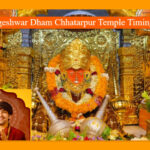
Centuries ago, on pastoral land owned by a wealthy goldsmith named Pandurang on what is now Mumbai’s Malabar Hill, a boy named Babul tended his employer’s cattle. One evening, a cow named Kapila failed to produce milk during her usual milking — and watching her closely over the following days, Babul discovered why: the cow was pouring all her milk, every evening, onto one specific spot of ground, before anyone could collect it. Babul reported this to Pandurang, who investigated personally, witnessed the same behavior firsthand, and ordered the spot dug up the next day. What the digging revealed was a Swayambhu (self-manifested) Shiva Linga — never carved by human hands, simply present in the earth, discovered because a single cow had, for reasons no devotee has ever fully explained, decided this exact patch of ground deserved her offering more than her owner did.
Alongside the Linga, idols of Ganesha, Hanuman, Parvati, and one further figure were unearthed during the same excavation — though that fifth idol, damaged beyond repair, was ultimately immersed in the sea rather than installed. The temple that grew around this discovery took its name directly from the boy who first noticed the cow’s strange behavior: Babulnath — “Babul’s Lord,” or, in another reading favored by some devotees, simply “guardian of all,” drawing on Babul/Baba’s broader sense as a protective father figure within Hindi devotional language.
This is, by most documented accounts, not the temple’s earliest layer of history. Evidence suggests a Shiva temple may have stood on this same hill as far back as the 12th century, consecrated under King Bhimdev — destroyed by invading forces at some later point, its idols buried and lost to time, until Babul’s cow led Pandurang back to rediscover what history had otherwise erased.
💡 Quick Answer Darshan timings: Sources show some variation — most commonly cited as 5:00/6:00 AM to 9:00/10:00 PM; Mondays often see extended hours (some sources cite 4:00 AM–11:30 PM) Entry: Completely free Lift service: ₹1 — to ascend the temple’s 80–110 steps, recommended specifically for elderly devotees, pregnant women, and those with health conditions Online booking: Not currently available for general darshan; special pooja booking via the temple’s contact channels Location: Babulnath Hill, near Girgaum Chowpatty, Malabar Hill, South Mumbai 2026 update: The Maharashtra government recently renewed the temple’s land lease for another 30 years at a symbolic rent of ₹1 Last Verified: June 2026 — confirm exact current timing locally
Babulnath Temple Timings 2026
| Source Pattern | Reported Timing |
|---|---|
| Most commonly cited pattern | 6:00 AM – 9:00/10:00 PM (Tue–Sun); Monday extended hours |
| Alternate pattern | 5:00 AM – 9:00 PM (weekdays); 4:30 PM – 11:30 PM (Sundays) |
| Another alternate | 5:00 AM (weekdays) – 9 PM; 4 AM – 11:30 PM (Mondays specifically) |
A note on this discrepancy: Babulnath’s exact daily hours show genuine variation across sources, particularly regarding Monday and Sunday-specific schedules — confirm the current exact timing locally before a tightly-timed visit, especially if your visit falls on either of these two specific days.
Aarti schedule (most consistently cited):
| Aarti | Timing |
|---|---|
| Morning | 5:30 AM – 6:30 AM |
| Noon | 11:30 AM – 12:30 PM |
| Evening | 5:30 PM – 6:30 PM |
| Night | 8:00 PM – 8:30 PM |
Pro tip: Weekday mornings and late evenings are consistently recommended as the most peaceful windows, with the morning aarti offering a calm, contemplative start and the evening aarti drawing a livelier, more colorful crowd with oil lamps, bells, and collective chanting.
The ₹1 Lift — A Small Detail That Matters a Great Deal
Reaching the main shrine requires climbing approximately 80 to 110 steps (sources show minor variation) up Babulnath Hill — a genuinely steep ascent, particularly in Mumbai’s heat and humidity. For devotees who cannot or prefer not to manage this climb, a lift service is available for a nominal ₹1 fee.
Who should specifically use it: Elderly devotees, pregnant women, and anyone with health conditions are specifically advised to use the lift rather than the stairs.
A practical tip: The lift is small and can become genuinely crowded — carry exact change, as this specific transaction is cited across multiple sources as a small but recurring point of friction for unprepared visitors. Wait your turn patiently if a queue has formed.
Booking — No Online System for General Darshan
As of this guide’s research, no online ticketing system exists for general darshan at Babulnath Temple. All payments for special services — including specific pooja and Abhishekam bookings — are made directly at the temple’s administrative office, with booking details (including specific timing) provided at the time of payment. Some sources reference contacting the temple through www.babulnath.com for special pooja inquiries — confirm current contact details directly given the absence of a unified, consistently cited official booking portal across sources.
Special Darshan: Available at a nominal cost (one source cites approximately ₹200) for devotees seeking a faster, priority queue compared to free Sarva Darshan.
What Is Babulnath Temple — Architecture and a Damaged Tower
Built in 1780, Completed in 1890
Following the rediscovery of the Linga, Pandurang constructed the original Babulnath Temple in 1780. Construction faced significant legal opposition from the Parsi community, whose dakhma (Tower of Silence) stood nearby — the matter was taken to court, with judgment ultimately passing in favor of the temple’s construction around 1800. The present-day structure was completed in 1890, financed by a Gujarati patron — specifically identified in some sources as Maharaja Sayajirao Gaikwad of Baroda.
Once Mumbai’s Tallest Structure — Until Lightning Struck
At the time of its 1890 completion, the temple’s gopuram (tower) was reportedly the tallest structure in all of Mumbai. A lightning strike, variously dated to the late 19th century or the 1960s depending on the source, significantly damaged the tower, permanently reducing the temple’s overall height from its original prominence.
Marathi Architectural Style, Rajasthani Marble
The temple is built in traditional Marathi architectural style, with walls intricately carved from limestone, richly decorated pillars and ceilings depicting scenes from Hindu mythology, and marble flooring specifically sourced from Rajasthan.
Believed by Some to Be a Jyotirlinga
At least one source describes the Babulnath Shiva Linga as believed to be one of the twelve Jyotirlingas of India — though this specific claim is not consistently repeated across the majority of detailed sources researched for this guide, and the more widely and consistently documented twelve Jyotirlingas list does not include Babulnath. Treat this specific claim with appropriate caution rather than as an established fact.
A 30-Year Lease Renewed at ₹1
In a notable recent development, the Maharashtra government renewed the temple’s land lease for another 30 years at a symbolic rent of just ₹1 — a gesture specifically recognizing the temple’s deep religious and cultural significance to the city, rather than treating it as an ordinary commercial land arrangement.
Practical Visitor Information
Footwear: Stands are available near the entrance for a small deposit fee.
Drinking water and seating: Available within the complex, alongside small, well-maintained gardens.
Dress code: No strict enforcement, though modest attire covering upper arms and legs is advised — men in dhoti/pajama with an upper garment, or formal trousers and shirts; women in saree, half-saree, or churidars. Mini-skirts, shorts, and sleeveless tops are best avoided.
Non-Hindu visitors: Generally permitted to enter, regardless of religious background.
Parking: Limited street parking available on Babulnath Road, filling up quickly, particularly during festivals — public transport is specifically recommended.
Festivals at Babulnath Temple
Maha Shivaratri (February): The temple’s largest annual festival, with overnight worship drawing devotees from across Mumbai. The temple specifically stays open all night for this occasion — arriving early, and considering Special/group darshan options given the extremely heavy crowds, is recommended.
Shravan month: A particularly significant period for Shiva devotion, drawing increased footfall throughout this specific Hindu calendar month.
The Trap — What Catches Most Visitors
“Relied on a single source’s timing for a Monday or Sunday visit” → Cause: Genuine variation exists across sources specifically regarding extended Monday and Sunday hours → Fix: Confirm the current exact schedule locally before a tightly-timed visit on either of these two specific days.
“Did not carry exact change for the lift” → Cause: Underestimating how specifically this small transaction can cause delays → Fix: Carry exact ₹1 coins or small change specifically for the lift service before beginning your visit.
“Assumed online booking existed for general darshan” → Cause: Expecting digital booking as found at many other major Indian temples → Fix: No online ticketing system currently exists for general darshan — all special pooja arrangements are made directly at the temple’s administrative office.
“Treated the ‘one of the twelve Jyotirlingas’ claim as settled fact” → Cause: At least one source describes this specific claim, though it is not widely or consistently corroborated → Fix: Approach this specific claim with appropriate caution, given the limited and inconsistent sourcing behind it.
“Drove and expected easy parking” → Cause: Underestimating how quickly limited street parking fills, particularly during festivals → Fix: Use public transport — Charni Road or Grant Road railway stations, both within easy walking or short cab distance.
How to Reach Babulnath Temple
Temple address: Babulnath Road, near Girgaum Chowpatty, Malabar Hill, Mumbai, Maharashtra.
By train: Charni Road Station — approximately 1.5 km, roughly a 15–20 minute uphill walk, or a short cab ride. Grant Road Station — approximately 1.6–2 km, a similar walking distance.
By road: Taxis and app-based cabs (Uber, Ola) readily available throughout Mumbai — request “Babulnath Temple, Malabar Hill” as your destination; the cab drops you at the base of the hill, with the stairs or lift completing the final ascent.
By air: Chhatrapati Shivaji Maharaj International Airport — approximately 20–21 km, roughly 50 minutes by road.
Nearby attractions: Girgaum Chowpatty Beach (approximately 2 km), Malabar Hill’s Hanging Gardens and Banganga Tank, Marine Drive, Mani Bhavan, and Kamala Nehru Park — all commonly combined with a Babulnath visit given the central South Mumbai location.
Before You Visit Babulnath Temple — Checklist
☑ Current darshan timing confirmed locally given source variation, especially for Monday/Sunday visits ☑ Exact change carried for the ₹1 lift service if not using the stairs ☑ No online booking expected for general darshan — special pooja arrangements made at the temple office directly ☑ Modest, traditional dress worn — no strict enforcement, but respectful attire encouraged ☑ Footwear deposited at the designated stands near the entrance ☑ October–March travel preferred for the most comfortable climbing conditions, given Mumbai’s heat and humidity ☑ Public transport (Charni Road or Grant Road stations) used given limited, quickly-filling parking ☑ Maha Shivaratri crowd levels anticipated if visiting during this peak festival period
Frequently Asked Questions
What are Babulnath Temple Mumbai darshan timings in 2026?
Sources show some variation, but the most commonly cited schedule is 6:00 AM to 9:00/10:00 PM on regular days, with extended hours on Mondays (some sources cite 4:00 AM–11:30 PM). Confirm the current exact schedule locally for Monday or Sunday visits specifically.
What is the legend behind Babulnath Temple?
A cowherd boy named Babul noticed his employer’s cow, Kapila, pouring her milk onto one specific spot each evening instead of giving it during milking. When the spot was dug up, a self-manifested (Swayambhu) Shiva Linga was discovered, along with idols of Ganesha, Hanuman, and Parvati — leading to the temple’s construction and its name, “Babulnath,” after the boy who first noticed.
How much does the lift cost at Babulnath Temple?
₹1. The lift is recommended specifically for elderly devotees, pregnant women, and those with health conditions, as an alternative to climbing the approximately 80–110 steps to the main shrine.
Is entry free at Babulnath Temple?
Yes, general darshan is completely free. A Special Darshan option is available for a nominal fee (approximately ₹200, per one source) for priority access.
Is online booking available at Babulnath Temple?
No online ticketing system currently exists for general darshan. Special pooja and Abhishekam bookings are made directly at the temple’s administrative office.
Is the Babulnath Shivling one of the twelve Jyotirlingas?
This specific claim appears in at least one source but is not widely or consistently corroborated across the majority of sources researched, nor does it appear in the more commonly cited list of the twelve Jyotirlingas. Treat this claim with caution.
How far is Babulnath Temple from Charni Road Station?
Approximately 1.5 km, roughly a 15–20 minute uphill walk, or a short cab ride.
Contact and Help
Address: Babulnath Road, near Girgaum Chowpatty, Malabar Hill, Mumbai, Maharashtra Website (for special pooja inquiries): www.babulnath.com (confirm current details directly) Nearest railway stations: Charni Road (~1.5 km), Grant Road (~1.6–2 km)
One Last Thing
The stone here was not installed by a king commemorating a battle, nor consecrated by a saint completing a pilgrimage. It was found because a single cow, for reasons no one has ever managed to fully explain, kept pouring her own milk onto one specific patch of ground every evening, until a boy paying close enough attention finally noticed and a goldsmith curious enough to investigate decided to dig.
The city has rebuilt itself entirely around that hill since then — fishing village to financial capital, dakhma disputes resolved in colonial courts, a tower struck by lightning and never fully restored to its original height, a 30-year lease recently renewed at a single symbolic rupee. None of it has touched the actual reason anyone still climbs those hundred-odd steps, or pays their own rupee for the lift if the stairs feel like too much that day. The lingam was not built to demonstrate anything. It was simply found, by a cow’s strange devotion and a boy’s careful attention, exactly where it had apparently always been waiting.
Om Namah Shivaya. Jai Babulnath.