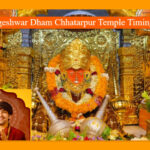
According to the legend that gives Thirumanancheri its entire devotional purpose, Lord Shiva and Goddess Parvati were once playing a celestial game of dice. The game escalated into a genuine quarrel, and in a moment of anger, Shiva transformed Parvati into a cow and sent her down to Earth. Almost immediately regretting what he had done, Shiva sought Lord Vishnu’s help to restore her — and Vishnu, taking the form of a cowherd specifically to protect “his sister,” eventually lifted the curse at a place called Thiruvaduthurai. Restored to her own form, Parvati bathed in the Kaveri River and went to live as the daughter of Sage Bharata Muni. Shiva, still wanting to make things right, approached the sage and formally asked for Parvati’s hand in marriage — a proposal the sage joyfully accepted, and the wedding took place at this exact spot. “Thirumanan” means marriage; “cheri” means village — together, “the village where the marriage happened.”
A second, complementary legend attached to the same temple involves Manmadhan, the god of love, who once shot an arrow of flowers at Shiva while the Lord sat in deep meditation (in his Dakshinamurthy form), attempting to disturb his penance. Shiva, disturbed, opened his third eye and reduced Manmadhan to ash on the spot. Manmadhan’s wife, Rathi Devi, pleaded for her husband’s restoration — and it was specifically at Thirumanancheri that Shiva granted her request and brought Manmadhan back.
These two legends — a marriage restored after a quarrel, and love itself revived after being destroyed — together explain why Thirumanancheri has become one of Tamil Nadu’s most significant pilgrimage destinations specifically for devotees facing delays or obstacles in marriage, with countless personal accounts circulating of matches finding sudden resolution shortly after a visit here.
💡 Quick Answer Darshan timings: 6:00 AM – 8:30 PM daily, with morning (6:00–9:30 AM), midday (12:00–1:30 PM), and evening (3:30–8:30 PM) darshan sessions Entry: Free general darshan; Archana and marriage Pariharam tickets purchased at the counter Online booking: Genuinely conflicting information across sources — at least one official-style source states plainly that online booking does not exist, while others describe an online process; confirm directly with the temple before relying on either Best months: Thai and Maasi (mid-January to mid-March) for marriage-specific prayers; Maha Shivaratri and the Chithirai wedding festival (April–May) for the most spiritually charged atmosphere Location: Thirumanancheri village, on the banks of the Kaveri River, Mayiladuthurai district, Tamil Nadu — approximately 26–35 km from Kumbakonam Last Verified: June 2026 — confirm current booking process directly with the temple
Thirumanancheri Temple Timings 2026
| Session | Timing |
|---|---|
| Morning darshan | 6:00 AM – 9:30 AM |
| Midday darshan | 12:00 PM – 1:30 PM |
| Evening darshan | 3:30 PM – 8:30 PM |
| Ambal Abhishekam (Santoshi Puja) | 7:30 PM – 10:30 PM |
| Kalyanam Pooja (marriage pooja) | 12:30 AM – 8:30 AM (sources show this as a notably wide, overnight-spanning window — confirm specific scheduling on arrival) |
Six daily pujas: The temple conducts six traditional daily rituals — Ushakkalam, Kalai Santhi, Uchikalam, Sayaratchai, Irandam Kalam, and Arthajamam — structuring the day’s worship around the classical South Indian temple ritual calendar.
Special days: Sankatahara Chathurthi and Poosa Nakshatra days specifically see Special Abhishekam combined with Umamaheshwara Homam — performed specifically to preempt marital discord or separation.
Pro tip: Visit during Thai and Maasi months (roughly mid-January to mid-March) if marriage-specific prayer is your primary purpose — these months are specifically cited as drawing the largest number of devotees with this exact intent.
Booking — A Genuine Contradiction Worth Addressing Directly
This deserves honest treatment rather than a confident-sounding answer either way. The temple’s own long-standing website states explicitly: “Online booking facility is not available. You can purchase the tickets at the devasthanam counter itself upon arrival.” At least one other source, by contrast, describes a step-by-step online booking process for marriage pooja, suggesting bookings “can be made via the official website by selecting the desired pooja and entering devotee details.”
The most consistent, repeated guidance across the majority of detailed sources points toward offline, counter-based booking as the standard, reliable method. If you specifically want to confirm whether an online option has since been introduced, check the temple’s current official channels directly before relying on it — but plan your visit assuming you will purchase tickets in person at the devasthanam counter, which multiple sources specifically describe as straightforward and unlikely to leave you without availability.
What to bring for the marriage Pariharam pooja specifically: Two garlands, two coconuts, turmeric, kumkum, camphor, ghee, sandal powder, betel leaf, betel nut, lemon, and bananas — devotees can purchase a pre-assembled Archana Set within the temple itself (containing clay lamps and ghee) specifically to avoid being overcharged by outside vendors. Bringing your own pure ghee from home is specifically recommended, given some sources’ caution that ghee sold within the temple grounds may not always be pure.
How the Marriage Prarthana (Prayer) Ritual Works
Step 1: Upon entering the temple, offer Pranam (respectful salutation) toward the Kodi Maram (flagpole).
Step 2: Proceed to offer prayers to Sri Selva Ganapathy, positioned to the left of the main shrine.
Step 3: Light five ghee lamps at the dedicated Ghee Deepa Mantap.
Step 4: Sit for a period of quiet prayer at the specific Marriage Prarthana Mantap.
Step 5: Proceed to pray to Lord Shiva (Kalyanasundareswarar), then to the Amman Sannithi (Goddess Parvati’s shrine), positioned on the right.
Pro tip: If you are unable to travel in person — whether due to distance, family circumstances, or being based abroad — some sources note that family members or representatives have historically performed this prayer on behalf of someone unable to attend themselves; confirm current guidance on this with the temple directly given the genuinely personal nature of the ritual.
What Devotees Specifically Pray For
Marriage delay (Vivaha Pariharam): The temple’s central and most well-known devotional purpose — devotees specifically pray for resolution of prolonged delays in finding a suitable match, with numerous personal accounts describing matches finalizing within weeks or months following a visit.
Marital harmony (Uma Maheshwara Homam): Performed specifically to preempt divorce, estrangement, or ongoing discord between husband and wife.
Conception difficulties (Putra Bhagyam): A special pooja performed specifically on Amavasai (New Moon) days, for couples struggling to conceive, including prayers to Raghu Bhagavan.
General success and obstacle removal (Poosa Nakshatra Homam): Performed monthly on Poosa Nakshatra days, addressing broader life difficulties including career and financial struggles, beyond marriage-specific concerns alone.
What Is Thirumanancheri — History and Architecture
Built by Sembiyanmadevi During the Chola Dynasty
The temple is attributed to Sembiyanmadevi of the Chola dynasty, with a history extending over a thousand years. It is recognized as one of the 276 Paadal Petra Shiva Sthalams — temples celebrated in the Tevaram hymns composed by the Tamil Saivite saints Tirugnanasambandar and Tirunavukkarasar — placing Thirumanancheri within the canon of medieval Tamil devotional literature, independent of its more contemporary fame as a marriage temple.
Sri Kalyanasundareswarar and Kokilambal
Lord Shiva is worshipped here as Sri Kalyanasundareswarar (also called Udhvaganathar), depicted in the specific “marriage pose” alongside Goddess Parvati, addressed as Kokilambal (from “Kokila,” the nightingale) — a depiction of the divine couple physically posed in the act of their wedding, rather than in a more conventional standing or seated devotional posture.
Built on the Banks of the Kaveri River
The temple stands among the group of significant shrines built along the River Kaveri, reflecting the broader sacred-river geography of the region.
A Note on the Aadi Month
Devotees specifically note that the Tamil month of Aadi (typically beginning around 16 July) is traditionally considered inauspicious for marriages generally — and some devotees specifically avoid visiting Thirumanancheri for marriage-related prayers during this particular month as a result, despite the temple otherwise being active and open throughout this period.
Festivals at Thirumanancheri Temple
Chithirai Wedding Festival (April–May): A three-day celebration of the divine couple’s wedding, creating the temple’s most magnificent annual atmosphere — specifically recommended for couples seeking blessings for a happy married life.
Maha Shivaratri: Highly auspicious for all Shiva-Parvati worship, with particular significance for marriage-related prayers specifically.
Thiruvadhirai (December–January): Commemorating Shiva’s cosmic creation of the universe.
Karthikai Deepam, Navratri, Vijayadasami, and Arudra Darshanam: Additional major festivals celebrated with considerable grandeur.
Pradosham days (monthly) and the broader Aadi season also draw significant devotee volume throughout the year.
The Trap — What Catches Most Visitors
“Assumed online booking definitely exists, or definitely does not, based on a single source” → Cause: Genuine contradiction exists between the temple’s own stated policy (no online booking) and at least one other source describing an online process → Fix: Plan your visit assuming counter-based, in-person booking as the reliable standard method, while checking the temple’s current official channels directly if you specifically want to confirm whether an online option has since launched.
“Purchased ghee or archana items from an outside vendor near the temple” → Cause: Assuming all nearby vendors offer the same quality and pricing as the temple’s own counter → Fix: Purchase the Archana Set within the temple itself to avoid being overcharged, and consider bringing your own pure ghee from home given some sources’ specific caution about ghee sold within the grounds.
“Visited during Aadi month expecting the same marriage-prayer significance as other months” → Cause: Unfamiliarity with this specific traditional caution → Fix: Some devotees specifically avoid Thirumanancheri for marriage-related prayers during the Tamil month of Aadi, given the broader cultural belief that this month is inauspicious for marriages generally — though the temple remains otherwise open and active throughout this period.
“Expected to complete the visit quickly without following the specific ritual sequence” → Cause: Treating the visit as a standard darshan rather than the temple’s specific multi-step marriage prayer process → Fix: Follow the sequence described above — Kodi Maram, Selva Ganapathy, ghee lamps at the Marriage Prarthana Mantap, then Shiva and the Amman Sannithi — for the complete, traditionally structured ritual experience.
How to Reach Thirumanancheri Temple
Temple address: Thirumanancheri, Mayiladuthurai District, Tamil Nadu, India.
By road: Approximately 26–35 km from Kumbakonam (sources show minor variation). From Chennai and Pondicherry, buses run via Cuddalore, Chidambaram, and Mayiladuthurai to Kuttalam, with onward connection to Thirumanancheri; direct buses and mini-buses also run from Kuttalam and Mayiladuthurai.
By train: Mayiladuthurai Junction (approximately 11 km) and Kumbakonam Junction (approximately 26–29 km) are the nearest railway stations, with extensive connectivity to Chennai, Trichy, Madurai, Coimbatore, Bangalore, and beyond. Kuttalam railway station, near Kumbakonam and Mayiladuthurai, is also cited as a convenient nearby option.
By air: Tiruchirapalli (Trichy) Airport — approximately 128 km, the nearest air gateway.
Parking: Available in front of the temple gopuram on regular days, though notably more difficult on weekends given larger crowds.
Before You Visit Thirumanancheri Temple — Checklist
☑ Darshan timings confirmed — 6:00–9:30 AM, 12:00–1:30 PM, and 3:30–8:30 PM ☑ Current booking process confirmed directly with the temple given genuine source conflict over online availability ☑ Marriage Pariharam pooja materials prepared — garlands, coconuts, turmeric, kumkum, and other listed items, or Archana Set purchased on-site ☑ Pure ghee carried from home if specifically concerned about quality of temple-sold ghee ☑ Thai or Maasi month travel preferred if marriage-specific prayer is your primary purpose ☑ Aadi month avoided specifically for marriage prayers, per traditional belief, if this matters to your plans ☑ Specific ritual sequence followed — Kodi Maram, Selva Ganapathy, ghee lamps, Marriage Prarthana Mantap, then Shiva and Amman Sannithi ☑ Modest, traditional dress worn — upper arms and legs covered
Frequently Asked Questions
What are Thirumanancheri Temple darshan timings in 2026?
The temple is open daily from 6:00 AM to 8:30 PM, with morning darshan from 6:00–9:30 AM, midday darshan from 12:00–1:30 PM, and evening darshan from 3:30–8:30 PM.
Is online booking available for Thirumanancheri Temple?
Sources show a genuine contradiction. The temple’s own long-standing official website explicitly states online booking is not available, recommending counter purchase upon arrival. At least one other source describes an online booking process. Plan for counter-based booking as the reliable standard method, and confirm directly with the temple if you want to check current online availability.
What is the legend behind Thirumanancheri Temple?
According to legend, Shiva and Parvati quarreled during a game of dice, and Shiva transformed Parvati into a cow in anger. After Vishnu helped lift the curse, Parvati lived as the daughter of Sage Bharata Muni, who later presented her to Shiva for marriage — a wedding that took place at this exact site, giving the village its name (“Thirumanan” meaning marriage, “cheri” meaning village).
What should I bring for the marriage Pariharam pooja at Thirumanancheri?
Two garlands, two coconuts, turmeric, kumkum, camphor, ghee, sandal powder, betel leaf, betel nut, lemon, and bananas. An Archana Set (clay lamps and ghee) is available for purchase within the temple itself to avoid overcharging by outside vendors.
When is the best time to visit Thirumanancheri for marriage blessings?
The Tamil months of Thai and Maasi (roughly mid-January to mid-March) are specifically cited as drawing the largest number of devotees with marriage-specific intentions. The three-day Chithirai wedding festival (April–May) and Maha Shivaratri are also particularly significant.
Why do some devotees avoid visiting Thirumanancheri during Aadi month?
The Tamil month of Aadi is traditionally considered inauspicious for marriages generally, leading some devotees to specifically avoid marriage-related prayers at Thirumanancheri during this period, even though the temple remains open and active throughout.
How far is Thirumanancheri from Kumbakonam?
Approximately 26–35 km, depending on the specific source and route, with Mayiladuthurai Junction (approximately 11 km) being the closest railway station.
Contact and Help
Address: Thirumanancheri, Mayiladuthurai District, Tamil Nadu, India Nearest railway stations: Mayiladuthurai Junction (~11 km), Kumbakonam Junction (~26–29 km)
One Last Thing
A quarrel over a game of dice is, on its own, a thoroughly ordinary kind of conflict — the sort of small disagreement that escalates faster than either party intends, said in anger, regretted almost immediately. What makes Thirumanancheri’s version of this story matter to so many strangers centuries later is what happened next: not punishment sustained, but a god determined to make things right, seeking help, waiting, eventually asking properly for the hand he had once taken so carelessly.
Devotees who travel here carrying their own much smaller, much more ordinary frustrations — a match that keeps falling through, parents running out of patience, a horoscope that won’t align with anyone’s — are, in their own way, asking for the same resolution Shiva once sought for himself: not a guarantee, but a chance for whatever has gone wrong to be set right, the same Kaveri water still flowing past the same temple where one marriage, against considerable odds, was eventually restored.
Om Namah Shivaya. Jai Kalyanasundareswarar. Jai Kokilambal.