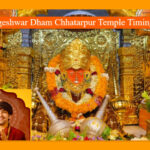
Rekha Patel, a 39-year-old from Surat, had heard about the Utara ritual at Sarangpur Hanuman Temple from her sister-in-law. Her teenage son had been suffering from severe anxiety and disturbed sleep for months. Doctors had been consulted. Medicine had been prescribed. Something remained unresolved.
Her sister-in-law, who had visited Sarangpur twice, said simply: “Ja. Utara karwa.” Go. Get the Utara done.
Rekha arrived on a Saturday morning at 6:30 AM. She had not fully understood what the Utara was. She only knew her son needed something that medicine alone wasn’t providing.
At the temple, a priest explained: the Utara is a ritual performed specifically for those suffering from what the tradition calls adhi, vyadhi, and upadhi — mental distress, physical illness, and spiritual disturbance. The priest performs a series of specific prayers, mantras, and ritual movements around the afflicted person, channelling the power of Kashtabhanjan Dev — the Remover of Sorrows — to release what burdens them.
At Sarangpur, Lord Hanuman has been worshipped specifically in this Kashtabhanjan form since 1905. Thousands come each week not for general blessings but for precisely this: the removal of what cannot be removed by ordinary means.
Rekha’s son sat quietly through the Utara. She cannot explain what happened. She says something shifted.
No online booking for Utara. Walk-in only. Arrive early on Saturdays.
Official portal: salangpurhanumanji.org
💡 Quick Answer Timings: 6:00 AM – 12:00 PM and 3:00 PM – 9:00 PM daily Afternoon break: 12:00 PM – 3:00 PM daily No online booking: All darshan and Utara ritual — walk-in only Best day: Saturday — most auspicious; also Tuesdays and Hanuman Jayanti Free meals (Bhojanalaya): Daily for all devotees Holy well: Collect water before leaving — inside complex 2026 news: Ambani ₹5 crore donation (Jan 2026); Trademark protection secured (June 2026) Last Verified: June 2026
Sarangpur Hanuman Temple Timings 2026
| Session | Timings | Notes |
|---|---|---|
| Morning darshan | 6:00 AM – 12:00 PM | Mangala Aarti at 6:00 AM |
| Afternoon break | 12:00 PM – 3:00 PM | Temple closed |
| Evening darshan | 3:00 PM – 9:00 PM | Sandhya Aarti at sunset |
Verify current timings at salangpurhanumanji.org — timings may shift during festivals.
Saturday timings are the same as regular days but the crowd is significantly larger. Saturday is considered Lord Hanuman’s most auspicious day for removing obstacles and negative influences. Arrive by 6:00 AM on Saturdays — the queue builds rapidly after 7:30 AM.
Pro tip: The 6:00–7:30 AM window on any weekday (Tuesday to Friday) is Sarangpur at its most contemplative. The Mangala Aarti is active, the Sarangpur village air is cool, and the queue for darshan typically moves in 20–30 minutes. On Saturdays, budget 2 to 4 hours minimum.
Major festivals with extended hours:
- Hanuman Jayanti (April/May) — largest annual gathering
- Ram Navami — special poojas
- Diwali and Saturday of Diwali week — extended into the night
What Is Kashtabhanjan Dev — The Unique Form at Sarangpur
Most Hanuman temples worship the Lord in one of his well-known forms — warrior Hanuman carrying the mountain, devotee Hanuman with Ram and Sita, or the standing protector form. Sarangpur is different.
“Kashtabhanjan” is a specific compound name: Kashta (sorrow/difficulty) + Bhanjan (destroyer/remover). Lord Hanuman at Sarangpur is specifically worshipped as the one who destroys suffering in three specific categories:
- Adhi — mental distress: anxiety, fear, obsession, disturbed thoughts
- Vyadhi — physical illness: ailments that have not responded to treatment
- Upadhi — spiritual disturbance: negative energy, evil eye, malefic planetary influence
This three-part framework is specific to the Kashtabhanjan tradition and explains why Sarangpur draws devotees who are not simply seeking general blessings but specific relief from specific suffering.
The founding miracle: In 1905, the saint Gopalanand Swami — a principal disciple of Bhagwan Swaminarayan — installed the Hanuman idol at this location. According to tradition, when Gopalanand Swami touched the idol with a rope during the installation ceremony, the idol moved — a divine manifestation that confirmed the Lord’s direct, active presence at this site. The idol is thus considered not merely an image but a living divine presence.
The Swaminarayan connection: Sarangpur is unique among Swaminarayan temples — it is the only major Swaminarayan Sampraday temple (Vadtal Gadi) that does not have Lord Swaminarayan or Lord Krishna as the principal deity. Lord Hanuman is the central deity, placed in the tradition of Swaminarayan devotion but maintaining his independent status as the King of Sarangpur.
Lord Shani at Hanuman’s feet: One of the temple’s most distinctive iconographic features — Lord Shani (Saturn) is depicted in female form seated at the feet of Lord Hanuman. This specific image reflects the Puranic tradition that even Saturn’s influence is subdued in Hanuman’s presence — which is why devotees who are going through Saturn-related difficulties (Sadhesati, Dhaiya) specifically come to Sarangpur.
The 54-foot King of Sarangpur statue: Beyond the main temple idol, the complex features a 54-foot tall statue of Lord Hanuman — known as the “King of Sarangpur.” This towering idol, visible from a distance as you approach the village, has become one of the most photographed Hanuman statues in Gujarat.
2026 News Updates That Matter for Your Visit
January 2026 — Ambani family’s first pilgrimage of the year: Mukesh Ambani, accompanied by wife Nita Ambani and son Anant Ambani, visited Sarangpur Kashtabhanjan Dev Hanumanji Mandir on 5 January 2026 — their first spiritual engagement of the new year, immediately after a Somnath Temple darshan on the same trip. Mukesh Ambani announced a donation of ₹5 crore to the temple trust, to be used for pilgrim facility improvements including better accommodation arrangements. The Salangpur Temple Trust shared a video of the visit on official channels.
June 2026 — Trademark and copyright protection: In June 2026, the Shri Kashtabhanjan Dev Hanumanji Temple Trust secured copyright and trademark protection for the 54-foot “King of Salangpur” statue, the Golden Wagha (the ornate golden ceremonial outfit worn by the deity on special occasions), and the institution’s logo. The move sparked protests from Hindu organizations and saints who argued that a deity’s form cannot be treated as intellectual property. The temple trust clarified: the copyright covers only the specific statue, the Golden Wagha design, and the institutional logo — not the deity itself — specifically to prevent online fraud and fake booking websites that have been collecting money from devotees using the temple’s images. The trust stated: “Hanumanji belongs to all, always has, and always will.”
This is a developing situation. Follow salangpurhanumanji.org for official updates.
The Utara Ritual — What It Is and How to Participate
The Utara is the most sought-after ritual at Sarangpur beyond general darshan — and the reason many devotees make the journey from distant cities.
The ritual is performed by temple priests for devotees who believe they are suffering from negative energies, evil eye (nazar), possession, or severe spiritual disturbance. The priest performs a specific sequence of prayers and mantras while conducting movements around the devotee with ritual objects, channelling the Kashtabhanjan form’s power to release the disturbance.
The tradition holds that Hanuman’s presence at Sarangpur is so potent that even a glance at the idol can drive out negative forces — the Utara formalizes this into a structured ritual.
How to participate:
- There is no advance booking for the Utara — it is a walk-in service
- Arrive at the temple during darshan hours (6 AM–12 PM or 3–9 PM)
- Go to the Seva counter and ask for “Utara” — the priests will guide you
- Saturday is the most auspicious day for the Utara, and typically the busiest
- A voluntary donation is customary; there is no fixed fee
The Anna Kshetra: The temple provides free sattvic meals daily through its Bhojanalaya to all devotees. No payment, no registration. Arrive during meal service hours and eat with the community — this practice of collective feeding is central to the temple’s identity.
The Holy Well — Don’t Leave Without It
Inside the temple complex is a sacred well whose water is considered spiritually charged by the deity’s presence. Devotees collect this water before leaving — it is used for sprinkling in homes, consumed as prasad, or taken for family members who could not make the journey.
This is a practical detail most guides omit — ask a sevak to direct you to the well within the complex. It is a 2–3 minute detour from the main sanctum exit.
No Online Booking — Everything Walk-In
The temple does not currently offer online darshan booking. All services — general darshan, Utara ritual, special sevas — are available on a walk-in basis at the temple counter.
Pro tip: The temple’s website salangpurhanumanji.org offers online booking for Yatri Niwas (accommodation) — if you plan to stay overnight, book the room online. Rooms fill on weekends and festival days.
Beware of fake websites: Following the trademark controversy of June 2026, the trust has specifically flagged that multiple fake websites are collecting money from devotees for darshan passes, room bookings, and donations — none of which are official. Only salangpurhanumanji.org is official. Any other site collecting money in the temple’s name is unauthorized.
How to Reach Sarangpur
Temple address: Shree Kashtabhanjan Dev Hanumanji Mandir, P.O. Salangpur (Hanuman), Tal: Barwala, Dist: Botad, Gujarat — 364 150
By road:
- Ahmedabad: 150 km (approximately 2.5 hours via NH48)
- Bhavnagar: 70 km (approximately 1.5 hours) — closer than Ahmedabad, less known
- Rajkot: 180 km (approximately 3 hours)
- Surat: 280 km (approximately 4.5 hours)
- Vadodara: 180 km (approximately 3 hours)
By train: Botad Railway Station — 12–15 km from Sarangpur (auto/taxi, 20–25 minutes). Connected to Ahmedabad, Bhavnagar, and Rajkot.
By air: Bhavnagar Airport — 70 km (approximately 1.5 hours). Ahmedabad Airport — 150 km (approximately 2.5 hours).
From Ahmedabad: GSRTC and private buses run directly to Sarangpur from Ahmedabad bus stand. Multiple services daily, including morning departures timed for early darshan.
Before You Visit — Checklist
☑ Timings confirmed — 6:00 AM–12:00 PM and 3:00 PM–9:00 PM; break 12–3 PM ☑ Saturday visit? — arrive by 6:00 AM; 2–4 hour queue expected ☑ Utara ritual planned — walk-in at seva counter; no advance booking ☑ Holy well water — ask sevak to direct you before leaving complex ☑ Bhojanalaya (free meals) — available daily for all devotees ☑ Accommodation booked at salangpurhanumanji.org if staying overnight ☑ Only official site is salangpurhanumanji.org — no other site is authorized ☑ Traditional dress — modest attire expected; no shorts or sleeveless
Frequently Asked Questions
What are Sarangpur Kashtabhanjan Dev Hanuman temple timings in 2026?
Morning darshan: 6:00 AM to 12:00 PM. Afternoon break: 12:00 PM to 3:00 PM. Evening darshan: 3:00 PM to 9:00 PM. Saturday and Tuesday have the same timings but significantly higher crowds. Verify current timings at salangpurhanumanji.org as festival schedules may vary.
What is the Utara ritual at Sarangpur?
The Utara is a ritual performed by temple priests for devotees suffering from mental distress, physical illness, or spiritual disturbance (adhi, vyadhi, upadhi). The priest channels the power of Kashtabhanjan Dev to release negative energies. It is a walk-in service — no advance booking — available during darshan hours at the seva counter. Saturday is the most auspicious day for Utara.
What does “Kashtabhanjan” mean?
Kashtabhanjan is a Sanskrit compound — Kashta (sorrow/difficulty) + Bhanjan (destroyer/remover). Lord Hanuman at Sarangpur is specifically worshipped in his form as the remover of three types of suffering: adhi (mental distress), vyadhi (physical illness), and upadhi (spiritual disturbance).
Is online booking available at Sarangpur temple?
No online booking for darshan or Utara ritual — all walk-in. However, Yatri Niwas (accommodation) can be booked online at salangpurhanumanji.org. Beware of fake websites collecting money in the temple’s name — the trust flagged this issue in June 2026. Only salangpurhanumanji.org is official.
Why is Sarangpur temple unique among Swaminarayan temples?
Sarangpur is the only major Swaminarayan Sampraday (Vadtal Gadi) temple where Lord Hanuman — not Lord Swaminarayan or Lord Krishna — is the principal deity. This makes it distinctly unique within the Swaminarayan tradition.
What happened with the Ambani visit and donation in 2026?
Mukesh Ambani, with wife Nita Ambani and son Anant Ambani, visited Sarangpur Kashtabhanjan Dev Hanumanji Mandir on 5 January 2026 — their first spiritual engagement of the year after a Somnath Temple darshan. Mukesh Ambani donated ₹5 crore to the temple trust for pilgrim facility improvements.
Sarangpur temple kaise jaayein aur Utara kaise karwayein?
Ahmedabad se 150 km (2.5 ghante) ya Bhavnagar se 70 km (1.5 ghante) — road se. Botad railway station 12 km dur hai. Mandir 6:00 AM par khulta hai. Utara ke liye seva counter par seedha jaayein — koi advance booking nahi. Saturday ko sabse zyada bheed hoti hai, 6:00 AM tak pahunchna best. Holy well se paani zaroor lein jaate waqt. Yatri Niwas booking ke liye salangpurhanumanji.org.
Contact and Help
Official portal: salangpurhanumanji.org Address: Shree Kashtabhanjan Dev Hanumanji Mandir, P.O. Salangpur (Hanuman), Tal: Barwala, Dist: Botad, Gujarat — 364 150 Nearest railway station: Botad — 12–15 km
Official Links
| Purpose | Link |
|---|---|
| Temple information & accommodation booking | salangpurhanumanji.org |
One Last Thing
Gopalanand Swami touched the idol with a rope in 1905 and it moved. Since then, millions have come with their adhi, vyadhi, and upadhi — their mental sorrows, their physical ailments, their spiritual disturbances — and found something that ordinary remedies had not reached.
In January 2026, India’s richest man came here as his first pilgrimage of the new year. In June 2026, the temple trademarked its images to protect devotees from fraud — and then clarified, because the protests came: Hanumanji belongs to all. Always has. Always will.
The statue that India’s richest man prayed before, the idol whose rope moved in the hands of a saint, the Kashtabhanjan who sits with Saturn subdued at his feet — none of this belongs to any trust or institution. It belongs to anyone who arrives at 6:00 AM on a Saturday morning with something they cannot fix themselves.
Rekha’s son slept through the night after the Utara. She does not know why. She went back to thank Kashtabhanjan Dev three months later. She says she will keep going.
Jai Kashtabhanjan Dev. Jai Bajrang Bali.