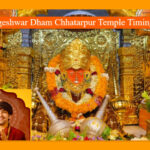
Priya Shah, a 41-year-old from Ahmedabad, had completed three of the four Char Dhams — Badrinath, Jagannath Puri, Rameshwaram. Dwarka was her last. She arrived early in the morning, climbed the 56 steps from Gomti Ghat to the temple entrance, and paused before the two gates.
A local priest noticed her uncertainty and explained what she was standing between.
The southern entrance is called Swarg Dwar — the Gateway to Heaven. Every pilgrim enters through here. The northern exit is Moksha Dwar — the Gateway to Liberation. Every pilgrim leaves through here.
You enter through heaven and exit through liberation. The entire pilgrimage is contained in the direction of your movement through the temple.
Priya said she had visited many temples. She had never stood between two gates that made the theological statement quite so directly.
She walked through the Swarg Dwar.
Official portal: dwarkadhish.org
💡 Quick Answer Timings: 6:30 AM – 1:00 PM and 5:00 PM – 9:30 PM daily Afternoon closure (Anosar): 1:00 PM – 5:00 PM — 4 full hours Entry: Free — Swarg Dwar (south, entry) | Moksha Dwar (north, exit) Flag change seva: 5 times daily — devotees can participate, ₹500–₹1,000 Gomti Ghat dip: Traditional before darshan — 56 steps below Swarg Dwar Janmashtami 2026: 4 September — darshan till 2:30 AM Best time: October–March | Early morning 6:30–8:30 AM Last Verified: June 2026
Dwarkadhish Temple Timings 2026 — Full Daily Schedule
| Session | Timings | Notes |
|---|---|---|
| Mangala Aarti | 6:30 AM | Opening; most devotionally intense |
| Morning darshan | 6:30 AM – 1:00 PM | Best window: 6:30–8:30 AM |
| Afternoon closure (Anosar) | 1:00 PM – 5:00 PM | 4 hours — deity’s rest and internal rituals |
| Evening darshan | 5:00 PM – 9:30 PM | Sandhya Aarti ~7:00 PM; Shayan Aarti ~9:00 PM |
The afternoon break at Dwarkadhish is called Anosar — a specific term used in the Vaishnava tradition for the period when the deity is considered to be resting and not receiving visitors. This is not simply “temple closed” — it is a devotional principle: the Lord, too, needs rest.
The Anosar runs for 4 hours (1:00–5:00 PM). Pilgrims arriving from Jamnagar or Ahmedabad during this window find the gates shut. Plan arrivals before 12:00 PM for the morning session, or after 5:30 PM for the evening.
Pro tip: The 6:30–8:30 AM window is Dwarkadhish at its best. The Mangala Aarti has just concluded, the Arabian Sea breeze is cool through the narrow Dwarka lanes, and the crowd is a fraction of the afternoon surge. On weekdays in the off-season (June–September), this window can feel almost private. The black marble idol of Lord Dwarkadhish in the morning light — jewelled, four-armed, radiant — is the visual that stays.
Festival darshan (Janmashtami 2026 = 4 September): The temple remains open through the night with darshan extended to 2:30 AM. Lakhs of devotees arrive for the midnight Abhishek — the open ceremonial bath of Lord Dwarkadhish — which can be witnessed by all present. Doordarshan’s DD Girnar and DD National channels carry live coverage from 11:25 PM.
What Is Dwarkadhish Temple — Char Dham AND Sapta Puri
The Dwarkadhish Temple — also called Jagat Mandir, “Temple of the World” — holds a dual designation that no other temple in India shares: it is simultaneously one of the four Char Dhams and one of the seven Sapta Puris.
Char Dham: The four sacred pilgrimage sites that Adi Shankaracharya designated as the spiritual corners of India — Badrinath (north), Puri (east), Rameshwaram (south), and Dwarka (west). Completing all four is considered one of Hinduism’s most complete acts of pilgrimage.
Sapta Puri: The seven cities where moksha (liberation from the cycle of birth and death) can be attained — Varanasi, Mathura, Ayodhya, Haridwar, Kanchipuram, Ujjain, and Dwarka. A person who visits all seven is believed to be released from the cycle of rebirth.
Dwarka is the only city on both lists.
The Mahabharata connection: After the Kurukshetra war ended, Lord Krishna returned to Dwarka and lived here until the city was submerged in the sea following his departure from earthly life. The original Dwarkadhish Temple is believed to have been built by Vajranabh — Krishna’s great-grandson — over the site of Krishna’s own palace, Hari Griha.
Underwater archaeology confirms the legend: Between 1983 and 1990, the Archaeological Survey of India conducted underwater excavations off the Dwarka coast. They found stone walls, stone anchors, copper coins, and structural remains approximately 2 km offshore — evidence of a well-established ancient city now submerged. This physical evidence aligns with the Mahabharata’s account that Dwarka was reclaimed by the sea after Krishna’s departure.
2026 update: The Devbhoomi Dwarka district administration completed a signage and visitor infrastructure upgrade around the temple complex in early 2026 — improving pedestrian flow from Gomti Ghat to the Swarg Dwar entrance, with new English and Hindi interpretation boards at key points.
The 52-Yard Flag — Five Times Daily
The most visible feature of the Dwarkadhish Temple is not the black marble idol inside — it is the enormous flag (Dhwaja Ji) on the 43-metre shikhara (main spire), visible from 10 km away across the flat Saurashtra landscape.
The flag is 52 yards long, made of silk, decorated with the sun and moon symbols of the Yadava clan. It flutters constantly from the Arabian Sea breeze — on clear days it can be seen from the sea itself.
What makes the flag uniquely participatory: it is changed five times every day, and devotees can book the flag-hoisting seva (Dhwaja Ji Arohan) to personally participate in the change. The seva costs approximately ₹500–₹1,000 per flag change participation and includes the experience of standing near the shikhara area during the hoisting ceremony.
The flag changes happen at specific times during darshan hours — enquire at the seva counter inside the temple or at dwarkadhish.org for the current booking process.
Why five times a day? The five changes correspond to the five elements (Pancha Bhoota) — each flag change is a cosmic renewal, a re-dedication of the Lord’s presence in Dwarka. Many regular Dwarkadhish devotees plan their visits around attending at least one flag change.
The Gomti Ghat Tradition — Before You Enter
Traditional Dwarkadhish pilgrimage begins not at the temple gate but 56 steps below it — at the Gomti Ghat, where the Gomti River meets the Arabian Sea.
The tradition: take a dip in the Gomti River before climbing to the temple. The Gomti at Dwarka is considered as sacred as the Ganga here — the river flows from the east through the city and joins the sea just below the temple, creating a sacred confluence.
From Gomti Ghat, 56 stone steps (called the Swarga Seepi or Nij Mandir steps) lead up to the Swarg Dwar entrance. Most pilgrims descend from the main road, bathe at the Gomti Ghat, and climb the 56 steps to the temple entrance. The Sudama Setu — a pedestrian bridge crossing the Gomti — connects the Ghat area to the opposite bank where smaller shrines are located.
Note: The Gomti Ghat area has currents from the Arabian Sea on certain days — exercise caution when bathing, especially during monsoon and high tide.
Inside the Complex — What Most Visitors Miss
The Dwarkadhish Temple complex is richer than a single darshan of the main idol suggests. Several shrines and features within the complex are worth specific attention:
Devaki Devi temple: Lord Dwarkadhish’s mother Devaki has a small temple placed directly opposite the main sanctum — positioned so she can always see her son and observe every seva offered to him. The emotional resonance of a mother who can eternally watch her son receive the world’s devotion is one of the most quietly moving details in the entire complex.
Pattarani Mahal: A separate courtyard structure within the complex housing deities of Lakshmi-Narayana, Satyabhama, Jambavati, Bala-Gopal, Radhika, and Saraswati. Most pilgrims pass through the main darshan and miss this courtyard entirely.
The Satyabhama-Tuladan legend: One of the most beloved stories associated with Dwarkadhish — once Satyabhama, in a moment of piety, donated Lord Krishna himself to the sage Narada. When she sought to reclaim him, Narada said she would have to place gold equal to Krishna’s weight on the scale. All of Dwarka’s gold was placed on the scale. Krishna did not move. At last, Rukmini placed a single Tulasi leaf with true devotion — and the scale balanced. The idol of Satyabhama and this legend are honoured within the complex.
No photography inside: The main sanctum and inner shrines prohibit photography. Leave camera equipment outside.
Janmashtami 2026 — What Makes Dwarka’s Celebration Different
Janmashtami 2026 falls on 4 September (Friday). At Dwarkadhish Temple, Janmashtami is the biggest celebration of the year — drawing 5 lakh+ devotees to the city.
What makes the Dwarka Janmashtami specifically different from other cities:
The Abhishek is open to all: The ceremonial bathing of the Lord (Abhishekam) on Janmashtami is performed openly — devotees present can witness the priests bathing the black marble idol with milk, curd, honey, and water. This open Abhishek is not available on other days.
Midnight darshan: The exact birth moment of Lord Krishna (midnight) is marked with a special Aarti. Darshan continues until 2:30 AM.
Doordarshan live coverage: DD Girnar and DD National broadcast the midnight Aarti live from approximately 11:25 PM — for devotees who cannot be physically present.
The Holi comparison: Dwarka’s Holi is also considered exceptional — celebrated in the Vrindavan spirit with coloured celebrations inside the temple premises. If Janmashtami is the birth, Holi at Dwarka is the life.
Planning for Janmashtami: Dwarka accommodation fills 2–3 months ahead for 4 September 2026. Book by early July. Arrive in Dwarka by 3 September evening for a comfortable experience.
Bet Dwarka + Rukmini Temple — The Complete Dwarka Circuit
Most pilgrims come to Dwarkadhish and leave. The complete Dwarka pilgrimage includes two additional sites:
Rukmini Devi Temple (2 km from Dwarkadhish): The temple of Lord Krishna’s first wife and queen of Dwarka. According to legend, Rukmini lives separately from the main temple because she once arrived late for a meal when sage Durvasa was visiting — and was cursed to remain at a distance from her husband’s palace. The four-armed idol of Rukmini (a form of Goddess Mahalakshmi) is one of the most beautifully adorned in Gujarat. The route from Dwarkadhish to Rukmini Temple passes through the main Dwarka bazaar — plan 1 hour for this visit.
Bet Dwarka (30 km, ferry from Okha): An island temple where Lord Krishna is believed to have actually lived — his residence during his time in Dwarka, as distinguished from the Dwarkadhish Temple which is his place of royal rule. The ferry from Okha Port to Bet Dwarka takes 20 minutes. The island has a 500-year-old temple built by Vallabhacharya, and the atmosphere — a small island Krishna temple surrounded by the Gulf of Khambhat — is completely different from the grand main temple. The Krishna-Sudama reunion is specifically associated with Bet Dwarka — the spot where the humble Sudama met his childhood friend who had become a king.
Pro tip: Dwarkadhish + Rukmini Temple is a half-day circuit, easily completed before the Anosar closure. Bet Dwarka requires a full additional day due to the ferry logistics. Many Gujarat pilgrims combine Dwarka + Somnath (230 km south) in a two-day Gujarat circuit.
The Dwarka Trap — What Catches Most Visitors
“Arrived at 2:30 PM — gates shut” → Cause: Anosar (afternoon closure) runs 1:00 PM–5:00 PM → Fix: Arrive before 12:00 PM for morning darshan, or plan to reach after 5:30 PM. Use the closure time for Rukmini Temple (2 km) or Gomti Ghat and Sudama Setu walk.
“Skipped the Gomti Ghat dip — did not know it was traditional” → Cause: Many pilgrims arrive directly at the temple entrance and skip the Ghat → Fix: Before climbing to the temple, descend the 56 steps to Gomti Ghat, take a dip or at least touch the water, and then climb to Swarg Dwar. This completes the traditional sequence.
“Came for Janmashtami without accommodation booking” → Cause: Dwarka fills completely for 4 September 2026 by early July → Fix: Book by July. Fallback: Jamnagar (137 km) or Porbandar (100 km) — both have more accommodation options and are driveable for the festival.
“Did not know about the flag hoisting seva” → Cause: The Dhwaja Ji Arohan seva is not prominently marketed but is one of the most personal experiences at Dwarkadhish → Fix: Enquire at the seva counter inside the temple or at dwarkadhish.org. The flag change happens 5 times daily — one will likely fall within your visit window.
How to Reach Dwarkadhish Temple
Temple address: Dwarkadhish Temple (Jagat Mandir), Dwarka, Devbhoomi Dwarka District, Gujarat — 361 335
By train: Dwarka Railway Station — 2 km from the temple. Connected to Ahmedabad (7 hours), Jamnagar (3.5 hours), Mumbai (16 hours), Delhi (24 hours). Several overnight trains make Dwarka reachable without air travel.
By air: Jamnagar Airport — 137 km from Dwarka (approximately 2.5 hours). Porbandar Airport — 100 km (2 hours). Rajkot Airport — 220 km (4 hours).
By road:
- Ahmedabad: 450 km (7 hours)
- Rajkot: 220 km (3.5 hours)
- Jamnagar: 137 km (2.5 hours)
- Somnath: 230 km (4 hours)
- Porbandar: 100 km (2 hours)
Gujarat Char Dham + Jyotirlinga circuit: Dwarka + Somnath in 2 days is the most popular Gujarat pilgrimage combination — both are on templetimings.in, both have complete guides.
Before You Visit Dwarkadhish — Checklist
☑ Timing noted — 6:30 AM–1:00 PM and 5:00 PM–9:30 PM; Anosar closure 1–5 PM ☑ Gomti Ghat dip planned — 56 steps below Swarg Dwar; traditional first step ☑ Enter Swarg Dwar (south) | Exit Moksha Dwar (north) — note the direction ☑ Flag hoisting seva enquired at dwarkadhish.org or seva counter — ₹500–₹1,000 ☑ Rukmini Temple (2 km) included in day plan — best during Anosar break ☑ Bet Dwarka — extra day needed; ferry from Okha 30 km away ☑ Photography prohibited inside the main sanctum ☑ No leather items inside the temple complex ☑ Janmashtami 2026 (4 September) — accommodation booked by early July ☑ Traditional modest dress — dhoti/kurta (men); saree or salwar (women)
Frequently Asked Questions
What are Dwarkadhish Temple timings in 2026?
Morning darshan: 6:30 AM to 1:00 PM. Afternoon Anosar closure: 1:00 PM to 5:00 PM. Evening darshan: 5:00 PM to 9:30 PM. Mangala Aarti at 6:30 AM; Sandhya Aarti ~7:00 PM; Shayan Aarti ~9:00 PM. Extended hours on Janmashtami (4 September 2026) — darshan till 2:30 AM. Verify at dwarkadhish.org before visiting.
What is Swarg Dwar and Moksha Dwar at Dwarkadhish Temple?
Swarg Dwar (southern gate) is the entry — the Gateway to Heaven. Moksha Dwar (northern gate) is the exit — the Gateway to Liberation. All pilgrims enter through Swarg Dwar and exit through Moksha Dwar. The theological statement is intentional: the entire pilgrimage moves from heaven to liberation.
How many times does the flag change at Dwarkadhish Temple?
The 52-yard Dhwaja Ji (temple flag) is changed five times daily. Devotees can book the flag hoisting seva (Dhwaja Ji Arohan) to personally participate — approximately ₹500–₹1,000. Enquire at the seva counter or at dwarkadhish.org.
Is Dwarkadhish Temple part of Char Dham?
Yes. Dwarkadhish Temple in Dwarka is one of the four Char Dhams — with Badrinath (north), Jagannath Puri (east), and Rameshwaram (south). Dwarka occupies the western position. It is also one of the seven Sapta Puris where moksha can be attained — the only city on both lists.
When is Janmashtami 2026 at Dwarkadhish?
Janmashtami 2026 falls on 4 September (Friday). Darshan extends till 2:30 AM. The Lord’s Abhishekam (open ceremonial bath with milk, curd, honey) is visible to all present. Doordarshan broadcasts live from 11:25 PM. Accommodation in Dwarka fills by early July — book ahead.
What is the Anosar break at Dwarkadhish Temple?
Anosar is the afternoon ritual closure at the Dwarkadhish Temple — from 1:00 PM to 5:00 PM daily. During Anosar, the deity is considered to be resting and the temple is closed to visitors. Use this time for Rukmini Temple (2 km), Gomti Ghat, or Sudama Setu.
Dwarkadhish Temple mein darshan kaise karein?
Subah 6:30 AM par pahunchein. Pehle Gomti Ghat par jaayein (Swarg Dwar se 56 seedhiyaan neeche) — dip lein, phir Swarg Dwar se andar jaayein. Darshan ke baad Moksha Dwar se nikalna traditional hai. Dopahar 1–5 PM Anosar closure hai. Flag hoisting seva ke liye seva counter par poochein. Rukmini Temple 2 km door hai — same day possible. Janmashtami 2026 (4 September) ke liye July mein accommodation book karein.
Contact and Help
Official portal: dwarkadhish.org Phone: +91 2892-234080 Email: dwarkadhishtemple@dwarkadhish.org Address: Dwarkadhish Temple (Jagat Mandir), Dwarka, Devbhoomi Dwarka District, Gujarat — 361 335 Nearest railway station: Dwarka Railway Station — 2 km
Official Links
| Purpose | Link |
|---|---|
| Temple information & seva booking | dwarkadhish.org |
| Helpline | +91 2892-234080 |
One Last Thing
The city of Dwarka was built by Lord Krishna. He built it in a single night, with the divine architect Vishvakarma, from land reclaimed from the sea. He lived here. He ruled here. He left here. And then the sea took it back.
Underwater, 2 km off the coast, archaeologists have found walls, anchors, and pottery — the physical remains of a city that the Mahabharata says existed and then was swallowed by the Arabian Sea. The temple you visit today stands at the edge of that submerged world.
You enter through the Swarg Dwar. You walk through a temple built by a king’s great-grandson over his great-grandfather’s palace. You stand before a black marble idol that devotees have adorned daily for 2,500 years. You exit through the Moksha Dwar.
In between, if you know where to look, Devaki can see her son from across the courtyard, and the Tulasi leaf of devotion is still heavier than all the gold in Dwarka.
Priya completed her Char Dham when she walked through the Swarg Dwar. She stood before the Lord.
She said she felt like she had arrived somewhere she had been going to for a long time.
Jay Dwarkadhish. Jai Shri Krishna.