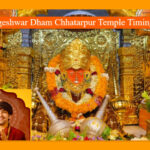
Ananya Sharma, a 29-year-old from Mumbai, had visited five temples in Vrindavan that morning — Banke Bihari, Radha Raman, Radha Damodara, Govind Dev, and Madan Mohan. Each was beautiful in its own way and each carried the particular quality of Vrindavan’s intense, sometimes chaotic, always devotional atmosphere.
ISKCON was her sixth stop. She entered through the main gate and stopped.
The marble floor was spotless. The crowd moved in organized lanes. The kirtan was amplified but controlled — not the free-form ecstasy of Banke Bihari but something more measured, more structured. Signboards in Hindi, English, and multiple other languages guided visitors through the complex. A Western devotee in saffron, with a shaved head and a tilak on his forehead, was explaining the significance of the Tulasi plant to a group of schoolchildren.
Ananya said it felt like a different country from the Vrindavan she had spent the morning in.
That is not a criticism. It is simply the truth about ISKCON Vrindavan — it is a different kind of sacred space from the ancient, crowded, intensely local temples that surround it. Both are genuine. Both serve devotees who need different things.
This guide tells you what makes ISKCON Vrindavan distinct, and how to visit it well.
Official portal: iskconvrindavan.com
💡 Quick Answer Morning session: 4:10 AM – 12:45 PM Afternoon closure: 12:45 PM – 4:30 PM Evening session: 4:30 PM – 8:45 PM Mangala Aarti: 4:30 AM (Main Temple) | 4:10 AM (Prabhupada Samadhi) Entry fee: Free — donations voluntary Janmashtami 2026: 4 September — midnight celebration Live darshan: iskconvrindavan.com/live-darshan Last Verified: June 2026
ISKCON Vrindavan Temple Timings 2026 — Complete Aarti Schedule
| Session | Timings | Notes |
|---|---|---|
| Mangala Aarti — Prabhupada Samadhi | 4:10 AM | Pre-dawn awakening; small intimate gathering |
| Mangala Bhoga | 4:10 AM | Morning food offering |
| Mangala Aarti — Main Temple | 4:30 AM | Most devotionally intense window |
| Tulasi Aarti | 5:00 AM | Worship of the sacred Tulasi plant |
| Shringar Darshan | 7:15 AM | Deities adorned in elaborate dress — reveal moment |
| Raj Bhog Aarti | 10:30 AM | Mid-morning grand food offering |
| Afternoon closure | 12:45 PM – 4:30 PM | Deity rest; complex partially open |
| Dhoop Aarti | 4:30 PM | Evening reopening |
| Sandhya Aarti | 6:30 PM | Most vibrant — kirtan, lights, full congregation |
| Shayan Aarti | 8:30 PM | Night closing; deities retire |
| Temple closes | 8:45 PM |
Pro tip: The Shringar Darshan at 7:15 AM is the visual highlight of the morning session. The deities — who have been veiled since the Mangala Aarti — are revealed in their full morning dress and jewellery. The moment of unveiling (called the Darshan opening) draws a concentrated burst of devotion from the assembled pilgrims. Arrive by 7:00 AM to be well-positioned.
The Sandhya Aarti at 6:30 PM is the most vibrant and accessible for casual visitors — the temple is fully lit, the kirtan is at its most joyful, and the congregation of Indian and international devotees creates an atmosphere that is genuinely unlike any other evening aarti in Vrindavan.
Afternoon closure: 12:45 PM to 4:30 PM — the deities rest and the main temple hall is closed. The Prabhupada Samadhi (across the courtyard) and the guest house areas remain accessible. The ISKCON restaurant serves lunch during this period.
What Is ISKCON Vrindavan — Three Deities, One World
The ISKCON Temple Vrindavan, officially called Sri Sri Krishna Balaram Mandir, was established by Srila A.C. Bhaktivedanta Swami Prabhupada — the founder of the International Society for Krishna Consciousness — and consecrated in 1975.
Most pilgrims come knowing it as the “Krishna Balaram Temple.” What many don’t realize is that the main temple hall houses three separate deity pairs, each with its own altar and significance:
Sri Sri Radha Shyamasundar with Lalita and Vishakha Devi: The first altar as you enter. Radha-Krishna in the classic Vrindavan form — the divine romantic couple, the eternal love that the Vaishnava tradition places at the heart of all existence.
Sri Sri Krishna Balaram: The central altar — Lord Krishna and his elder brother Balarama, depicted in their Vrindavan pastoral forms. This is the titular deity pair of the temple. The white-and-blue forms of Balaram and the dark blue of Krishna stand together as the Adi-Lila (original pastimes) deities.
Sri Sri Gaura-Nitai: The third altar — Lord Chaitanya Mahaprabhu and his companion Nityananda, the 15th-century saints who began the Bengal Vaishnava revival and whose movement eventually became ISKCON through Srila Prabhupada’s lineage. Golden-hued, arms raised in kirtan posture.
Each altar receives separate Aartis and is dressed and adorned separately. A complete darshan of all three altars — moving from left to right — takes 15 to 20 minutes if done attentively.
Srila Prabhupada’s Samadhi: Across the main courtyard from the temple hall is the white marble Samadhi of Srila Prabhupada — where the founder’s body was interred in 1977. The Samadhi has its own Mangala Aarti at 4:10 AM (earlier than the main temple) and is a place of profound quiet and reverence throughout the day. It houses a large marble murti of Prabhupada, numerous photographs, a small museum, and the scent of fresh flowers offered continuously by devotees.
2026 news update: ISKCON Vrindavan launched a live darshan streaming service that has been running daily since January 2026 at iskconvrindavan.com/live-darshan — including the early morning Mangala Aarti from 4:30 AM, allowing devotees worldwide to participate remotely. Janmashtami 2026 (4 September) will feature a full night of celebrations including midnight Abhishek and Aarti with extended live streaming.
What Makes ISKCON Vrindavan Different From Other Vrindavan Temples
This is the question most pilgrims have after spending a morning at the older Vrindavan temples and then arriving at ISKCON. The difference is real and worth understanding.
The older Vrindavan temples — Banke Bihari, Radha Raman, Radha Damodara, and the other 5,500+ temples of Vrindavan — are embedded in the continuous living tradition of Braj Vaishnava culture. They are intense, crowded, often loud, managed by hereditary priest communities, and have the quality of having existed for centuries without particularly accommodating the visitor. The deity is worshipped on the deity’s terms.
ISKCON Vrindavan was founded in 1975 to bring Krishna consciousness to devotees from all backgrounds — Indian and international, initiated and curious, experienced and first-time. The discipline of ISKCON’s daily schedule, the multilingual signage, the organized visitor flow, the clean complex, and the structured darshan experience all reflect this founding intention: to make the encounter with Krishna accessible without reducing it.
This makes ISKCON Vrindavan the natural starting point for several categories of visitor:
- First-time Vrindavan pilgrims — the organized atmosphere provides context before the more intense older temples
- International visitors — multilingual, globally oriented, with devotees who can explain in English
- Families with children — clean, organized, safe, with clear signage
- Pilgrims seeking extended stay — the guesthouse, restaurant, and daily program schedule make ISKCON ideal for multi-day immersion
The kirtan quality is distinctive. ISKCON kirtan follows the specific Mridanga-and-Kartals style codified by Srila Prabhupada — melodic, sustained, with a call-and-response structure. It begins before you enter the main gate and does not stop throughout the open hours. The sound reaches you 100 metres before you arrive.
Janmashtami 2026 at ISKCON Vrindavan — 4 September
Janmashtami — Lord Krishna’s birthday — is the most significant festival at ISKCON Vrindavan. In 2026, Janmashtami falls on 4 September 2026 (Friday).
The celebrations at ISKCON Vrindavan on Janmashtami are among the most organized and accessible in all of Vrindavan — significantly less crowded than Banke Bihari Temple on the same night, more structured than the older temples, and with live streaming for those who cannot be physically present.
The program sequence:
- Afternoon of 3 September: Fasting day preparations, special lectures and cultural programs
- 4 September evening: Grand Abhishek (ritual bathing of the deity) — the deities are anointed with milk, honey, ghee, and fragrant waters
- Midnight (4 September/5 September): The exact birth moment of Krishna — celebrated with the most elaborate Aarti of the year, conch blowing, bells, and the entire congregation chanting the Hare Krishna maha-mantra
- Post-midnight: Prasadam distribution — the fast broken communally
Pro tip: For Janmashtami at ISKCON Vrindavan, arrive by 8:00 PM on 4 September and plan to stay until after midnight. The midnight Aarti at the moment of Krishna’s birth — the Abhishek completed, the deities in their most elaborate dress, the kirtan at maximum energy — is the centerpiece of the entire year at this temple.
Accommodation in Vrindavan fills completely for Janmashtami — book at least 2 months ahead.
The ISKCON Restaurant — Prasadam Meals
ISKCON Vrindavan has a vegetarian restaurant within the complex serving pure sattvic food — prepared without onion, garlic, or non-vegetarian ingredients, in the ISKCON prasadam tradition.
Meals are available for breakfast, lunch, and dinner, with timings that align with the temple schedule. Advance seat booking is available and strongly recommended during festivals (Janmashtami, Radhashtami, Gaura Purnima) and weekends when the restaurant fills.
The meals are simple, well-prepared, and devotionally significant — in the ISKCON tradition, food prepared for and offered to Krishna is considered spiritually purifying. Even non-devotee visitors consistently describe the ISKCON prasadam as distinctively good.
For groups of 10 or more, advance coordination with the temple helps ensure seating. Contact iskconvrindavan.com or call the helpline.
How to Reach ISKCON Vrindavan
Temple location: Sri Sri Krishna Balaram Mandir, Bhaktivedanta Swami Marg, Raman Reti, Vrindavan, Mathura District, Uttar Pradesh — 281 121
Nearest railway station: Mathura Junction — 11 km from ISKCON Vrindavan (25 minutes by road).
By road:
- Mathura: 11 km (25 minutes)
- Agra: 65 km (1.5 hours)
- Delhi: 150 km (3 hours via Yamuna Expressway)
- Jaipur: 250 km (4 hours)
From Mathura to Vrindavan: Auto-rickshaws ₹80–100; e-rickshaws ₹30–40 per person; shared tempo available. From Mathura Junction, autos to ISKCON directly — ask for “ISKCON mandir” or “Krishna Balaram Mandir.”
Vrindavan temple circuit: Most pilgrims combine ISKCON with the older Vrindavan temples in a single day. Suggested sequence:
- Morning: ISKCON Mangala Aarti (4:30 AM) and Shringar Darshan (7:15 AM)
- Mid-morning: Banke Bihari Temple (opens 7:45 AM)
- Noon: Radha Raman or Radha Damodara
- Afternoon: Rest during closures
- Evening: ISKCON Sandhya Aarti (6:30 PM) + Prem Mandir Light Show (7:30 PM onwards)
The ISKCON Trap — What Catches First-Time Visitors
“Arrived at 1:30 PM — temple hall closed” → Cause: Afternoon closure 12:45 PM–4:30 PM → Fix: Visit the Prabhupada Samadhi (open through closure) or have prasadam at the restaurant. Return for Dhoop Aarti at 4:30 PM.
“Confused about which deity is which” → Cause: Three separate altar pairs, each with different forms and names → Fix: Left altar = Radha-Shyamasundar; Centre = Krishna-Balaram; Right = Gaura-Nitai. The temple floor guides you from left to right for a natural darshan flow.
“Could not find Prabhupada Samadhi” → Cause: The Samadhi is across the courtyard from the main temple hall, not inside it → Fix: After the main temple hall darshan, exit into the courtyard and walk across. The white marble structure with devotees entering and exiting is the Samadhi — 50 metres from the main hall.
“Went on Janmashtami without booking accommodation” → Cause: Vrindavan fills completely for Janmashtami; last-minute rooms unavailable → Fix: Book 2 months ahead for 4 September 2026. Mathura accommodation is slightly more available than Vrindavan itself.
Before You Visit ISKCON Vrindavan — Checklist
☑ Session timing confirmed — morning 4:10 AM–12:45 PM; evening 4:30 PM–8:45 PM ☑ Shringar Darshan (7:15 AM) or Sandhya Aarti (6:30 PM) planned as anchor events ☑ Prabhupada Samadhi visit included — courtyard across from main hall ☑ All three altar pairs noted — Radha-Shyamasundar, Krishna-Balaram, Gaura-Nitai ☑ Restaurant reservation made if visiting during festival or weekend ☑ Janmashtami 2026: 4 September — accommodation booked 2 months ahead if planning this ☑ Modest dress — traditional Indian attire preferred; footwear removed at main entrance ☑ Live darshan at iskconvrindavan.com/live-darshan for those who cannot visit physically
Frequently Asked Questions
What are ISKCON Vrindavan temple timings in 2026?
Morning session: 4:10 AM to 12:45 PM. Afternoon closure: 12:45 PM to 4:30 PM. Evening session: 4:30 PM to 8:45 PM. Key aartis: Mangala Aarti 4:30 AM (main temple), Shringar Darshan 7:15 AM, Raj Bhog Aarti 10:30 AM, Sandhya Aarti 6:30 PM, Shayan Aarti 8:30 PM. Verify current timings at iskconvrindavan.com.
What are the three deities at ISKCON Vrindavan?
Three deity pairs are enshrined in the main hall: Sri Sri Radha-Shyamasundar with Lalita and Vishakha Devi (left altar), Sri Sri Krishna-Balaram (central altar, titular deities), and Sri Sri Gaura-Nitai (Lord Chaitanya and Nityananda, right altar). Each receives separate aartis and darshan.
Is there an entry fee at ISKCON Vrindavan?
No entry fee. Darshan is free for all. Donations are voluntary. The restaurant has meal charges; meal advance booking is available online.
When is Janmashtami 2026 at ISKCON Vrindavan?
Janmashtami 2026 falls on 4 September 2026 (Friday). Celebrations include a grand Abhishek of the deities in the evening, followed by the midnight Aarti at the exact birth moment of Lord Krishna. ISKCON Vrindavan will stream the celebrations live at iskconvrindavan.com/live-darshan.
What is the Prabhupada Samadhi at ISKCON Vrindavan?
Srila A.C. Bhaktivedanta Swami Prabhupada — the founder of ISKCON — is interred at this white marble Samadhi in the ISKCON Vrindavan complex. The Samadhi has its own Mangala Aarti at 4:10 AM (earlier than the main temple), houses a large murti of Prabhupada, a museum, and is a place of quiet darshan throughout the day.
How is ISKCON Vrindavan different from other Vrindavan temples?
ISKCON Vrindavan is organized, multilingual, and designed to be accessible to devotees from all backgrounds — Indian and international. The complex is well-maintained with clear signage, organized visitor flow, and a structured daily aarti schedule. This is intentionally different from the older Vrindavan temples (Banke Bihari, Radha Raman, etc.) which are more intense, crowded, and embedded in the continuous local tradition.
ISKCON Vrindavan mein darshan kaise karein?
Subah 4:30 AM Mangala Aarti ya 7:15 AM Shringar Darshan ke liye pahunchein — yeh do best morning windows hain. Teen deities hain — Radha-Shyamasundar, Krishna-Balaram, Gaura-Nitai — left se right jaayein. Prabhupada Samadhi courtyard mein alag jagah hai — main hall ke baad zaroor jaayein. Shaam 6:30 PM Sandhya Aarti sabse vibrant hai. Janmashtami 2026 = 4 September, raat 12 baje birth celebration.
Contact and Help
Official portal: iskconvrindavan.com Helpline: 18002021108 (10 AM–7 PM) | WhatsApp: +91 9068945108 Live darshan: iskconvrindavan.com/live-darshan Address: Sri Sri Krishna Balaram Mandir, Bhaktivedanta Swami Marg, Raman Reti, Vrindavan, Mathura District, UP — 281 121
Official Links
| Purpose | Link |
|---|---|
| Temple information & live darshan | iskconvrindavan.com |
| Helpline | 18002021108 |
One Last Thing
Vrindavan has 5,500 temples. It has temples that are 500 years old, built in sandstone by Mughal-era patrons who were also Vaishnava devotees. It has temples where the priest and the pilgrims belong to the same tradition that has worshipped there for generations. It has temples where the boundary between the sacred and the mundane has never been clearly drawn.
ISKCON Vrindavan is 50 years old. It was built by a movement that carried the same tradition from Bengal to New York to Vrindavan, and brought it back. The devotees in saffron explaining the Tulasi plant to schoolchildren, the Westerner chanting Hare Krishna in the kirtan hall, the live-streamed Mangala Aarti reaching devotees in Brazil and Japan — these are not departures from the tradition. They are the tradition doing what it has always done: moving, expanding, finding new expressions without losing the center.
The center is the same. Three altars, six deities, the kirtan that does not stop.
Ananya stayed at ISKCON longer than she had planned. She sat in the temple hall after the morning darshan, listening to the kirtan, not moving toward anything in particular.
She said the organized atmosphere — which she had noticed first as different — eventually disappeared. What remained was what it had always been: the sound of someone calling out a name, and the hall responding.
Hare Krishna. Hare Rama.