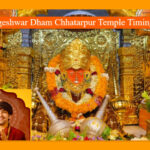
In the heart of Connaught Place, surrounded by the office towers, retail arcades, and relentless traffic of one of Delhi’s busiest commercial districts, a single sound has continued without interruption for more than six decades: “Shri Ram, Jai Ram, Jai Jai Ram” — chanted in unbroken rotation, 24 hours a day, every single day, since 1 August 1964, inside the Pracheen Hanuman Mandir. This sustained, continuous chanting has been formally recorded in the Guinness Book of World Records, making this small orange-painted temple on Baba Kharak Singh Marg one of the very few religious sites in India whose specific devotional practice carries internationally documented, verified recognition.
The temple’s claimed history reaches back considerably further than 1964, however — to the Mahabharata era itself. According to widespread local tradition, the Pandava brothers built five temples in Delhi (then known as Indraprastha) after their victory in the Kurukshetra war, and this Hanuman shrine is counted among them, with some specific tellings crediting Bhima himself with its establishment — a detail that connects directly to one of the Mahabharata’s most beloved episodes, in which Bhima encounters Hanuman, disguised as an old, weakened monkey, blocking a forest path with his tail.
This guide covers complete 2026 darshan timings, the temple’s extraordinary chanting record, the crescent-moon legend that may have protected it from historical destruction, and everything devotees need for a visit.
💡 Quick Answer Darshan timings: 5:00 AM – 1:00 PM and 3:00 PM – 11:00 PM (most days) Full-day opening: Tuesday and Saturday — open continuously, no midday closure Entry: Completely free Continuous chanting: “Shri Ram, Jai Ram, Jai Jai Ram” running unbroken since 1 August 1964 — Guinness World Record Nearest Metro: Rajiv Chowk (Blue and Yellow Lines) Best day to visit: Tuesday, for the temple’s traditionally most significant Hanuman-worship day Last Verified: June 2026
Pracheen Hanuman Mandir Timings 2026
| Day | Timings | Notes |
|---|---|---|
| Monday, Wednesday, Thursday, Friday, Sunday | 5:00 AM – 1:00 PM and 3:00 PM – 9:00 PM (some sources cite 11:00 PM closing) | Standard split-session schedule |
| Tuesday and Saturday | Open all day, no midday closure | Full continuous access, reflecting these days’ significance for Hanuman worship |
| Hanuman Jayanti | Opens before dawn, remains open late into the night | Continuous bhajans, diyas, and heavy festival crowds |
A note on the evening closing time: Sources show slight variation between a 9:00 PM and 11:00 PM evening closing on regular days — confirm the current exact closing time with the temple directly if your visit timing is tight, particularly for an evening darshan.
Pro tip: If your schedule allows flexibility, visiting on a Tuesday gives you both the temple’s traditionally most significant weekly observance day and the practical benefit of continuous, all-day access without the midday closure that applies on other days.
What Is Pracheen Hanuman Mandir — History, Legend, and the Crescent Moon
One of Five Pandava-Era Temples in Delhi
According to enduring local tradition, the five Pandava brothers, ruling from their capital at Indraprastha (identified with present-day Delhi), built five temples following their victory in the Kurukshetra war. Alongside the Pracheen Hanuman Mandir, this group traditionally includes the Kalkaji Temple (a Kali shrine in South Delhi with a self-manifested rock idol), the Yogmaya Temple near Qutub Minar, the Bhairav Temple near Purana Qila, and the Nili Chatri Mahadev (Shiva temple) at Nigambodh Ghat.
Bhima and the Old Monkey — A Beloved Episode
One specific version of the temple’s founding credits the Pandava brother Bhima directly with its establishment, connecting it to a well-known Mahabharata episode: during the Pandavas’ forest exile, Bhima — searching for a fragrant flower at his wife Draupadi’s request — came across an old, seemingly frail monkey lying across his path, its tail blocking the way. Unaware he was addressing Hanuman himself (traditionally considered Bhima’s own half-brother, as both are sons of the wind god Vayu), Bhima scornfully demanded the monkey move its tail. Hanuman, testing him, replied that he was too weak to lift it himself — and Bhima, attempting to fling the tail aside with his famous strength, found he could not budge it even slightly, a humbling revelation of Hanuman’s true, vastly superior power hidden beneath an unassuming form.
Bala Hanuman — The Self-Manifested Idol
The presiding deity is worshipped as Bala Hanuman — the infant/youthful form of Lord Hanuman — and is specifically described as Swayambhu (self-manifested), rather than an idol carved and consecrated through the standard installation process. The idol’s face is depicted facing south, an orientation considered unusual and specifically auspicious within Hanuman temple tradition, with the deity holding a Gada (mace) in his left hand and his right hand resting over his chest in a posture of prayer. The temple structure itself is reported at approximately 108 feet in height.
Renovated in 1724 by Maharaja Jai Singh
While the underlying spiritual site is traditionally dated to the Mahabharata era, the present-day temple structure was substantially renovated in 1724 by Maharaja Jai Singh II of Jaipur — around the same period he constructed Delhi’s Jantar Mantar nearby — with further large-scale renewals occurring in subsequent centuries.
Tulsidas, a Mughal Emperor, and the Crescent Moon
One of the temple’s most distinctive physical features — and its most striking legend — involves the spire (shikhara), which bears a crescent moon finial, unusual for a Hindu temple, in place of the more typical Om symbol or kalash.
According to the temple’s own tradition, the revered saint-poet Tulsidas, author of the Ramcharitmanas and the Hanuman Chalisa, visited this temple during a trip to Delhi. Summoned before the reigning Mughal emperor and challenged to demonstrate his professed faith in Hanuman through a miracle, Tulsidas sought Hanuman’s blessing at this very shrine and successfully performed the demonstration the emperor demanded. Deeply impressed, the emperor is said to have gifted the temple an Islamic crescent moon finial as a mark of respect — and local tradition holds that this specific Islamic symbol atop a Hindu temple subsequently protected the shrine from destruction during repeated waves of invasion and iconoclasm that affected many other Delhi temples under various Muslim rulers across the centuries that followed.
A Continuous Six-Decade Chant — The Guinness Record
The temple’s modern claim to global recognition began on 1 August 1964, when continuous chanting of “Shri Ram, Jai Ram, Jai Jai Ram” commenced inside the temple — and has run, by rotation of devotees, without a single interruption ever since, a sustained devotional commitment now spanning more than six decades and formally documented in the Guinness Book of World Records as one of the longest unbroken religious chants anywhere in the world.
How to Reach Pracheen Hanuman Mandir
Address: Baba Kharak Singh Marg, Connaught Place, New Delhi — 110001.
By Metro: Rajiv Chowk Metro Station (Blue and Yellow Lines) is the nearest station, with a short walk to the temple — making this one of the most centrally located and easily reached major temples in Delhi.
By road: DTC buses serve Connaught Place extensively throughout the day. Auto-rickshaws and app-based cabs are readily available from anywhere in central Delhi.
By air: Indira Gandhi International Airport — approximately 16 km, with Metro and taxi connections available.
Festivals at Pracheen Hanuman Mandir
Hanuman Jayanti (typically falling in March–April on the full moon day of the Chaitra month, per the lunar Hindu Panchang calendar) is the temple’s most significant annual celebration. On this day, the temple opens before dawn and remains active well into the night, with continuous bhajans, diyas lighting the courtyard, and the air filled with the scent of marigolds and incense — drawing some of the heaviest crowds the temple sees all year.
Tuesday and Saturday weekly observance: Beyond the major annual festival, the temple’s special full-day opening on these two days each week reflects their ongoing significance specifically for Hanuman devotion within the broader Hindu calendar.
The Trap — What Catches Most Visitors
“Arrived midday on a Wednesday expecting the temple to be open” → Cause: Standard days follow a split-session schedule with a midday closure, unlike Tuesday and Saturday’s continuous access → Fix: Plan around the 5:00 AM–1:00 PM and 3:00 PM–9/11:00 PM windows on regular days, or visit on a Tuesday or Saturday specifically for all-day access without a closure gap.
“Assumed the crescent moon symbol indicated a non-Hindu shrine” → Cause: Unfamiliarity with the temple’s specific historical legend → Fix: The crescent moon finial is a deliberate historical feature tied to the Tulsidas legend and the temple’s protection during periods of historical conflict — it does not indicate anything other than a Hindu Hanuman temple with a uniquely preserved piece of its own history visible on the spire.
“Visited only this temple, unaware of the other four Pandava-era Delhi temples” → Cause: Limited awareness of the broader five-temple tradition → Fix: If exploring Delhi’s ancient temple history interests you, the Kalkaji Temple, Yogmaya Temple (near Qutub Minar), Bhairav Temple (near Purana Qila), and Nili Chatri Mahadev (Nigambodh Ghat) are traditionally grouped with this temple as the five Pandava-era shrines of Indraprastha.
“Traveled from far away without confirming exact timing changes around festivals” → Cause: Festival days or special pujas can shift the standard daily schedule → Fix: If traveling a significant distance specifically for this temple, call the temple office ahead to confirm current timings, particularly around Hanuman Jayanti or other major observances.
Before You Visit Pracheen Hanuman Mandir — Checklist
☑ Day-specific timing confirmed — standard split sessions (5 AM–1 PM, 3–9/11 PM) versus Tuesday/Saturday continuous access ☑ Tuesday visit considered for both devotional significance and all-day access convenience ☑ Rajiv Chowk Metro Station (Blue/Yellow Lines) used as the primary, most convenient access route ☑ Hanuman Jayanti dates checked if planning a festival-period visit — significantly larger crowds expected ☑ Modest, traditional dress worn as a mark of respect ☑ Minimal belongings carried given the temple’s central, busy commercial location ☑ Crescent moon spire and the Tulsidas legend specifically looked for and appreciated as part of the visit
Frequently Asked Questions
What are Pracheen Hanuman Mandir timings in 2026?
On most days (Monday, Wednesday, Thursday, Friday, Sunday), the temple is open from 5:00 AM to 1:00 PM and 3:00 PM to 9:00 PM (some sources cite 11:00 PM). On Tuesday and Saturday, the temple remains open continuously throughout the day with no midday closure.
Why is this temple recorded in the Guinness Book of World Records?
Since 1 August 1964, the mantra “Shri Ram, Jai Ram, Jai Jai Ram” has been chanted continuously inside the temple without a single interruption, by rotation of devotees, for more than six decades — formally recognized in the Guinness Book of World Records as one of the longest unbroken religious chants documented anywhere.
What is the legend behind the crescent moon on the temple’s spire?
According to temple tradition, the saint-poet Tulsidas visited Delhi and was challenged by a Mughal emperor to demonstrate his faith in Hanuman through a miracle. After successfully doing so with Hanuman’s blessing, the impressed emperor gifted the temple an Islamic crescent moon finial. Local belief holds this symbol subsequently helped protect the temple from destruction during later periods of invasion that affected many other Delhi temples.
Is Pracheen Hanuman Mandir really from the Mahabharata era?
According to widespread local tradition, yes — it is considered one of five temples built by the Pandava brothers in Indraprastha (ancient Delhi) after the Kurukshetra war, with some versions specifically crediting Bhima with its establishment. The current physical structure was substantially renovated in 1724 by Maharaja Jai Singh II of Jaipur, with further renewals since.
Which Metro station is nearest to Pracheen Hanuman Mandir?
Rajiv Chowk Metro Station, served by both the Blue and Yellow Lines, is the nearest station, with the temple a short walk away in Connaught Place — making it one of the easiest major Delhi temples to reach.
What is the significance of Bala Hanuman facing south at this temple?
The temple’s self-manifested (Swayambhu) idol depicts Bala Hanuman (the youthful form of Hanuman) facing south, an orientation considered unusual and especially auspicious within Hanuman worship tradition.
Is entry free at Pracheen Hanuman Mandir?
Yes, entry is completely free for all visitors.
Contact and Help
Address: Baba Kharak Singh Marg, Connaught Place, New Delhi — 110001 Nearest Metro: Rajiv Chowk (Blue and Yellow Lines)
One Last Thing
Somewhere inside this small, orange-painted temple, in the middle of Delhi’s busiest commercial circle, a chant has not stopped since 1964. Devotees have rotated in and out for sixty-plus years, taking turns keeping “Shri Ram, Jai Ram, Jai Jai Ram” alive in the air without a single gap long enough for silence to occur — a sustained act of devotion turned, almost incidentally, into a world record.
Above them, on the spire, a crescent moon sits where most Hindu temples would place a kalash or an Om — a gift, tradition says, from a Mughal emperor impressed by a saint’s faith, and possibly the very symbol that kept this particular Pandava-era shrine standing through centuries when so many others around it did not survive.
Connaught Place has changed entirely around this temple — colonial architecture, then independence, then decades of being one of Delhi’s most valuable commercial addresses, retail rents climbing every year on every side. The chant inside has not changed at all. It has simply continued, the same words, the same devotion, since long before most of the buildings now surrounding it were built.
Jai Bajrang Bali. Shri Ram, Jai Ram, Jai Jai Ram.