Anitha Shetty, a 43-year-old from Mangalore, had grown up visiting Madhur temple with her family every Ganesh Chaturthi. But she had never fully absorbed what made it architecturally and theologically unusual until her husband pointed it out during a visit three years ago.
Most temples have a primary deity and subsidiary shrines. At Sharavu Mahaganapathi in Mangalore — another of the six ancient Tulunadu Ganapati temples — you worship Ganesha in his own space. At Dharmasthala, you worship Manjunatha (Shiva) with Ganapati in a separate shrine nearby.
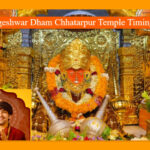
At Madhur, Lord Shiva (as Madanantheshwara) and Lord Ganesha (as Siddhi Vinayaka) are worshipped together in the same sanctum sanctorum — not in separate shrines, not in adjacent spaces, but in one Garbhagriha. Father and son, the cosmic deity and his elephant-headed child, receiving simultaneous worship in a single sacred chamber.
Anitha said she had been coming to this temple since childhood without consciously registering this. Once she understood it, the darshan felt different — not two separate prayers but one unified act.
This is the detail that makes Madhur unlike any other temple in Kerala, and possibly in all of South India.
No online booking required. Just arrive.
💡 Quick Answer Timings: 5:00 AM – 1:00 PM and 6:00 PM – 8:30 PM daily Afternoon closure: 1:00 PM – 6:00 PM — five hours Entry fee: Free — all darshan and general rituals No online booking: All poojas and sevas booked at temple counter on arrival Main deities: Lord Shiva (Madanantheshwara) + Lord Ganesha (Siddhi Vinayaka) — same sanctum Best time: 6:00 AM – 8:00 AM weekdays Ganesh Chaturthi 2026: 23 August — 10-day festival Last Verified: June 2026
Madhur Temple Timings 2026 — Two Sessions Daily
| Session | Timings | Notes |
|---|---|---|
| Nirmalya Darshan | 4:30–5:00 AM | Priests’ first ritual — before public opening |
| Morning darshan | 5:00 AM – 1:00 PM | Six poojas during this window |
| Afternoon closure | 1:00 PM – 6:00 PM | Temple closed — 5 full hours |
| Evening darshan | 6:00 PM – 8:30 PM | Evening poojas and closing |
The afternoon closure at Madhur is five hours — longer than most major South Indian temples. Pilgrims who drive from Mangalore (48 km) and arrive between 1:00 PM and 6:00 PM find the gates shut. This planning detail catches the largest number of first-time visitors.
Pooja schedule within morning session: The six daily poojas include Udayasthamana Pooja (sunrise), Kalasanthi, Uchikalam (noon), Athazhapuja (evening), and others. Devotees participating in the Udayasthamana Pooja — which covers the entire day from sunrise to sunset in a single continuous ritual offering — must make prior arrangements at the temple counter.
Pro tip: The 6:00 AM to 8:00 AM window on weekdays is Madhur at its most contemplative. The morning poojas are active, the Mogral River air from the west carries through the complex, and the three-tiered copper-plated roof catches the early light in a way that afternoon hours cannot replicate. Arrive before 6:30 AM for the quietest, most unhurried darshan.
Ganesh Chaturthi 2026 (23 August): The 10-day Ganesh Chaturthi festival at Madhur is the biggest annual event, drawing lakhs of devotees from both Kerala and Karnataka. Extended hours, elephant processions, and special sevas mark all 10 days. Outside festival season, the temple is significantly calmer.
What Is Madhur Temple — The Name, the Deity, and the River
Why “Madhur” — The Old Woman and the River
The name “Madhur” comes from a legend specific to the Tulu speaking community of coastal Kerala-Karnataka. An old woman named Madaru from the Tulu Moger (fishermen’s) community discovered a self-manifested Shivalinga at this spot on the banks of the river. Over generations, this discovery became a temple, and the settlement took the name of the woman who found what was already there.
The river that flows past the temple is called Mogral River — but its traditional name is Madhuvahini, meaning “she who carries honey.” The honey river flows past the honey-sweet abode of Madhur.
The Chandrakanta Shila — The Moonstone Base
The Ganesha idol at Madhur — Lord Siddhi Vinayaka — is self-manifested (Svayambhu/Udbhava Murthy). It is not sculpted or placed; it emerged from the earth at this sacred spot. What makes the Madhur Ganapathi specifically unique is that the idol rests on a Chandrakanta Shila — a moonstone base. Chandrakanta (moon-jewel) is a legendary stone believed to absorb and release the moon’s light, cool in touch, and considered deeply auspicious in the Kerala-Tulu tradition.
This combination — a self-manifested Ganesha on a moonstone base — is not found at any other temple in the six ancient Ganapati shrines of Tulunadu.
Shiva and Ganesha Together — The Theological Statement
In Hindu iconography, Shiva and Ganesha have a complex relationship. Ganesha is Shiva’s son — born from the divine creative energy of Parvati. At most temples, they are worshipped in separate spaces, sometimes in the same complex but never in the same sanctum.
At Madhur, both deities are present in the same Garbhagriha. The theological statement is deliberate and profound: the source (Shiva) and the gateway (Ganesha, who removes obstacles and is invoked first in all Hindu rituals) are held together in one sacred space. Before you can reach Shiva, you pass through Ganesha — and at Madhur, this cosmic relationship is made literally, architecturally visible.
The temple’s full name reflects this dual presence: Sree Madanantheshwara-Siddhi Vinayaka — Madanantheshwara (Lord Shiva) and Siddhi Vinayaka (Lord Ganesha of accomplishment).
Additional deities within the complex: Beyond the main sanctum, the temple houses sub-shrines for Kashi Vishwanatha, Subrahmanya, Dharmasastha, Durga Parameshwari, Veerabhadra, and Gulika. The complex is thus a comprehensive sacred site representing multiple traditions of the Tulu region.
2026 update: The Madhur temple management completed renovation work on the three-tier copper-plated roof in early 2026 — the copper sheeting, a distinctive feature of traditional Kerala temple architecture, has been restored to its characteristic gleam. The renovation, which began in 2025, drew significant attention from heritage conservationists studying Thachu Shastra (Kerala’s traditional temple architecture system).
The Six Ancient Ganapati Temples of Tulunadu
Madhur belongs to a specific tradition — the six most ancient and sacred Ganapati temples of the Tulunadu region (the coastal strip spanning southern Karnataka and northern Kerala). Understanding this context helps explain why Madhur draws devotees from both Kerala and Karnataka states, not just from Kasaragod district.
The six ancient Tulunadu Ganapati temples include Madhur, Sharavu Mahaganapathi (Mangalore), and Idagunji Mahaganapathi among others. Each has its own specific form, tradition, and legend. Madhur is distinctive among the six for its dual Shiva-Ganesha sanctum and its Chandrakanta Shila base.
Completing a circuit of all six is considered a complete Ganapati pilgrimage for devotees of the Tulu tradition — similar in spirit to the Arupadai Veedu circuit for Murugan or the Jyotirlinga circuit for Shiva.
What to Offer at Madhur — The Temple’s Distinctive Prasad
Modaka (Kozhukatta): Ganesha’s favourite sweet — a steamed dumpling made from rice flour, jaggery, and coconut — is the primary prasad at Madhur and the most auspicious offering. The modaka prasad from Madhur is considered especially powerful and devotees carry it home for family members unable to attend.
Appam-Panchakajaya: A specific offering unique to this temple tradition — rice appam offered with a mix of five sweet substances (Panchakajaya). This is one of the most traditional Kerala temple offerings and carries the specific sanctity of the Tulu region.
Ksheera Abhishekam (Milk Abhishekam): Ritual bathing of both deities with milk, chanted simultaneously. Booking at the temple counter; one of the most popular sevas, especially on Sankashti Chaturthi.
All pooja bookings are at the temple counter only. No online booking system exists as of June 2026. Arrive early on festival days and weekends — the counter queue itself builds before the darshan queue.
The Trap — What Catches Most Madhur Temple Visitors
“Arrived from Mangalore at 2:30 PM — temple closed” → Cause: Five-hour afternoon closure 1:00 PM–6:00 PM → Fix: From Mangalore (48 km), start by 7:00 AM for morning darshan, or arrive in Kasaragod the previous evening and plan the morning session.
“Tried to book pooja online — no system found” → Cause: No online booking exists for Madhur temple as of 2026 → Fix: All seva bookings at the temple counter. Arrive 30 minutes before your desired pooja window to register. On Ganesh Chaturthi and festival days, arrive 1–2 hours before opening (4:30–5:00 AM) to secure counter position.
“Ganesh Chaturthi — 10 days, which day is best?” → Cause: The 10-day festival (23 August – 1 September 2026 approximately) has varying crowd levels → Fix: First day (Chaturthi, 23 August) and last day (Ananta Chaturdashi) are the most crowded. Days 3–7 have significant devotional atmosphere with slightly more manageable crowds. All 10 days see extended hours.
“Could not find the sub-deity shrines” → Cause: The U-shaped temple complex has multiple shrines not prominently signed for non-Tamil/Malayalam readers → Fix: After main sanctum darshan, complete the U-shaped circuit. Ask a sevak to point out the Subrahmanya, Durga Parameshwari, and Dharmasastha shrines within the complex.
Pro tip: The Sankashti Chaturthi (monthly Ganesha observance, falling on the 4th day after full moon) draws significant crowds specifically for Ganesha worship. At Madhur, many regular devotees fast on this day and break their fast after temple darshan and the Ksheera Abhishekam. If you visit on Sankashti, arrive 30 minutes before opening (4:30 AM) to be early in the counter queue for Abhishekam.
How to Reach Madhur Temple
Temple address: Madhur Sree Madanantheshwara-Siddhi Vinayaka Temple, Madhur, Kasaragod District, Kerala — 671 321
By road:
- Mangalore: 48 km (approximately 1 hour via NH66)
- Kasaragod town: 8 km (15 minutes)
- Kannur: 115 km (2.5 hours)
- Kozhikode: 185 km (3.5 hours)
- Bengaluru: 380 km (7 hours)
By train: Kasaragod Railway Station — 8 km from temple. Connected to Mangalore (45 minutes), Kozhikode (2.5 hours), Thiruvananthapuram (9 hours), Mumbai (18 hours). Auto-rickshaws and taxis from Kasaragod Junction to Madhur — ₹80–120 (15 minutes).
By air: Mangalore International Airport — 55 km (1 hour). Calicut International Airport — 200 km (3.5 hours).
Mangalore–Madhur day trip: Mangalore to Madhur and back in a day is extremely practical — 48 km each way, good NH66 road. Morning session darshan (arrive by 6:30 AM), return to Mangalore by 10:30 AM. This is the most common visit pattern for Mangalore-based devotees.
Before You Visit Madhur Temple — Checklist
☑ Timings confirmed — 5:00 AM–1:00 PM and 6:00 PM–8:30 PM; 5-hour afternoon closure ☑ No online booking — all sevas and poojas at counter; arrive early for counter queue ☑ Morning arrival planned — 6:00–8:00 AM for most peaceful darshan ☑ Ganesh Chaturthi 2026 — 23 August to 1 September (approx); extended hours; very heavy crowd ☑ Sankashti Chaturthi — if visiting on this day, arrive before 5:00 AM for Abhishekam counter ☑ U-shaped temple circuit planned — complete all sub-shrines after main sanctum darshan ☑ Modaka prasad planned — Ganesha’s favourite sweet, available at prasad counter ☑ Traditional dress — Kerala tradition; modest, traditional attire ☑ Cash only — no digital payment at seva counters (verify current status on arrival)
Frequently Asked Questions
What are Madhur Maha Ganapati Temple timings in 2026?
The temple is open from 5:00 AM to 1:00 PM (morning session) and 6:00 PM to 8:30 PM (evening session). There is a five-hour afternoon closure from 1:00 PM to 6:00 PM. The temple is open all days of the week. Timings may extend during festivals, especially Ganesh Chaturthi.
What makes Madhur Temple unique among Ganapati temples?
Madhur is one of the very few temples in India where Lord Shiva (Madanantheshwara) and Lord Ganesha (Siddhi Vinayaka) are worshipped together in the same sanctum sanctorum. Additionally, the Ganesha idol is self-manifested (Svayambhu) and rests on a Chandrakanta Shila (moonstone base) — a combination not found at any other of the six ancient Ganapati temples of Tulunadu.
Is there online booking for Madhur Temple poojas?
No. As of June 2026, there is no online booking system for darshan or sevas at Madhur Maha Ganapati Temple. All poojas, Abhishekams, and special sevas are booked at the temple counter on the day of visit. Arrive early on festival days and weekends to secure counter position.
When is Ganesh Chaturthi 2026 at Madhur Temple?
Ganesh Chaturthi 2026 falls on 23 August. The Madhur Temple celebrates a 10-day festival from Chaturthi to Ananta Chaturdashi (approximately 23 August to 1 September 2026). This is the biggest annual festival at Madhur, drawing lakhs of devotees from Kerala and Karnataka, with extended darshan hours throughout.
What is the significance of the Chandrakanta Shila at Madhur?
The Siddhi Vinayaka (Ganesha) idol at Madhur rests on a Chandrakanta Shila — a moonstone base. The Chandrakanta is considered a sacred stone that absorbs and releases the moon’s energy, cool to the touch, and deeply auspicious in the Tulu and Kerala temple traditions. This specific feature is unique to Madhur among the six ancient Ganapati temples of Tulunadu.
How far is Madhur Temple from Mangalore?
Madhur Temple is 48 km from Mangalore (approximately 1 hour via NH66). This makes a Mangalore–Madhur day trip extremely practical — morning darshan (6:30 AM) and return to Mangalore by 10:30 AM. Many devotees from Mangalore visit Madhur regularly on this schedule.
Madhur temple mein darshan kaise karein?
Kasaragod se 8 km hai — taxi ya auto-rickshaw se 15 minute. Subah 6:00–8:00 AM mein jaayein — sabse shaant time. Dopahar 1 PM se 6 PM mandir band rehta hai — Mangalore se aane walon ko subah ya shaam ka plan banana chahiye. Online booking nahi hai — pooja counter pe directly. Ganesh Chaturthi (23 August 2026) par 10-day festival hota hai — Kerala aur Karnataka dono jagah se lakhs of devotees aate hain.
Contact and Help
Address: Madhur Sree Madanantheshwara-Siddhi Vinayaka Temple, Madhur, Kasaragod District, Kerala — 671 321 Nearest railway station: Kasaragod Junction — 8 km Nearest major city: Mangalore — 48 km
One Last Thing
The old woman Madaru of the Tulu Moger community found a Shivalinga on the riverbank. She did not build a temple. She simply recognized what was there.
The river flows past — the Madhuvahini, she who carries honey. The copper roof catches the early morning light. Inside the single sanctum, Lord Shiva and Lord Ganesha are present together — the source and the gateway, the cosmic principle and its first expression, the father and the son.
You do not need to resolve the theology to feel what the space is doing. You simply stand in front of both of them at once and understand, for a moment, what it means to be at the beginning and the end simultaneously.
Anitha has been coming to Madhur since childhood. She said the darshan changed only when she understood what she was actually seeing.
She said that is true of most things.
Om Gam Ganapataye Namah. Om Namah Shivaya.