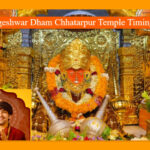
In a country where nearly every major temple offers some version of a faster lane for a fee — VIP darshan, special entry tickets, priority sevas — Chilkur Balaji Temple near Hyderabad has built its entire five-century identity on refusing all of it. There is no Hundi (donation box) anywhere inside the temple premises. There is no VIP darshan, no paid fast-track queue, no special pass that lets one devotee skip past another. A government minister and a daily-wage laborer stand in the exact same line, move at the exact same pace, and receive the exact same few seconds before Lord Venkateswara — a configuration temple guides increasingly describe, with good reason, as “pure spiritual democracy.”
This radical simplicity is precisely what has made the temple Hyderabad’s most talked-about pilgrimage site for a very specific, modern reason: Chilkur Balaji is known across India as the “Visa Temple” — the place where students preparing for an overseas university interview, software professionals awaiting an H-1B decision, and families hoping for a child’s safe journey abroad come specifically to ask Lord Balaji for help with a visa.
The temple’s own founding legend explains why this association with travel and distant journeys took root in the first place — and it begins, fittingly, with someone who could not make a journey at all.
💡 Quick Answer Temple opens: 4:00 AM | Formal darshan begins: 6:00 AM Morning darshan: 6:00 AM – 1:00 PM Evening darshan: 4:00 PM – 8:00 PM (extended to 9:00 PM on Sundays) Entry fee: None — completely free; no Hundi, no VIP darshan, no paid sevas of any kind Best days for a peaceful visit: Monday to Thursday mornings Signature ritual: 11 Pradakshinas (circumambulations) on the first visit; 108 Pradakshinas after a wish is fulfilled Daily footfall: Reported at 75,000 to 1 lakh devotees Last Verified: June 2026
Chilkur Balaji Temple Timings 2026
| Session | Timings | Notes |
|---|---|---|
| Temple gates open | 4:00 AM | |
| Formal darshan begins | 6:00 AM | |
| Morning darshan | 6:00 AM – 1:00 PM | |
| Afternoon closure | 1:00 PM – 4:00 PM | |
| Evening darshan | 4:00 PM – 8:00 PM | Extended to 9:00 PM on Sundays |
Pro tip: Monday to Thursday mornings are consistently described as the least crowded window for a peaceful, unhurried visit and Pradakshina ritual. Weekends — and Sundays in particular — see significantly heavier footfall, driven specifically by the volume of devotees performing the Pradakshina circumambulation tradition, which takes considerably longer to complete amid a large crowd.
No special arrangements needed: Because there is no VIP darshan and no advance booking system of any kind, planning your visit is genuinely as simple as choosing the right day and time — there is no portal to check, no ticket to secure, and no quota to worry about missing.
The Founding Legend — A Devotee Who Could Not Travel to Tirupati
According to the temple’s own account, a devotee of Lord Venkateswara who had, for years, made the annual pilgrimage to Tirupati fell seriously ill and found himself physically unable to make the journey one particular year. Praying fervently to the Lord from where he was, unable to travel, he was directed — in some tellings through a dream, in others through the Lord’s own appearance — to a specific spot at Chilkur, where the deity revealed himself, sanctifying the location as an accessible, earthly abode for those who could not always make the longer pilgrimage to the hills of Tirupati.
This origin point — a devotee unable to travel, answered by a god who came to him instead — is, many devotees note, a fitting foundation for a temple now most associated with helping people travel successfully to places they very much want to reach.
The temple’s documented history places its establishment during the era of Akkanna and Madanna, two influential ministers who served the Golconda Sultanate and were themselves devoted followers of Lord Balaji. They were, notably, the uncles of Bhakta Ramadas, one of India’s most celebrated devotional saints, known for his own deep devotion to Lord Rama and his association with the Bhadrachalam Temple. This places Chilkur Balaji’s founding squarely within a documented 16th–17th century historical context, supported by its connection to well-recorded historical figures, rather than resting purely on undated legend.
Why “No Hundi” Is the Whole Point — Not Just a Policy
Most temple guides mention the absence of a donation box as a curious footnote. At Chilkur Balaji, it is the entire organizing principle of the institution, and understanding why changes how the policy reads.
No Hundi (donation box): There is no collection box anywhere on the premises. Any offering a devotee chooses to make is entirely voluntary and is not solicited, tracked, or rewarded with preferential treatment.
No VIP Darshan: There is no fast-track queue available at any price. Every devotee — regardless of status, wealth, or connections — joins the same line and proceeds at the same pace.
No paid sevas: There are no special, paid rituals offering an enhanced or more personalized darshan experience beyond what every other devotee receives.
Independent administration: The temple operates outside standard government endowment-board control structures that manage most major South Indian temples, allowing it to maintain this policy without the institutional pressures that often push larger temples toward monetized fast-track systems.
The result, repeatedly described across devotee accounts, is a specific kind of spiritual experience: nobody’s prayer is treated as more urgent because they paid more for it. The wait is the same wait for everyone, and the brief moment of darshan, when it comes, arrives identically for the person who walked from a nearby village and the person who flew in from abroad specifically for this visit.
The 11 and 108 Pradakshinas — A Vow, Not a Casual Walk
The temple’s most distinctive devotional practice is the Pradakshina (circumambulation) ritual, performed around the temple complex, and it functions as a structured, two-part vow system rather than a single symbolic walk.
First visit: Devotees perform 11 Pradakshinas around the temple — the initial act of making a request known to the Lord, whether for a visa, a job, an exam result, a marriage, or any significant life matter.
After the wish is fulfilled: Devotees return and perform 108 Pradakshinas — a substantially more demanding circumambulation undertaken specifically as fulfillment of the implicit promise made during the first visit, a devotional “thank you” proportionate to the request that was granted.
This 11-then-108 structure is widely understood among regular devotees as creating genuine accountability in the devotional relationship: you do not simply ask and walk away — you commit, implicitly, to returning and completing a much larger act of gratitude if the prayer is answered. Many visa-seeking devotees specifically describe planning a return trip to Chilkur for their 108 Pradakshinas immediately upon receiving visa approval, sometimes scheduling it before they even depart on the trip the visa made possible.
What Is Chilkur Balaji — Deity and Setting
The temple is dedicated to Lord Balaji (Venkateswara), an incarnation of Lord Vishnu, worshipped here alongside his consorts Sridevi and Bhudevi — representing prosperity and balance, respectively, within the temple’s devotional configuration.
The temple sits on the banks of Osman Sagar Lake (also known as Gandipet), in the town of Chilkur, surrounded by greenery and a noticeably calmer atmosphere than central Hyderabad — a setting multiple sources specifically describe as contributing to the temple’s particular spiritual quality, distinct from the more commercially developed environment surrounding many other major South Indian temples.
The Trap — What Catches Most Visitors
“Looked for an online VIP darshan booking option” → Cause: Assuming, based on the pattern at most other major Indian temples, that some paid fast-track system must exist → Fix: No such system exists at Chilkur Balaji, by design and policy. General darshan via the standard queue is the only access route for every devotee, with no exceptions.
“Arrived on a Sunday expecting the same crowd as a weekday” → Cause: Underestimating how significantly weekend Pradakshina participation increases footfall → Fix: Plan for Monday–Thursday mornings specifically if a calm, faster visit and Pradakshina experience matter more to you than visiting on a particular day.
“Tried to make a donation and could not find a collection point” → Cause: Expecting a Hundi or counter, as found at virtually every other major temple → Fix: There genuinely is no donation box at Chilkur Balaji. If you wish to contribute, any voluntary offering should be made according to the temple’s own specific, limited arrangements — confirm with temple volunteers on-site rather than assuming a standard collection point exists.
“Performed only 11 Pradakshinas after a wish was already fulfilled, confusing the two stages of the ritual” → Cause: Misunderstanding the two-part structure of the Pradakshina tradition → Fix: 11 Pradakshinas are for making a new request; 108 Pradakshinas are specifically for returning after that request has been granted, as an act of fulfilled devotion.
How to Reach Chilkur Balaji Temple
Temple address: Chilkur Balaji Temple Road, Chilkur Village, Hyderabad, Telangana — 500075. Approximately 25–30 km from Hyderabad city center, near Osman Sagar Lake along Vikarabad Road.
By road: TSRTC buses run frequently from Mehdipatnam and other major areas of Hyderabad. Autos and taxis are also readily available for the full journey from the city.
By train: Hyderabad Deccan Railway Station is the nearest major railway station, with onward bus or taxi connections to the temple.
By air: Rajiv Gandhi International Airport, Hyderabad — approximately 25–30 km, roughly 40–50 minutes by taxi or app-based cab directly to the temple.
Parking: Facilities available near the temple for both two-wheelers and cars.
Before You Visit Chilkur Balaji Temple — Checklist
☑ Timings confirmed — gates open 4:00 AM, formal darshan 6:00 AM–1:00 PM and 4:00 PM–8:00 PM (9:00 PM Sundays) ☑ Monday–Thursday morning visit planned if a calmer, faster experience is preferred ☑ No booking needed — no online system exists; this is a genuinely walk-in-only temple ☑ Pradakshina stage understood — 11 for a new wish, 108 for one already fulfilled ☑ No donation box expected — voluntary offerings, if made, follow the temple’s own specific arrangements ☑ Comfortable walking footwear for the Pradakshina circumambulation ☑ Modest, traditional dress as a mark of respect ☑ Realistic expectations set regarding wait time — every devotee, regardless of status, follows the same queue
Frequently Asked Questions
What are Chilkur Balaji Temple timings in 2026?
The temple gates open at 4:00 AM, with formal darshan beginning at 6:00 AM and continuing until 1:00 PM. Evening darshan runs from 4:00 PM to 8:00 PM, extended to 9:00 PM on Sundays. The temple is open every day, including Sundays and public holidays.
Why is Chilkur Balaji Temple called the “Visa Temple”?
Devotees widely believe that sincere prayers offered here help fulfill wishes related to visas, overseas education, jobs abroad, and international travel. This reputation has made it one of India’s most distinctive pilgrimage destinations for people awaiting visa decisions or planning to study or work overseas.
Is there a donation box (Hundi) at Chilkur Balaji Temple?
No. The temple is specifically known as a “Hundi-less” temple — there are no donation boxes anywhere on the premises, no VIP darshan, and no paid sevas, reflecting the temple’s core philosophy of equal treatment for every devotee regardless of financial contribution.
What is the Pradakshina ritual at Chilkur Balaji Temple?
Devotees perform 11 Pradakshinas (circumambulations) around the temple during their first visit, typically to make a wish or request. After that wish is fulfilled, devotees return and perform 108 Pradakshinas as an act of devotional gratitude and fulfillment of their implicit vow.
Is there VIP darshan at Chilkur Balaji Temple?
No. The temple does not offer any VIP darshan, fast-track queue, or paid priority access at any price. Every devotee joins the same general queue and receives the same darshan experience, regardless of status or financial offering.
How far is Chilkur Balaji Temple from Hyderabad?
Approximately 25 to 30 km from Hyderabad city center, located near Osman Sagar Lake along Vikarabad Road. It takes roughly 40 to 50 minutes by taxi from Rajiv Gandhi International Airport.
Who built Chilkur Balaji Temple?
The temple’s establishment is associated with Akkanna and Madanna, two ministers who served the Golconda Sultanate and were devoted followers of Lord Balaji. They were the uncles of Bhakta Ramadas, a celebrated devotional saint associated with the Bhadrachalam Temple, placing the temple’s founding within a documented 16th–17th century historical context.
Contact and Help
Address: Chilkur Balaji Temple Road, Chilkur Village, Hyderabad, Telangana — 500075 Nearest airport: Rajiv Gandhi International Airport — approximately 25–30 km
One Last Thing
There is something quietly radical about a temple that has spent five centuries refusing to let money buy proximity to God, in a country — and a religious landscape — where the opposite has increasingly become the norm. No Hundi. No VIP queue. No special favor for whoever can pay for it. The minister and the laborer wait in the same line, take the same number of steps, and receive the same handful of seconds before Lord Balaji that everyone else in that line receives.
What began with a sick devotee who could not travel to Tirupati has become, centuries later, the temple most associated in all of India with successful travel — visas granted, flights boarded, futures begun elsewhere. The devotee who could not go anywhere founded the temple that, by overwhelming popular belief, helps the most people go somewhere new.
Eleven steps around the temple for the asking. A hundred and eight for the thanks, whenever that thanks is finally due. No donation box waiting at the end of either.
Om Namo Venkatesaya. Govinda Govinda.