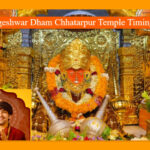
At Arulmigu Eachanari Vinayagar Temple near Coimbatore, the daily Ganapathi Homam (sacred fire ritual) is not funded by collecting fresh donations every single day. Instead, the temple operates through an unusual and genuinely clever endowment system: 350 individual devotees, known as Kattalaitharars, each deposit a one-time sum of ₹15,000 into the temple’s account. That principal amount is never spent. Only the interest accrued on each deposit is used to fund that specific sponsor’s requested Ganapathi Homam, performed once a year on their behalf, in perpetuity — meaning a single payment made once, potentially decades ago, continues funding an annual fire ritual indefinitely, for as long as the deposit remains with the temple.
This system reflects something deeper about Eachanari’s particular devotional character: a temple built not around a single grand annual spectacle, but around the patient, compounding accumulation of hundreds of individual devotional commitments, each one small on its own, together sustaining a sacred fire that has, by some accounts, not gone unlit for a single day in generations.
The temple’s own founding story carries a similar theme of unplanned permanence. According to legend, when a six-foot, three-foot-diameter idol of Lord Ganesha was being transported by bullock cart from Madurai for installation at the Perur Pateeswarar Temple roughly 500 years ago, the cart’s axle broke at Eachanari, and the idol became immovably seated in the soil exactly where it had stopped. Devotees, recognizing this as divine will rather than mechanical failure, consecrated the idol on the spot — meaning Eachanari Vinayagar Temple exists, in the most literal sense, because Ganesha decided he was not actually going anywhere else.
💡 Quick Answer Darshan timings: 5:00 AM – 10:00 PM daily, no break (some sources cite a 10 AM–5 PM window for a more limited set of poojas — confirm current schedule) Entry: Free for general darshan Daily Ganapathi Homam: Performed continuously, funded by 350 Kattalaitharar lifetime endowments (₹15,000 deposit each) Online booking: Available at eachanarivinayagar.hrce.tn.gov.in for sevas and poojas Unique feature: Six-foot, self-installed Ganesha idol — the temple grew around an accident, not a plan Location: Eachanari village, Pollachi Main Road (NH 209), approximately 12 km from Coimbatore Last Verified: June 2026
Eachanari Vinayagar Temple Timings 2026
| Activity | Timing | Notes |
|---|---|---|
| Temple opens | 5:00 AM | Continuous, no midday break, per most sources |
| Temple closes | 10:00 PM | |
| Ganapathi Homam | Performed daily | One source cites approximately 5:30 AM; confirm current timing |
| Chariot procession | Approximately 7:00 PM daily | Devotees can participate by payment (see Sevas section below) |
| Alternate cited general hours (some sources) | 10:00 AM – 5:00 PM | Likely reflects a specific subset of poojas rather than full darshan hours — confirm with the temple |
A note on the timing variation: Most detailed sources consistently describe a continuous 5:00 AM to 10:00 PM operating window with no break — but at least one source cites a narrower 10:00 AM–5:00 PM window for some specific pooja activity. Given the predominance of the 5 AM–10 PM figure across sources, this is the more reliable general guide, but confirm the exact current-day schedule directly with the temple, particularly if your visit is time-sensitive.
Pro tip: Early morning and evening hours are specifically recommended for the calmest darshan experience and to witness peak pooja and archanai activity. For a quieter visit overall, late morning or early afternoon on weekdays tends to be less crowded than the typical early-morning and evening peaks.
Sevas and Pooja Offerings
The temple offers seven distinct types of pooja: Ganapathy Homam, Moolavar Abishegam, Alangaram, Utchikala Poojai, Annadhanam, Abishegam, and Thanga Thear (Golden Chariot).
Ganapathi Homam: The temple’s signature daily ritual, funded through the 350-sponsor Kattalaitharar endowment system described above. To newly become a Kattalaitharar, a devotee deposits ₹15,000, with the resulting interest funding one annual Homam performed in their name going forward.
Chariot procession (Thanga Thear): Held daily at approximately 7:00 PM around the temple, devotees can participate directly by paying approximately ₹1,600.
Annadhanam: The temple hosts a free communal meal open to all visitors, regardless of background — a practical, charitable counterpart to the temple’s more formal ritual offerings.
Pro tip: Pooja costs and procedures can change — it is specifically advisable to check current timings and costs for each individual puja type before your visit, rather than assuming fixed, unchanging pricing across all categories.
How to Book Pooja and Seva Online
Step 1: Visit the official website: eachanarivinayagar.hrce.tn.gov.in.
Step 2: Click on “Temple Booking Service” on the homepage.
Step 3: Click on “Temple Service” on the next page.
Step 4: Browse the list of available Sevas and Poojas offered by the temple.
Step 5: Click on your chosen Seva or Pooja, which will redirect you to a dedicated booking page.
Step 6: Select your preferred date from the calendar — available slots will display below.
Step 7: Click “Book Now” on your chosen slot.
Step 8: A pop-up form will appear — enter devotee details and address information to complete your booking.
Offline alternative: Most sevas can also be arranged directly at the temple on arrival, particularly for general, lower-cost offerings — the online system is most valuable for securing specific dated slots or higher-value sevas like the Ganapathi Homam sponsorship in advance.
What Is Eachanari Vinayagar Temple — History and Architecture
Built Around 1500 AD
The temple’s construction is generally dated to approximately the 16th century CE (around 1500 AD), though, as with many temples of this antiquity, no definitive historical records confirm exactly who built the original structure or who performed the earliest rituals — the founding date rests primarily on consistent oral and devotional tradition rather than a documented inscription.
The Idol — Self-Installed, Later Gilded
The presiding Vinayagar (Ganesha) idol stands six feet tall and three feet in diameter, carved from a single stone, with the deity’s face traditionally black, marked with a tilak typical of South Indian temple iconography. In 2004, the body of the idol was plated with gold, giving the deity its current striking gilded appearance — a relatively modern enhancement layered onto a much older devotional structure.
Dravidian Architecture, 75-Acre Complex
The temple follows Dravidian architectural style, featuring an intricately carved gopuram (entrance tower) and a colorful rajagopuram visible from the highway. The broader temple complex spans approximately 75 acres, drawing millions of devotees annually — particularly during Ganesh Chaturthi.
Multiple Names for the Same Deity
Within the temple’s own devotional tradition, Lord Ganesha is worshipped and addressed by several names interchangeably: Vinayagar, Pillaiyar, Ganapathy, and Vakkaradundan — each carrying slightly different devotional and linguistic emphasis within Tamil Shaivite tradition, though all referring to the same presiding deity.
Managed by HRCE
The temple is administered by the Hindu Religious and Charitable Endowments (HRCE) Department, Government of Tamil Nadu, which oversees its daily ritual operations, festival arrangements, and the broader preservation of the region’s Dravidian temple traditions.
Festivals at Eachanari Vinayagar Temple
Vinayaka Chaturthi (Ganesh Chaturthi): The single most significant annual festival, falling in the Tamil month of Avani/Sharavana (mid-July to mid-August), celebrating the deity’s birth with elaborate decoration of the temple premises and the highest annual footfall of any single day.
Tamil New Year (Puthandu, 14 April): Marked by a specific tray offering presented to Lord Ganesha first thing in the morning, containing three fruits (mango, banana, jackfruit), betel leaves and areca nuts, flowers, a mirror, gold or silver jewelry, and money as dakshina.
Aadi 18 (around 2–3 August): Women specifically gather at the temple to perform poojas marking the onset of the monsoon season.
Deepavali (Diwali): Celebrated with the broader Tamil tradition of visiting temples of Ganesh, Shiva, and Vishnu in sequence at the start of the day.
Thai Pongal and Thai Pusam: Both observed in the Tamil month of Thai (January), falling close together — Pongal as the harvest festival honoring prosperity deities including Murugan, Surya, and Vinayagar; Pusam marking the gods’ victory over the asuras.
Additional festivals: Ram Navami, Janmashtami, Shivratri, and Holi are also observed at the temple, reflecting a broader, pan-Hindu festival calendar beyond Ganesha-specific occasions alone.
The Trap — What Catches Most Visitors
“Arrived expecting a midday closure, as at many other South Indian temples” → Cause: Most major South Indian temples observe an afternoon break, leading visitors to assume the same here → Fix: Most sources confirm Eachanari Vinayagar Temple operates continuously from 5:00 AM to 10:00 PM without a midday break — though confirm current scheduling given minor source variation.
“Tried to become a Kattalaitharar without understanding the lifetime structure” → Cause: Assuming the ₹15,000 deposit funds a single, one-time Homam rather than an ongoing annual commitment funded by accrued interest → Fix: Understand that this deposit is intended as a lasting endowment — the principal remains with the temple, and only the interest funds your annually recurring Homam, in perpetuity.
“Visited during Ganesh Chaturthi without anticipating extreme crowds” → Cause: Underestimating the scale of this temple’s most significant annual festival → Fix: Plan for significantly heavier footfall and extended waiting during Vinayaka Chaturthi specifically — arrive early if attending during this period.
“Assumed all seven puja types follow the same cost and timing structure” → Cause: Treating the temple’s pooja offerings as uniform → Fix: Confirm current timings and costs for your specific intended puja (Ganapathy Homam, Moolavar Abishegam, Alangaram, Utchikala Poojai, Annadhanam, Abishegam, or Thanga Thear) before your visit, as these vary individually.
How to Reach Eachanari Vinayagar Temple
Temple address: Arulmigu Vinayagar Temple, Pollachi Main Road, Eachanari, Coimbatore, Tamil Nadu — 641021.
By road: Approximately 12 km from Coimbatore city center, along the Coimbatore–Pollachi Road (NH 209/NH 83). Well connected by local buses, autos, and taxis.
By train: Coimbatore Junction Railway Station — the nearest major railhead, approximately 12 km from the temple.
By air: Coimbatore International Airport — approximately 18–20 km, with taxis and app-based cabs available for the 30–45 minute onward journey, depending on traffic.
Best season: October to March, for the most comfortable weather — particularly December to February, the coolest and most pleasant period for early morning and evening worship.
Before You Visit Eachanari Vinayagar Temple — Checklist
☑ Darshan timings confirmed — 5:00 AM–10:00 PM continuous (verify any seasonal or pooja-specific variation) ☑ Online booking completed at eachanarivinayagar.hrce.tn.gov.in if planning a specific dated seva, or offline arrangement planned on arrival ☑ Current pooja costs confirmed for your specific intended Seva (Ganapathy Homam, Abishegam, etc.) ☑ October–March travel preferred for the most comfortable weather ☑ Vinayaka Chaturthi crowd levels anticipated if visiting during this peak festival period ☑ Modest, traditional dress worn — shoulders and knees covered, footwear removed before entry ☑ Photography expectations set — not permitted inside the temple per several sources ☑ Chariot procession (~7 PM daily) considered if interested in this specific participatory ritual
Frequently Asked Questions
What are Eachanari Vinayagar Temple timings in 2026?
Most sources confirm the temple operates continuously from 5:00 AM to 10:00 PM daily with no midday break, though at least one source cites a narrower 10 AM–5 PM window for specific poojas — confirm current scheduling directly with the temple given this minor variation.
What is the legend behind Eachanari Vinayagar Temple?
According to tradition, a six-foot Ganesha idol being transported by bullock cart from Madurai for installation at the Perur Pateeswarar Temple became immovably seated in the soil at Eachanari when the cart’s axle broke, roughly 500 years ago. Devotees took this as divine will and consecrated the idol on the spot, founding the temple where it stands today.
What is the Kattalaitharar system at Eachanari Vinayagar Temple?
This is the temple’s unique endowment structure for funding its daily Ganapathi Homam. 350 devotees, called Kattalaitharars, each make a one-time deposit of ₹15,000 with the temple; the principal remains untouched, while the interest it generates funds one annual Homam performed in that devotee’s name, in perpetuity.
How do I book pooja or seva online at Eachanari Vinayagar Temple?
Visit eachanarivinayagar.hrce.tn.gov.in, click “Temple Booking Service,” then “Temple Service,” select your desired Seva or Pooja from the list, choose your date, click “Book Now” on an available slot, and complete the booking form with devotee details.
Is entry free at Eachanari Vinayagar Temple?
Yes, general darshan is completely free for all devotees. Specific sevas and poojas, including the Ganapathi Homam, carry their own individual costs.
What is special about the idol at Eachanari Vinayagar Temple?
The presiding idol is six feet tall and three feet in diameter, carved from a single stone, believed to be self-installed at this exact spot due to the broken-cart legend. The deity’s body was plated in gold in 2004.
How far is Eachanari Vinayagar Temple from Coimbatore?
Approximately 12 km, along the Coimbatore–Pollachi Road (NH 209). Coimbatore Junction Railway Station is also approximately 12 km away, and Coimbatore International Airport is approximately 18–20 km away.
Contact and Help
Official website: eachanarivinayagar.hrce.tn.gov.in Address: Arulmigu Vinayagar Temple, Pollachi Main Road, Eachanari, Coimbatore, Tamil Nadu — 641021 Managed by: Hindu Religious and Charitable Endowments (HRCE) Department, Tamil Nadu
Official Links
| Purpose | Link |
|---|---|
| Seva & pooja online booking | eachanarivinayagar.hrce.tn.gov.in |
One Last Thing
A cart broke down on its way to somewhere else, and five hundred years later, millions of people travel specifically to the spot where it stopped — not the original destination at all, but the accident that became permanent because enough people recognized something in it worth keeping.
Three hundred and fifty devotees, over however many years, each made a single decision — ₹15,000, paid once — and turned that single decision into something that continues working on their behalf indefinitely, a small fire lit each year by interest accumulated from a payment most of them probably made decades before any flame from it was struck. There is something quietly instructive in that structure, independent of any specific belief about Ganesha himself: that a single sincere commitment, properly placed, can outlast the person who made it, working long after the immediate moment of devotion has passed.
The idol never reached Perur. The temple it founded instead has, by most accounts, never gone a single day without its fire.
Om Gam Ganapataye Namah. Vinayagar Saranam.