According to the legend behind this Bangalore hilltop temple, a devout woman named Sudharma, wife of a local chieftain, was visited one day by three beggars asking for alms — who were, unknown to her, Lord Brahma, Lord Vishnu, and Lord Shiva in disguise. Without hesitation, she offered them what she had: freshly harvested ragi (finger millet). Her mother-in-law, disapproving of this generosity toward strangers, insisted the grain be taken back.
Sudharma refused. If the visitors did not want the alms returned, she reasoned, then she herself no longer needed the grain either — and rather than reclaim what she had freely given, she let it go entirely. The ragi she released transformed into a hillock. Moved by her selfless and uncompromising devotion, the holy trinity granted her their sacred darshan in their true divine forms — and according to one telling of the legend, the three gods chose to remain near that same hilltop afterward, transforming themselves into the rocks that still stand on the temple grounds today, bearing engravings now open for public view.
This is the origin of Ragigudda — “Ragi” meaning millet, “Gudda” meaning hillock — and while the legend describes an ancient mythological event, the physical temple itself is, notably, quite recent: established in 1969 through the initiative of local youth, officially registered in 1972. Few major Bangalore temples combine such an ancient-feeling founding story with such a recently documented institutional history.
💡 Quick Answer Darshan timings: Most consistently cited as 8:00 AM – 11:30 AM and 5:00 PM – 8:30 PM (some sources cite an earlier 4:30 AM opening; confirm current schedule) Entry: Completely free for general darshan Special sevas (Abhishekam, Archana): ₹50–₹300, purchased at the temple counter Online booking: Limited — primarily for donations and select special poojas; most sevas remain counter-only Best days: Tuesdays and Saturdays for Hanuman Abhishekam; weekday mornings for the calmest darshan Free community meal: Served to all visitors every Saturday Last Verified: June 2026 — confirm exact current timings given some source variation
Ragigudda Temple Timings 2026
| Day | Morning | Evening |
|---|---|---|
| Monday–Friday | 8:00 AM – 11:30 AM | 5:00 PM – 8:00 PM |
| Saturday & Sunday | 8:00 AM – 12:30 PM | 5:00 PM – 8:30 PM |
A note on the timing discrepancy: Most detailed sources converge on the 8:00 AM–11:30 AM and 5:00 PM–8:30 PM pattern shown above, with weekends extending slightly later in the morning. However, at least one source cites a considerably earlier opening of 4:30 AM. Given the strong majority consensus around the 8:00 AM figure, this is the more reliable general guide — but confirm the exact current schedule directly with the temple if your visit timing is tight.
Afternoon closure: The temple closes between the morning and evening sessions — plan your visit around the two distinct windows rather than expecting continuous access.
Pro tip: Saturday draws the thickest crowds of the week, specifically because the Mahamangalarathi is held around 11:00–11:30 AM and again 8:00–8:30 PM — the hill, despite its substantial 5-acre footprint, can feel considerably more crowded than that area suggests during these specific windows.
Daily and Weekly Pooja Schedule
Tuesdays and Saturdays: Hanuman Abhishekam is performed in the morning — described by regular devotees as creating a particularly strong devotional atmosphere on these two specific days.
Sundays and Ekadashi: Sri Rama Pattabhishekam and Sahasranama Archana are performed.
Tuesday evening: A Hanuman Chalisa Saptaha session, reported at approximately 6:00 PM.
Daily: Both morning and evening Aarti are performed without exception, with the evening Aarti around 6:30 PM specifically described as a particularly special moment — the glow of lamps combined with devotional bhajans creating what many devotees describe as the most beautiful spiritual atmosphere of the day.
Sevas and Seva Pricing
| Seva | Cost |
|---|---|
| Abhishekam, Archana, and similar offerings | ₹50 – ₹300, depending on the specific seva chosen |
Tickets for all special sevas are purchased at the temple counter. As of this guide’s publication, the temple has not fully implemented online booking for darshan or most sevas — limited online facilities exist for donations and a small number of selected special poojas through the official website, with the temple management reportedly working toward expanding this over time.
Pro tip: Carry small cash specifically for sevas and donations, since most transactions remain in-person and counter-based rather than digital.
What Is Ragigudda — Deity, Architecture, and Community Service
Prasanna Anjaneyaswamy — Hanuman in His Calm Form
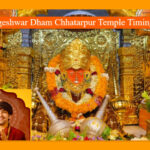
The main deity is Lord Hanuman, worshipped here specifically as Prasanna Anjaneyaswamy — Hanuman in his calm, benevolent, peaceful aspect, distinct from the more commonly depicted dynamic or warrior forms found at many other Hanuman shrines.
A Comprehensive Multi-Deity Complex
Beyond the main Hanuman shrine, the temple complex houses shrines for Lord Rama, Goddess Sita, Lord Lakshmana, a Shivalinga, Lord Ganesha, the Navagrahas, and Goddess Rajarajeshwari — making it, in practice, a comprehensive devotional complex rather than a single-deity shrine.
Thrimurthy Sannidhi — The Trinity Carved Into Rock
A genuinely distinctive feature: a Thrimurthy Sannidhi, featuring the Hindu trinity of Lord Brahma, Lord Vishnu, and Lord Shiva engraved on large natural rocks — directly connected to the founding legend’s account of the three gods choosing to remain near the hilltop after granting Sudharma their darshan.
Five Acres, Multiple Amenities
The temple complex spans approximately 5 acres, including a Pushkarni (sacred water tank), an artificially created waterfall called Hanuman Dhara, an auditorium, an amphitheatre, and a Prasad distribution area — layered across the lower terraces beneath the main hilltop shrine. Visitors are specifically encouraged not to rush back down immediately after darshan, since these lower terraces carry much of the temple’s lived, everyday devotional texture beyond the main sanctum itself.
Approximately 60–90 Steps
Sources vary slightly on the exact count, citing 60 to 90 steps with handrails on both sides leading up to the hilltop shrine. Wheelchair access is limited given the hilltop location, though temple volunteers can assist elderly or differently-abled visitors, and basic seating is available at the base for those unable to climb.
A Community Hub — Education, Medical Services, Free Meals
Beyond its religious function, Ragigudda Temple operates as an active community hub, providing educational support and medical services to the surrounding community, and serving free meals to all visitors every Saturday — a charitable, weekly practice independent of any specific festival occasion.
Hanuman Jayanti — The Temple’s Grandest Festival
Hanuman Jayanti is described, by one source, as a 12-day-long festival celebrated with significant grandeur and devotional fervor — by far the most important annual observance at Ragigudda, drawing the temple’s highest yearly footfall. For 2026, the date is tentatively cited as 14 April, though this should be confirmed closer to the date given the lunar-calendar basis for the exact festival timing each year. Celebrations typically include Rathotsava (chariot procession) and Annadanam (community feeding).
The Trap — What Catches Most Visitors
“Arrived expecting a single continuous darshan window” → Cause: Most sources confirm a midday closure between the morning and evening sessions → Fix: Plan your visit specifically for 8:00 AM–11:30 AM/12:30 PM or 5:00 PM–8:00/8:30 PM, rather than expecting all-day continuous access.
“Visited on a Saturday expecting a calm experience” → Cause: Underestimating how significantly the Saturday Mahamangalarathi and Hanuman Abhishekam increase crowd density on this specific day → Fix: For the calmest darshan, choose a weekday morning instead, particularly if you are sensitive to crowds.
“Assumed full online booking existed for sevas” → Cause: Expecting a digital-first booking system as found at many other major South Indian temples → Fix: Most seva tickets must be purchased at the temple counter. Online facilities remain limited to donations and a small number of select poojas — carry cash and plan for in-person booking.
“Brought a wheelchair without checking accessibility in advance” → Cause: Underestimating how limited wheelchair access is given the hilltop terrain → Fix: Contact temple volunteers in advance for assistance, or plan to use the basic seating available at the base if climbing the 60–90 steps is not feasible.
How to Reach Ragigudda Anjaneya Temple
Temple address: Ragigudda Sri Prasanna Anjaneyaswamy Temple, Ragigudda Temple Road, Jayanagar 9th Block, Bengaluru — 560069, Karnataka.
By Metro: Jayanagar Metro Station (Green Line) is the nearest station, with a local rickshaw or short cab ride completing the journey.
By road: Approximately 10–15 minutes from Jayanagar 4th Block; 35–50 minutes from MG Road, depending on Bengaluru traffic. BMTC buses along Bannerghatta Road and nearby Jayanagar side roads get you close, with the final approach being an uphill walk over exposed rock.
By taxi/auto: Easily located by searching “Ragigudda Temple” on Google Maps — accessible from any part of Bangalore.
Parking: Paid parking is available at the base for both cars and two-wheelers.
Before You Visit Ragigudda Anjaneya Temple — Checklist
☑ Current darshan timings confirmed — most sources cite 8 AM–11:30/12:30 PM and 5–8/8:30 PM, but verify given some source variation ☑ Cash carried for seva tickets (₹50–₹300) and donations — counter-based, mostly not online ☑ Saturday or festival-day crowd levels anticipated, or a weekday chosen for a calmer visit ☑ Comfortable footwear for the 60–90 steps to the hilltop shrine ☑ Modest, traditional dress worn — sarees, salwar suits, dhotis, or kurtas preferred ☑ Time budgeted for the lower terraces (Hanuman Dhara waterfall, Pushkarni, sub-shrines) in addition to main darshan ☑ Hanuman Jayanti dates (tentatively 14 April 2026) checked if planning around this major 12-day festival ☑ Wheelchair/accessibility needs arranged in advance with temple volunteers if relevant
Frequently Asked Questions
What are Ragigudda Anjaneya Temple timings in 2026?
Most sources confirm darshan from 8:00 AM to 11:30 AM (extending to 12:30 PM on weekends) and 5:00 PM to 8:00 PM (8:30 PM on weekends), with a closure between sessions. At least one source cites an earlier 4:30 AM opening — confirm current scheduling directly with the temple given this variation.
What is the legend behind Ragigudda Temple’s name?
According to tradition, a devout woman named Sudharma offered freshly harvested ragi (finger millet) to Lord Brahma, Vishnu, and Shiva disguised as beggars. When her mother-in-law objected, Sudharma refused to take the grain back, and it transformed into a hillock — “Ragigudda” means “hill of ragi/millet.” The three gods are said to have remained near the hilltop afterward, becoming the rocks now part of the temple’s Thrimurthy Sannidhi.
Is entry free at Ragigudda Temple?
Yes, general darshan is completely free for all devotees. Special sevas like Abhishekam and Archana carry charges of approximately ₹50 to ₹300, purchased at the temple counter.
Can I book sevas online at Ragigudda Temple?
Online booking remains limited — primarily for donations and a small number of selected special poojas. Most seva tickets must currently be purchased directly at the temple counter, though the temple management has indicated plans to expand online facilities over time.
What is special about the deity at Ragigudda Temple?
Lord Hanuman is worshipped here as Prasanna Anjaneyaswamy — his calm, benevolent form, distinct from more dynamic or warrior depictions found at many other Hanuman temples.
Does Ragigudda Temple offer free meals?
Yes. The temple serves free meals to all visitors every Saturday, as part of its broader community service activities alongside educational and medical support initiatives.
How many steps lead to the Ragigudda Temple hilltop shrine?
Sources cite approximately 60 to 90 steps, with handrails on both sides. Wheelchair access is limited given the hilltop terrain, though temple volunteers can assist, and basic seating is available at the base.
Contact and Help
Official website: ragigudda.org Address: Ragigudda Sri Prasanna Anjaneyaswamy Temple, 9th Block, Jayanagar, Bengaluru — 560069, Karnataka Nearest Metro: Jayanagar Station (Green Line)
Official Links
| Purpose | Link |
|---|---|
| Temple information & limited online booking | ragigudda.org |
One Last Thing
A woman gave away the only thing she had at hand, refused to take it back when pressured to, and watched it become a hill rather than simply disappear — a small, stubborn act of generosity that the legend insists mattered enough to bring three gods to stay and watch over it afterward, turning themselves to stone on the same hillside.
The temple that grew there is barely older than many of the devotees who visit it weekly — founded in 1969, registered in 1972, a genuinely modern institution built atop a legend old enough that no one can date its beginning. Every Saturday, free meals are served to whoever arrives hungry, in a small echo of the same gesture that started everything: someone offering what they have, without calculation, to whoever happens to be standing in front of them.
Sixty to ninety steps up, a calm-faced Hanuman waits at the top, exactly as patient as the story that brought him here.
Jai Bajrang Bali. Jai Prasanna Anjaneyaswamy.